
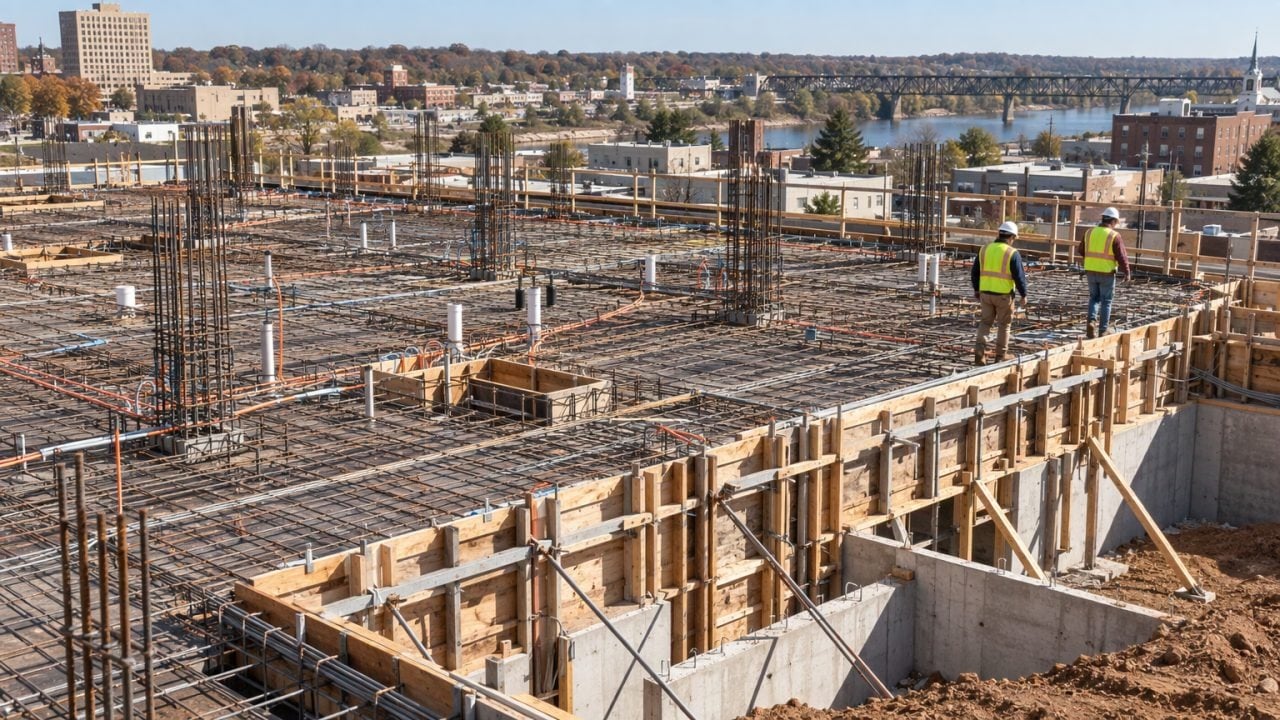
International Business Times reported on November 9, 2026, that the preliminary, seasonally adjusted BLS estimate for September showed Texas construction employment would reach 921,600 jobs in 2026. Employment climbed 1.7 percent from September 2025. The report also noted skilled-worker shortages and higher capital costs.
Construction growth brings oversight concerns when staffing or schedules are under strain. More construction doesn’t automatically lead to accidents. Texarkana contractors and property owners need to know whether each project has enough experienced people and enough time to check the work before crews cover it or begin another phase.
Worker shortages put schedules under pressure
South Texas business leaders met with U.S. Rep. Henry Cuellar in Washington to talk about immigration and workforce needs, according to KGNS’s November 12, 2026, report. Builders reported worker shortages and home construction delays.
Latin Times reported on November 11, 2026, that 87 percent of companies had skilled-trade openings in a survey by the Associated General Contractors of America and the National Center for Construction Education and Research. The survey also found that 42 percent reported delays because of worker shortages. The report cited the Alliance for America’s Skilled Trades estimate that the country needs 1.7 million new skilled-trade workers each year through 2035, but training programs produce barely half that number.
Those findings don’t give a count of Texarkana job vacancies. When you schedule local work, ask which crews are already committed and which phases rely on workers the contractor still needs to hire.
Oversight needs time and named supervisors
A realistic schedule should allow time for design review and corrections before another trade covers the work. You should know who handles skilled supervision and agree on regular project reviews while construction is underway. You need to give expansive soils specific attention when planning foundations; ask how the design addresses ground conditions at your site.
Compressed work phases should put you on alert. Unresolved defects are another warning, and you should watch for unclear responsibility for checking completed work, too. A change of crew shouldn’t erase an open defect. Ask for a written record naming who will make the correction and who will check it before the next phase begins.
Don’t accept a verbal promise to correct a defect later when the next crew will cover the work. Schedule both the correction and its inspection before that crew arrives.
Safety figures provide context, not proof of causation
Texas safety figures offer you a baseline. They don’t establish that the preliminary September employment estimate caused an accident. Texas recorded 557 fatal occupational injuries in 2024, down from 564 in 2023, according to the Texas Department of Insurance.
That statewide figure covers all industries. The department’s March 2026 report counted 125 construction deaths in 2024, or 23 percent of all Texas workplace fatalities.
Fatality figures also leave out nonfatal harm.
What to do after a construction injury
Get medical care after a construction site accident in Texas, and tell your employer. Save records safely. Keep treatment records and a copy of the incident report that shows when and where the injury happened. Save the site photos and messages you already have. Don’t go into an unsafe area to gather evidence, and don’t alter equipment.
Ask for copies of your discharge instructions and written work restrictions. Keep records from later treatment in the same file so it covers more than the first visit.
Two strict timelines govern a Texas construction workers’ compensation claim: letting your employer know about the injury within 30 days and filing your official claim paperwork with the Texas Division of Workers’ Compensation within one year. Missing either deadline can put your benefits at risk.
Liability for Texas construction site accidents depends on what coverage the employer has and whether a third party contributed to the injury. Employer coverage, third-party involvement, and preserved evidence shape compensation and liability issues following Texas construction site accidents. A negligent employer without workers’ compensation coverage can face a personal injury claim. A third party, such as an equipment manufacturer or another contractor, may also face liability if its negligence helped cause the injury.
| Record to keep | Practical relevance |
| Employer details and incident report | Establish who employed you and when you gave notice. |
| Contractor identities | Help distinguish your employer’s work from another company’s tasks. |
| Equipment information | Preserve the machine’s identity and its reported condition. |
| Witness contacts | Allow follow-up with people who saw what happened. |
| Insurance coverage records | Show whether the employer carries workers’ compensation coverage. |
What to watch as local projects expand
Don’t assume a full schedule means anyone checked the work as projects expand. Contractors need staffing commitments that fit the job, and owners should ask who closes out defects. Workers and families need a clear channel for reporting. Check whether the project assigns responsibility for oversight and records follow-through.