

Texarkana’s waste contract gives Waste Management exclusive rights, and the city a 10 percent cut
A new lawsuit calls the same kind of arrangement in Waxahachie an illegal monopoly. Records show Texarkana's deal is built the same way, down to the city's role enforcing it against competitors.

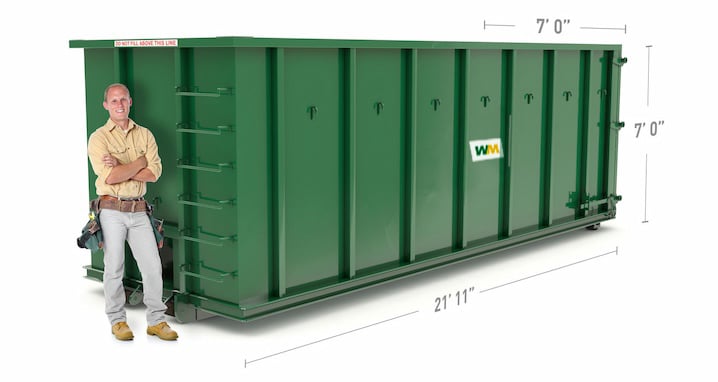
When a property owner in Texarkana, Texas placed a construction dumpster on a job site, the city told them to get rid of it.
“Please remove the unapproved dumpster from the property,” a city official wrote in a comment on the property’s city project file. “Waste Management has exclusive rights for debris removal.” The comment, obtained by TXKtoday, directed the owner to contact a Waste Management representative to arrange an approved dumpster instead.
A stop work notice from the City Inspection Office, also obtained by TXKtoday, shows the same thing. It halted construction on a structure and listed two violations. One was a missing remodel permit. The other, written by hand, was a “dumpster with Western Waste.”
The city’s contract with Waste Management explains why those notices went out. It also shows the city has a financial stake in keeping competitors out.
What the contract says
Texarkana’s deal with Waste Management runs back to a 2017 agreement the City Council approved in December 2016. It took effect March 1, 2017, renews automatically and remains in force. The council last updated it in February 2024.
Article continues below
▼ Continue reading
The agreement grants Waste Management “the exclusive right and privilege” to collect and dispose of waste from residential, commercial and industrial properties across the city. A later section spells out that the exclusive right covers commercial and industrial waste hauled in dumpsters, compactors or roll-off bins, the open-top containers used at construction sites.
A third provision ties the knot. When a homeowner hires a contractor for a remodel, the construction debris that contractor generates is, in the contract’s words, “deemed Commercial Waste.” That places it inside Waste Management’s exclusive territory. Under the contract’s own logic, a competitor’s dumpster on a remodel job is infringing on Waste Management’s rights. That is the situation Texarkana’s two enforcement records describe.
The contract also assigns the city a role in enforcing the deal. It grants Waste Management the right to seek a court injunction against any third party believed to be infringing its exclusive rights. And it commits the city to “take all steps necessary and permitted by law to require Customers to comply” with the agreement. The stop work notices and project-file comments are the city carrying out that commitment.
The city’s cut
The agreement gives the city a direct financial interest in how much Waste Management hauls. The city collects a 10 percent franchise fee on the company’s services, and the contract states that the fee applies to “payments actually received from Commercial and Industrial Unit Customers that Contractor direct bills for Roll-Off Bin services.” The fee is built into the published rates. The more construction roll-offs Waste Management rents, the more the city collects.
Franchise fees like this are common in Texas cities and are not unusual on their own. What they do is give the city a continuing stake in its contractor’s revenue, including revenue from the construction dumpsters its inspectors have told property owners to use.
A 2024 amendment added more. Waste Management agreed to donate $10,000 a year to Keep Texarkana Beautiful or a similar city program, and to forego a scheduled rate increase that year.
The Waxahachie lawsuit
That kind of arrangement is now the subject of a lawsuit in North Texas.
This week, Josh Roman and his company, American AF Dumpster Rentals, joined the Institute for Justice, a national public-interest law firm, to sue the city of Waxahachie, south of Dallas. Roman started his roll-off dumpster business in 2020 with one trailer and a Craigslist ad. It now runs four trucks and keeps about 75 construction dumpsters in rotation across the Dallas-Fort Worth area.
The suit says Waxahachie granted a national waste company the exclusive right to rent roll-off construction dumpsters inside the city limits, then enforced that monopoly by sending inspectors to pressure Roman’s customers with the threat of fines and permit delays until they switched to the city’s contractor. In exchange, the suit says, the city collects a share of the contractor’s revenue.
The lawsuit leans on the Texas Constitution, which states that monopolies “shall never be allowed.” It also cites the constitution’s equal rights and “law of the land” provisions, which the firm argues protect the right to compete and to earn a living. Roman said the case is about customer choice and the right of a small business to compete fairly.
The pieces the suit describes in Waxahachie are present in Texarkana’s contract. An exclusive right that reaches construction roll-offs. A city that enforces it against competitors. A city that takes a share of the money.
Where the law stands
Texas courts have generally upheld a city’s power to fold roll-off dumpsters into an exclusive franchise. In a 2016 case involving San Angelo, a federal appeals court ruled that a home-rule city could enforce its exclusive solid waste franchise even as it applied to temporary construction roll-offs.
The Institute for Justice is trying a different argument. It says the practice violates the Texas Constitution’s ban on monopolies, not just a waste statute. If it succeeds, the ruling could reach well beyond Waxahachie and put cities like Texarkana on notice.
What the records do not show is the city’s justification, or how often Texarkana issues such notices. The city has not addressed the practice publicly. Those questions remain for the city to answer.
The contract does leave some room. It excludes inert material such as concrete, dirt, rock and land-clearing debris from its definition of construction debris, which may be why some independent roll-off companies operate in Texarkana without conflict. The dispute is over mixed construction and remodel debris, the kind a competitor’s dumpster on a job site is most likely to hold.