

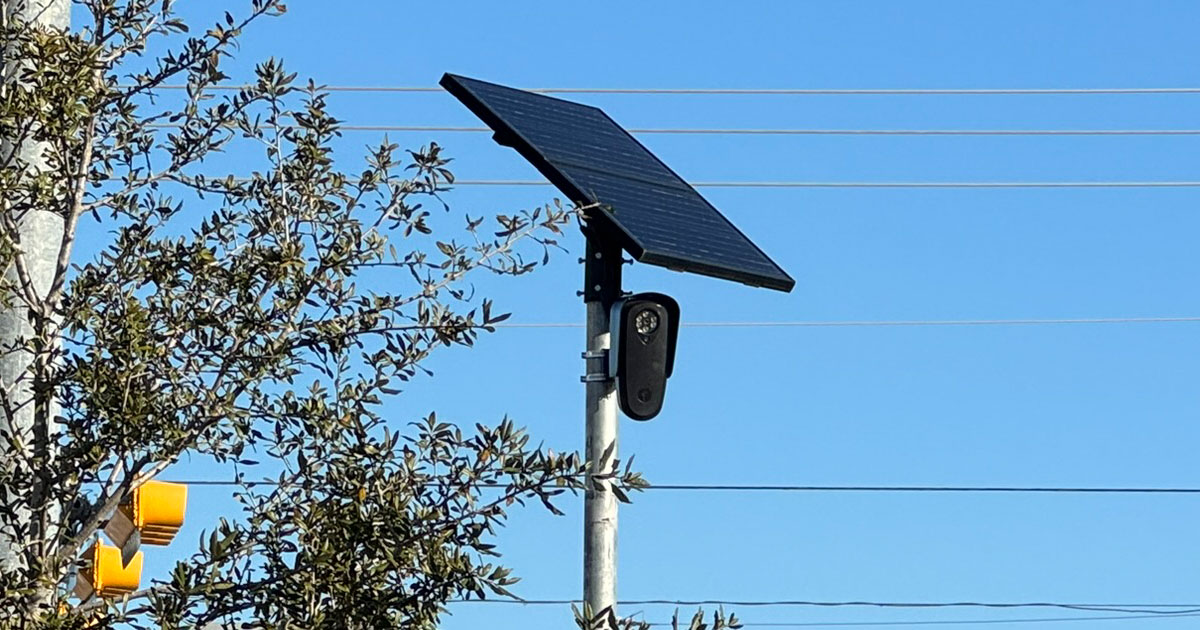
Residents urge Texarkana, Texas council to cancel Flock camera contract

Four residents used the open forum portion of Monday night’s Texarkana, Texas City Council meeting to call on the city to terminate its contract with Flock Safety, the company behind the automated license plate reader cameras installed around the city.
The speakers raised concerns about warrantless surveillance, data security and officer misuse, and pointed to a recent U.S. Supreme Court ruling they said has undermined the legal footing for citywide camera networks. The council took no action and did not respond to the comments, which came during open forum, where items are not on the agenda for discussion.
Brandon Cowan, owner of Liberty Ledger Media and founder of a local group he said has grown to more than 2,300 members, told the council he filed a public records request with the city on June 10 seeking the Flock contract, purchasing records, the police department’s use policy and communications around the system’s adoption. He said he published an investigative report last week based on the documents the city produced, along with the underlying records, and that City Manager David Orr and Councilmember Davis both responded before publication.
“I’m not here to relitigate any of that tonight,” Cowan said. “I’m here to tell you what’s happened since, because the ground under this system has moved twice in the last few weeks.”
Cowan pointed first to the Supreme Court’s June 29 ruling in Chatrie v. United States, which held that police conduct a Fourth Amendment search when they obtain cellphone location history through a geofence warrant. He said the decision knocked out the legal precedent a Virginia court had used to uphold a Flock camera network, and that the case is now on appeal with the ACLU, the Institute for Justice and the Cato Institute arguing that searchable citywide camera networks amount to warrantless tracking.
He also said more than 80 cities in 28 states have terminated their Flock contracts, citing Mountain View, California, where he said 250 outside agencies ran 600,000 unauthorized searches; Evanston, Illinois, which he said caught the company reinstalling cameras it had been ordered to remove; and Austin, which canceled its contract last year over data sharing concerns.
“My ask tonight is direct: terminate the Flock Safety contract and remove the cameras,” Cowan said. “At the very least, have a public conversation about it. A standalone agenda item, not a consent vote.”
John Savage told the council the cameras expose the city to fiscal and legal liability. He cited an Institute for Justice investigation he said found officers nationwide misusing the system, including a Florida officer he said tracked an ex-girlfriend’s car 69 times, and said audits in Georgia led to firings and criminal charges against more than 10 officers.
Savage also described security research he attributed to independent researcher Ben Jordan, saying more than 60 vulnerabilities were disclosed to Flock, that some police cameras were found broadcasting on the open internet without passwords, and that law enforcement login credentials for the systems have been bought and sold on the dark web.
“When you combine wide open security flaws, dark web access, and the psychological impact of mass surveillance on our citizens, you get a system that doesn’t protect the public, it endangers it,” Savage said. He urged the council to suspend the contract and implement an audit system for the cameras already in place.
Colton Langford, a Texarkana attorney, framed his comments around the Fourth Amendment. He said the cameras log the license plates of every passing vehicle and upload them to a centralized national database that officers anywhere in the country can search.
“There’s a difference between investigating people who are suspected of committing crimes and creating a surveillance state contrary to the ideals of the Constitution and our founding fathers,” Langford said.
He compared the system to a neighbor who follows a person every time they leave home, recording where they go and when. “Most folk would find this behavior deeply unsettling and most would consider it stalking,” he said. “With enough camera coverage, this is exactly what Flock allows the government to do, except on a scale no individual ever could.”
Langford asked the council to cancel the contract or let it expire.
Brianna Gretline, a Texarkana resident, opened the round of comments. She said she was concerned about who has access to the data the cameras collect and where it is stored.
“I don’t think that the amount of surveillance is necessary to the freedom of others,” she said.
No council member placed the Flock contract on a future agenda during the meeting, and the topic did not come up again before adjournment.