

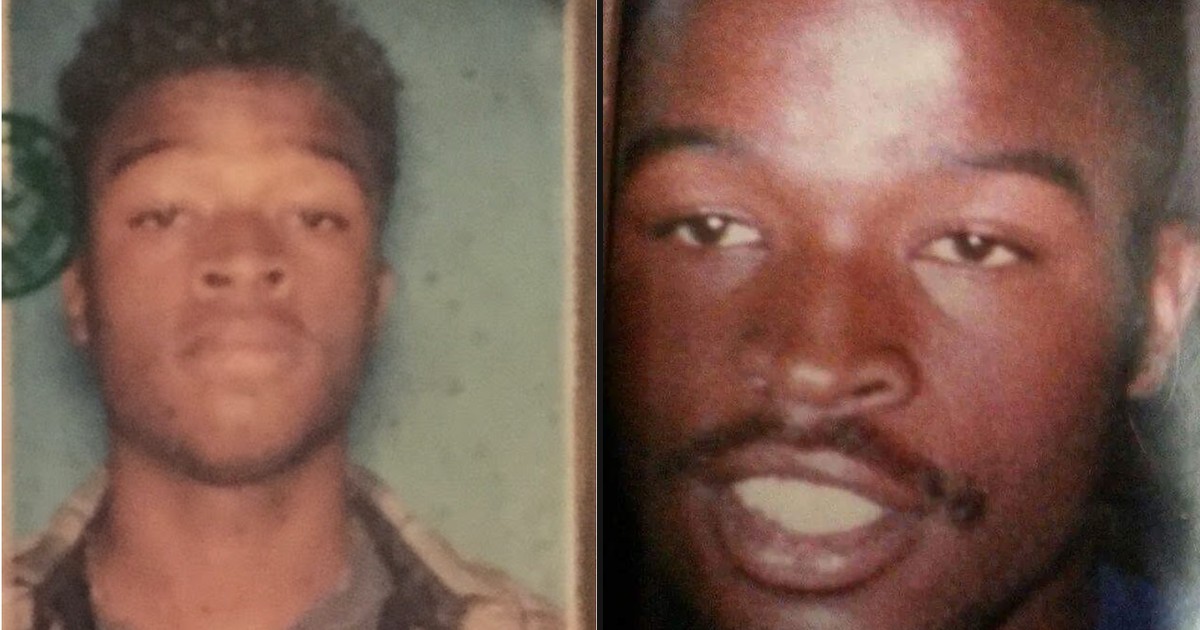
Father of 1996 drive-by victim vows to fight shooter’s parole

TEXARKANA, Texas — Thirty years after his son was gunned down in a drive-by shooting, a Texarkana father says he will stand before the Texas parole board to keep the man convicted of the killing behind bars.
Adrian L. Manley, now 46, was sentenced in September 1998 to 99 years in prison and a $10,000 fine for the July 17, 1996, shooting death of Roderick Earl Adams. Texas Department of Criminal Justice records show Manley becomes eligible for parole for the first time on Jan. 9, 2027. He is housed at the Connally Unit near Kenedy, with a maximum sentence date of Jan. 8, 2096.
Earl Adams, Roderick’s father, learned of the eligibility date in a phone call from the Texas Board of Pardons and Paroles several months ago. He said it was not what the family was told when Manley was convicted.
‘That’s not true’
Roderick Adams was standing outside with two other men when a car drove past and opened fire, Earl Adams said. All three were hit. Adams did not survive.
The case was tried in Bowie County’s 102nd District Court in September 1998. Appellate court records list then-District Attorney Bobby Lockhart for the state. Earl Adams said Jamie Elliott handled the prosecution. When the jury handed down 99 years, he said, the family understood Manley would serve at least 45 years before he could be considered for parole.
“I was kinda pissed off when they called and told me he was eligible for parole in January,” he said. “I was thinking, no, that’s not true.”
He went back through the newspaper clippings he saved from the trial and found nothing to support the 45-year figure. Bowie County District Attorney Jerry Rochelle’s office also searched its records, he said, and could not find it either. A victim services representative from the district attorney’s office has called him several times since.
The parole board followed up its phone call with a letter notifying him of the review.
What the court record shows
The Texas 6th Court of Appeals in Texarkana laid out the facts of the shooting when it upheld Manley’s conviction in August 2000.
On the night of July 17, 1996, Manley was riding in a car with three other men, James Hughey, Gene Paxton and Tory Blair, when it approached a crowd on Blanton Street. All three testified that Manley rose up through the passenger window, leaned over the roof of the car and said, “What’s up, Cuz?” Roderick Adams stepped forward and raised his arms, and multiple shots were fired. Hughey testified it was Manley who pulled the trigger.
Manley was a teenager at the time and had to be certified to stand trial as an adult. He was arrested about two weeks later on an unrelated aggravated robbery charge. Police searching his mother’s home, where he lived, found a .25-caliber Raven semiautomatic pistol. Ballistics testing matched it to the bullets that killed Adams.
A Bowie County jury convicted Manley of murder on Sept. 10, 1998. At punishment, a gang intelligence detective testified he had watched Manley commit crimes with fellow gang members, and a probation officer told jurors Manley had 11 prior arrests in Arkansas, half of them for assaultive offenses, and had once been charged alongside his brother in another Texarkana shooting.
On appeal, Manley argued a letter from a state witness amounted to a confession by someone else and that an unrecorded statement he gave police should not have been admitted. The appeals court agreed the statement was improperly admitted but ruled the error harmless, pointing to the three eyewitnesses in the car and the murder weapon recovered from his home. The Texas Court of Criminal Appeals refused to hear the case in February 2001, and no further appeals appear in state or federal court records.
How the math works
Parole eligibility in Texas is set by the law in effect on the date of the offense. The Board of Pardons and Paroles’ own eligibility chart for offenses committed between Sept. 1, 1995, and Aug. 31, 1997, lists murder among the aggravated offenses for which an inmate must serve half the sentence in calendar time, with a 30-year cap, before the first parole review. On a 99-year sentence, that is 30 years, which lines up with Manley’s January 2027 date. Murder is also excluded from mandatory supervision, so Manley cannot be released early on good time. Absent parole, his sentence runs to 2096. No 45-year threshold has ever existed in Texas parole law for a 99-year murder sentence.
Eligibility does not mean release. The parole board reviews each case and votes on whether to grant parole. Victims’ families may submit written statements and request a meeting with board members before a vote. If parole is denied, the board sets the next review date, which can be anywhere from one to 10 years out for violent offenses.
‘The only dad she ever known’
Roderick Adams left behind a daughter, Ravenisha Adams, who was 6 months old when he was killed. She was standing beside her grandfather during the interview.
“She never knew a dad,” he said. “I’m the only dad she ever known.”
Ravenisha now has four children of her own. Earl Adams said he has told them that if he is not around when Manley comes up for review, they are to go and protest in his place. He believes the children’s lives would look different if Roderick had lived.
“He would probably be on them like white on rice,” he said.
Thirty years on, Earl Adams still wants the officers who built the case against Manley to know how grateful he is for their hard work: Texarkana, Texas, police Detectives Ronnie Sharp, Jim White and Steve Shelley, who now serves as Wake Village police chief.
For now, he plans to testify himself.
“I hope he don’t get out,” he said. “He coming up for his first-time parole, and you never know what might happen.”
TXKtoday will follow the parole review as it approaches.