

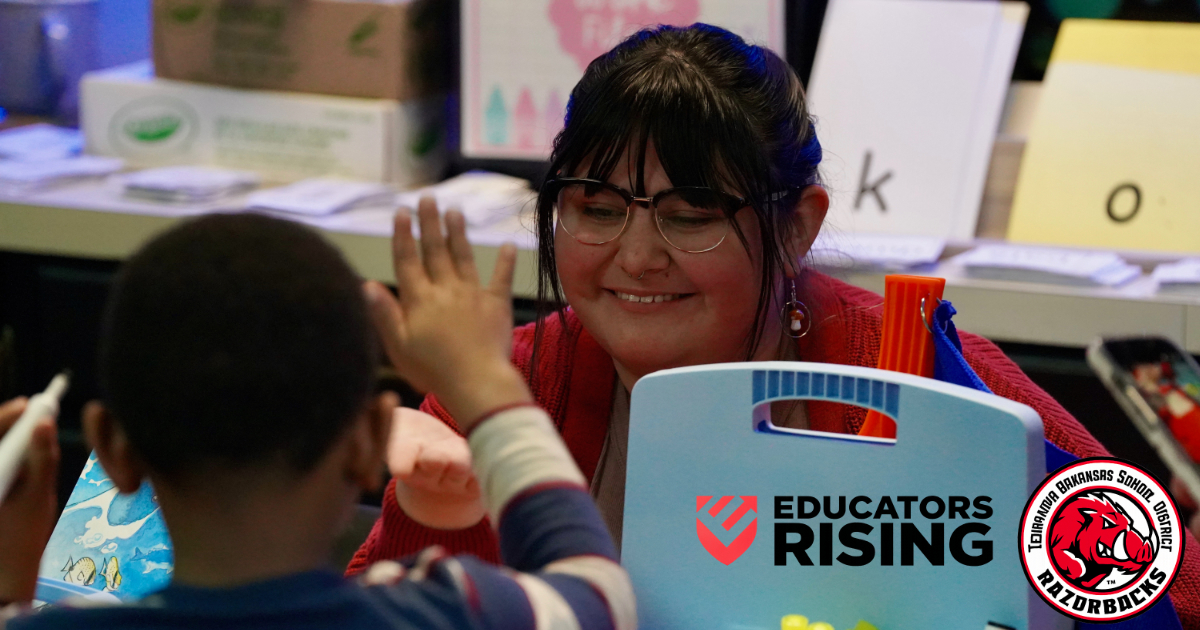
Arkansas High School’s Educators Rising program has shown promise at the state and national levels in its short time. This program highlights the importance of teaching to young, aspiring students who may be interested in education as a future career, on top of illustrating the basics of the job. One student, Josselyn Perez, has shown a deep passion and understanding for education as a career and will be competing in the Educators Rising Leadership Award competition.
“I think what drew me into teaching as a career was just growing up as the oldest of five kids,” explained Josselyn. “I ended up actually really liking it, and from there I started branching into volunteering and stuff like that.” While she took on the responsibility of raising four younger siblings, Josselyn began her interest in education. When she still lived in Angel Fire, New Mexico, she volunteered at local elementary schools whenever possible.
“At Moreno Valley Prep, the high school in Angel Fire, all students were taken to the elementary school on a few occasions to help with stuff like fall festivals and parent events,” said Josselyn. “After meeting the teachers there, I personally volunteered to help teach the students with special needs about the Socratic method, which is the system that our middle school and high school followed for lessons.”
When she moved back to Texarkana for her senior year, Josselyn quickly joined Arkansas High School’s Educators Rising program, which allows her to continue volunteering at elementary schools, this time at Trice Elementary, where she’s been able to go from merely volunteering to working alongside teachers. Since December, she’s been interning in Mr. Sworn’s kindergarten classroom.
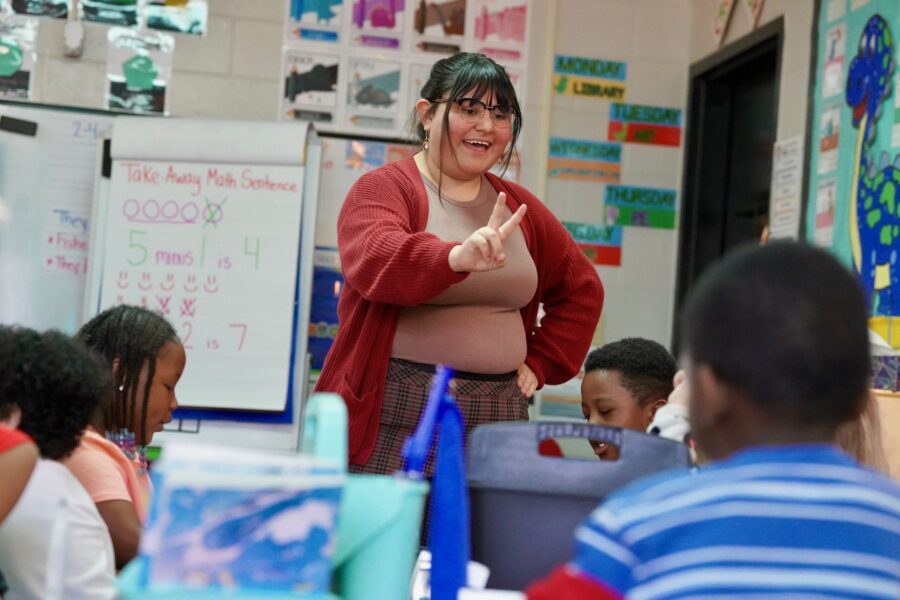
“Being in this classroom has been great for me,” Josselyn said. “I’ve learned so much about working with different types of kids. He has a few students with different accommodations in his classroom and being able to work with them before finalizing my project has been a wonderful experience. I get to understand the different types of accommodations that students normally need. Even students without accommodations have different learning styles. It’s not just special needs students that this project is going to impact, even though it was meant for them.”
Josselyn is on the autism spectrum and has struggled in some classes both in Arkansas and in New Mexico, where teachers didn’t differentiate their teaching style for any student, not just Josselyn. Her competition aims to find a way to make the classroom a safe space for all students, regardless of their learning style or needs.
The Educators Rising Leadership Award competition requires students to complete a service-learning project of at least 40 hours, submit a portfolio that includes an essay and five to eight artifacts demonstrating their work in the service, and give a presentation at the National Conference held this summer. The competition honors students who have completed significant voluntary community service. “I’ve already done extensive research into the different kinds of teaching methods that are used with different kinds of children, including those with special needs,” Josselyn said. “I’m going to be using this information to determine, out of the four that I was able to test, which teaching methods work best for students with special needs.”
Her project aims to show teachers and students with special needs that they can do the work presented to them and that “it’s not just that something’s wrong with them.” During her internship, she’s had one-on-one time with some students who have accommodations. Her ability to understand these students and the different minds that can be found in a classroom has helped her illustrate this point in her project. “I really want people to understand that they can do the work, and sometimes you just have to adapt to their method of learning,” Josselyn explained.
While her project shows great promise, Josselyn is aware of its limitations, as she’s only one person. Students with special needs or accommodations are looked down upon in some academic settings, not just in Arkansas or New Mexico, but worldwide. Her process is one that future educators could use in class and expand upon. “I really want it to show how students with special needs are just as capable of doing the work as every other kid; they just might need a little bit of help,” Josselyn expressed.
Along with Josselyn, 18 other students plan on competing at the state level on February 19. To support Arkansas High’s Educators Rising group, you can donate to the program through its current carwash ticket fundraiser. Contact instructor Monica McLelland at monica.mclelland@tasd7.net