

State audit flags Miller County bidding practices, $63,000 in Quorum Court bonuses
Report presented to lawmakers Thursday also details a personal vacation taken in a county vehicle and an $11,106 check fraud that was caught and recovered

TEXARKANA, Ark. — A state audit of Miller County’s 2024 finances found the county repeatedly failed to follow Arkansas bidding laws on construction projects, paid Quorum Court members $63,000 in retention bonuses that auditors say violated state law, and allowed the county assessor to use a county vehicle for a personal vacation without reimbursing taxpayers.
The findings are contained in Miller County’s Financial and Compliance Report for the year ended Dec. 31, 2024, prepared by Arkansas Legislative Audit and dated May 26, 2026. The report became public this week when it went before the Legislative Joint Auditing Committee’s standing committee on counties, which met Thursday, Aug. 13, in Little Rock.
Auditors said noncompliance with state law and accepted accounting practices was noted in three offices: the county judge, the treasurer and the assessor. The officials who held those offices during 2024 were County Judge Cathy Harrison, Treasurer Teresa Reed and Assessor Joyce Dennington.
Contract for Health Unit reroofing went to highest bidder — before bids were advertised
The most extensive findings concern how the county awarded construction contracts under Judge Harrison’s office. Auditors reviewed nine construction contracts and found the county did not comply with the state law governing competitive bidding on public construction work.
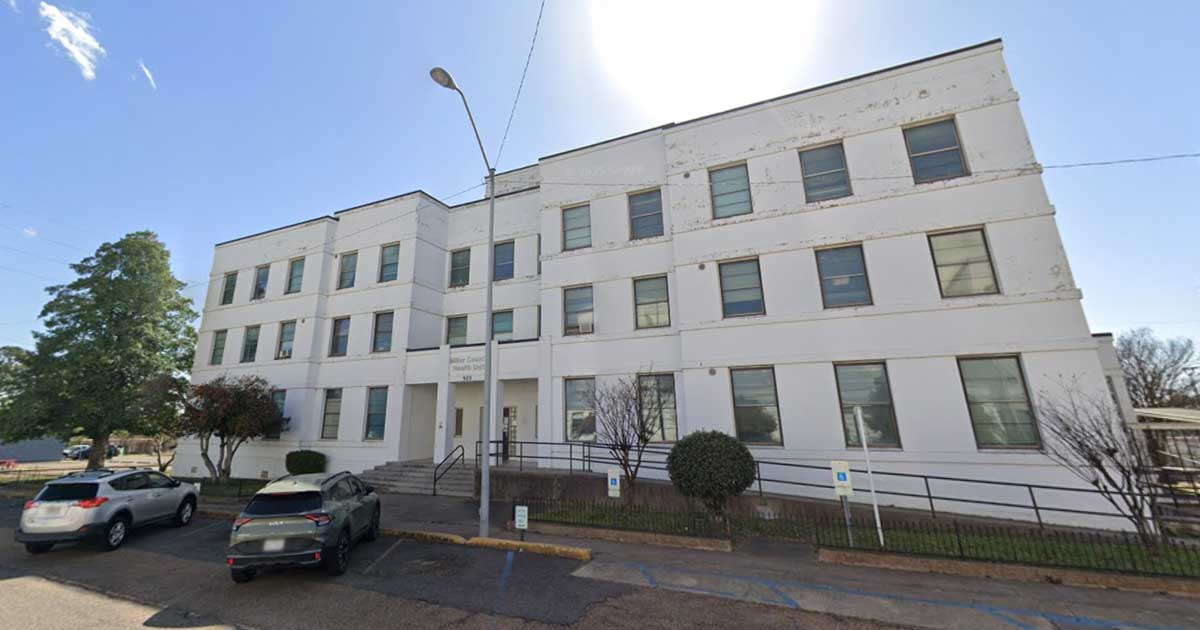
According to the report, the contract to reroof the Miller County Health Unit was executed before the county ever advertised for bids. A court order was later issued explaining why the company received the contract, but auditors noted pointedly that the company in question was the highest bidder on the project.
Article continues below
▼ Continue reading
For a second project — renovations to the Miller County Health Unit office — the county could not provide any bid documentation at all for the company that won the work.
Beyond those two projects, auditors found that three of the nine contracts reviewed were awarded based on quotes received before the county advertised for bids, effectively putting the cart before the horse in the competitive bidding process.
The report also cites a separate record-keeping failure: eight of the nine contracts reviewed were never recorded by court order and filed with the county clerk, as state law requires.
$63,000 in ‘retention incentive bonuses’ for Quorum Court members
Auditors also flagged payments made to the county’s own legislative body. Quorum Court members were paid retention incentive bonuses totaling $63,000 — $3,000 apiece — across 2024 and 2025, according to the report.
Those payments, auditors said, violate state law and the Arkansas Constitution, which govern how justices of the peace are compensated. The finding also points to an attorney general opinion addressing the legality of bonus payments to county officials.
Retention and recruitment bonuses became common across Arkansas local governments in the wake of the pandemic-era labor market, but state law tightly restricts how elected officials — as opposed to rank-and-file employees — may be paid. The audit does not indicate whether the county intends to seek repayment of the funds.
Assessor drove county vehicle 949 miles on personal vacation
In the assessor’s office, the report states that Dennington used a county vehicle to drive 949 miles for a personal vacation in June 2024.
According to an attorney general opinion cited by auditors, “the personal use of a county vehicle is permissible only when it is incidental to a use that fulfills a public purpose.” The value of the trip — $636, calculated using the IRS standard mileage rate — was neither added to the assessor’s reported wages nor reimbursed to the county, as IRS rules require for personal use of a government vehicle.
The assessor also acknowledged to auditors that the county vehicle does not display the Miller County seal, as county policy requires. Seal requirements on public vehicles exist in part so residents can identify official vehicles — and notice when they turn up somewhere they shouldn’t be.
An $11,106 check fraud — caught and recovered
The report’s treasurer finding involves the county as victim rather than violator. In January 2026, the county learned that an $11,106 check it had mailed to a vendor was fraudulently diverted into another bank account. The scheme came to light only after the vendor contacted the county to ask why it had never been paid.
A review found the county had authorized payment on the check even though the payee line had been altered. Once the county notified its bank, all of the funds were recovered, according to the report.
Altered-check fraud of this kind has surged nationally in recent years, and the episode ended without loss to taxpayers — but the report notes the county approved the altered check for payment before the vendor raised the alarm.
County finances otherwise on solid footing
Apart from the compliance findings, the unaudited financial statements in the report show Miller County ended 2024 in a stronger cash position than it began. The county’s general fund took in $9.8 million in revenue against $8.5 million in expenditures, and its fund balance grew from about $6.5 million to $7.9 million over the course of the year.
Law enforcement remains the county’s largest expense at nearly $4 million from the general fund alone, plus another $6.9 million from other funds — a category that includes operation of the Miller County jail, which generated $3.1 million in jail fees during the year. The county spent $4.6 million on highways and streets from its road fund.
What happens next
Arkansas Legislative Audit reports on county governments are presented to the Legislative Joint Auditing Committee, and under state law, all reports presented to the committee are matters of public record. Counties with findings are generally expected to address them, and repeat findings in future audit cycles draw increased scrutiny from the committee.
The full 36-page report, covering all county offices and funds, is available on the Arkansas Legislative Audit website at arklegaudit.gov under report ID LOCO04624.
This article is based on the Miller County, Arkansas Financial and Compliance Report for the year ended Dec. 31, 2024, issued by Arkansas Legislative Audit. The officials named have not yet been reached for comment.