

What Lies in Future for the Mavs’?

Dallas is staring at a future that feels equal parts exciting and uneasy: a franchise-defining trade still echoing around the league, a roster trying to find its footing, and a new face of the team emerging fast enough to keep hope alive even when the standings don’t cooperate. What comes next hinges on whether the Mavericks can turn turbulence into direction—building around what’s working, fixing what’s failing, and making sure the next era is defined by smart timing instead of rushed reactions.
The 2025-26 reality check
Dallas’ immediate future starts with accepting the current baseline. The Mavericks are living through the messy middle of a transition: the roster is talented enough to flash, thin enough to spiral, and young enough to make “development” a nightly priority. Results have matched the turbulence, with the season taking shape as a test of organizational patience—players learning roles, coaches juggling availability, and a fan base recalibrating expectations. The harsh part is that the West doesn’t give space for long experiments; every losing stretch becomes a referendum. The hopeful part is that these painful weeks are also where a new hierarchy forms, and where the next Mavericks identity—built around different strengths than the last era—starts to show itself.
The most concrete snapshot is the record: the Mavericks are 19-32 and 12th in the Western Conference in 2025-26. Their longest losing streak this season is six games, and they also carried an eight-game losing slide into All-Star timing. Being 4th in the Southwest adds extra sting because divisional opponents see you often and don’t let you hide weaknesses. There’s no pretending this is a contender’s profile, but there is value in clarity: Dallas can now judge every player, scheme, and decision through a single question—does it help the next great Mavericks team form, or is it just noise.
Cooper Flagg as the new franchise axis
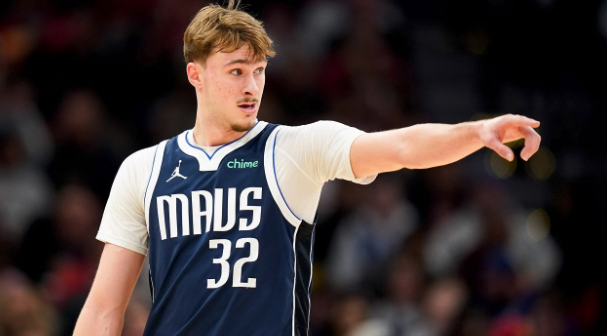
If the Mavericks’ future has a face, it’s Cooper Flagg. Dallas didn’t just draft a talented rookie; it drafted a timeline. With a roster in flux and a fan base needing a new emotional anchor, Flagg’s nightly production matters beyond the box score. His job isn’t simply to score—it’s to make losing stretches feel like they’re building toward something concrete. That’s why every hot streak, every tough fourth quarter, and every matchup against a star wing becomes part of the pitch for “why Dallas will be fine.” The organization’s next several years will be judged on how well it protects his health, shapes his responsibilities, and puts him next to complementary playmaking and rim pressure.
Flagg’s season production on the Mavericks’ official listing is loud: 48 games played, 20.3 points per game, 4.2 assists per game, and 6.6 rebounds per game. Even during the eight-game losing streak, he averaged 29.7 points, 7.6 rebounds, and 4.3 assists over that span, which is the kind of output that usually drags a team upward even when everything else is messy. He became the youngest player to score 30+ in four consecutive games, including a 32-point performance against San Antonio. Then came a 49-point explosion versus Charlotte, reported as a franchise rookie scoring record, stamping him as more than a “promising piece.”
The only thing that can slow this momentum is health. Dallas announced Flagg has a left midfoot sprain and will miss time through All-Star Weekend, which also ruled him out of the Rising Stars event. Dallas’ first game after the break is Feb. 20 at Minnesota, and how Flagg’s return is handled—minutes, workload, rhythm—will signal how carefully this franchise intends to build around him.
The Luka Dončić trade that reset everything
The biggest fork in the road wasn’t gradual—it was a shockwave. When Dallas moved Luka Dončić, the franchise didn’t just swap talent; it swapped identity and time horizon. That decision still hangs over everything: roster construction, fan trust, national perception, and how every future move is interpreted. Even if the organization believed it had reasons, the league rarely grants clean do-overs for trading a generational player in his prime.
The deal, reported as completed on February 2, 2025, was a three-team trade that also involved the Utah Jazz. The headline exchange sent Luka Dončić to the Los Angeles Lakers for Anthony Davis and others. At the time of the trade, Dončić had averaged 28.6 points per game for his career. A Lakers-focused report later described Dončić’s debut season in L.A. at 32.8 points per game, a sharp contrast that fuels constant comparison. Early reporting also noted he had been limited to 22 games that season amid injuries including calf issues, which formed part of Dallas’ reasoning at the time.
That blend of superstar output, injury context, and massive risk reshaped the Mavericks’ timeline. The franchise is now judged not by what Dončić was in Dallas, but by what Dallas becomes without him.
Jason Kidd and the continuity bet
Coaching is where transitions either become coherent or chaotic. Dallas chose continuity by extending Jason Kidd, signaling a desire for stability as the roster changes shape. A young star’s early years are heavily influenced by structure: how shots are generated, how accountability is enforced, and how roles are defined when veterans and rookies share the floor.
NBA.com reported the Mavericks agreed to a multiyear extension with Kidd, and ESPN likewise reported a multiyear extension dated Oct. 14, 2025. ESPN’s coverage included a statement from team governor Patrick Dumont praising Kidd’s “leadership, focus and positive energy.” The Mavericks’ staff list reflects experience, with assistants including Frank Vogel, Jay Triano, Popeye Jones, Phil Handy, Mike Penberthy, and Eric Hughes, along with development and support staff such as Josh Broghamer, Dru Anthrop, Keith Veney, Jordan Sears, and trainer Jana Austin. That depth of basketball knowledge must now translate into a clear, repeatable system built around Flagg’s strengths.
The roster snapshot and who fits next to Flagg
Future-building is about fit. Dallas’ roster currently blends veterans and developing players, and the franchise must determine which skill sets actually scale next to its young star.
The official roster page provides specific production snapshots. Klay Thompson is listed with 48 games played, averaging 11.6 points per game, 1.4 assists per game, and 2.4 rebounds per game. P.J. Washington is listed with 37 games played, averaging 14.1 points per game, 1.9 assists per game, and 7.1 rebounds per game. Marvin Bagley III is listed with 39 games played, averaging 10.3 points per game, 1.5 assists per game, and 5.8 rebounds per game. Moussa Cissé is listed with 30 games played, averaging 3.7 points per game, 0.2 assists per game, and 4.5 rebounds per game. In the 135-123 loss to San Antonio, Naji Marshall scored 32 points, matching Flagg’s 32-point output that night.
Dallas needs more than isolated scoring bursts. The next version of this team requires spacing, defensive versatility, and a secondary creator who can prevent defenses from loading up on Flagg.
Ownership, governance, and the direction message
A franchise’s future is shaped as much by leadership as by lineups. Dallas operates under a high-visibility ownership structure that carries financial and reputational weight.
ESPN’s Kidd extension story quotes team governor Patrick Dumont. Separate reporting noted that Mark Cuban retained 27% ownership after selling a majority share in late 2023, with a $3.5 billion valuation cited for the sale. Reporting also connected Patrick Dumont and Miriam Adelson to the controlling ownership group. Those numbers reflect expectation. A franchise valued at $3.5 billion is not meant to drift without purpose. Clear messaging and alignment across leadership levels will influence free-agent perception, fan trust, and overall credibility.
The cap and contract math that will shape the build
Roster building is ultimately about timing and numbers. One contract that still frames historical context is Luka Dončić’s 5-year, $215,159,700 deal, fully guaranteed, with an average annual salary of $43,031,940. Spotrac lists a 2025-26 salary and cap hit of $45,999,660, along with forward table figures of $49,800,000 in 2026-27, $53,784,000 in 2027-28, and $57,768,000 in 2028-29 with a player option.
Even though Dončić is no longer in Dallas, those figures illustrate how max-level contracts shape flexibility. Dallas’ advantage now is that Flagg is on a rookie-scale trajectory, giving the front office a window to add talent before future extensions compress financial breathing room.
Health, availability, and the cost of missing games
Continuity depends on availability. Flagg’s MRI confirmed a left midfoot sprain, sidelining him through All-Star Weekend. Dallas’ first game after the break is Feb. 20 at Minnesota, which becomes an early test of how smoothly the team can reset. In the 135-123 loss to San Antonio, Dallas had only 10 players available, illustrating how quickly rotations become survival exercises.
Looking back at the Anthony Davis chapter, one report described his Mavericks stint as 29 games with 18 injuries, a stark reminder of how durability can derail planning. Development requires repetition, and repetition requires health.
The fan economy and staying relevant
Rebuild seasons test relationships. Flagg’s 49-point performance and franchise rookie scoring record provided a jolt of energy that keeps fans invested even during losing stretches. Engagement extends beyond the court, intersecting with broader NBA culture, including betting conversations where a phrase like DraftKings sportsbook promo code naturally appears in modern fan dialogue.
The Mavericks must maintain credibility by showing tangible growth, not just marketing optimism. If the team’s identity becomes clear—defensive commitment, disciplined cap management, and intelligent roster building—fans will see direction even before the standings reflect it.
What the next 18 months should look like
The Mavericks’ trajectory depends on sequencing. Stabilize after the break beginning Feb. 20 at Minnesota. Clarify which players truly fit alongside Flagg long-term. Prioritize shooting and spacing. Add a legitimate secondary creator. Build a defense capable of traveling. Avoid panic reactions to six-game or eight-game losing streaks.
If Dallas treats Flagg’s development as the center of every decision and uses this transitional season as data rather than drama, the franchise can transform uncertainty into structure. The numbers are already written. What lies in future for the Mavs’? The answer will depend on how deliberately they write the next set.