

How to Listen to Police Scanners in 2026: Free Apps, SDR Dongles, the Best Radios and What Encryption Blocks

How to Listen to Police Scanners in 2026
Free apps, a $60 USB radio, or a real digital scanner: which one you need, how to find your local channels, what encryption blocks, and what the law says. Written by a newsroom that listens to police radio every night.
Police scanning at a glance
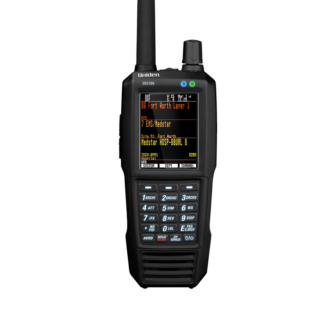
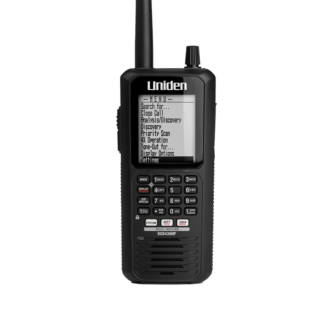
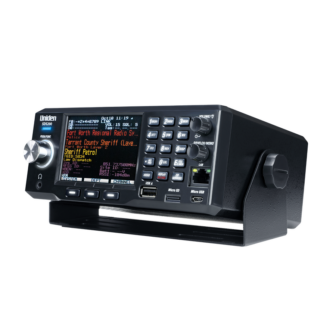
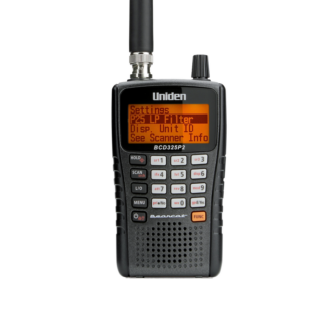
Amazon affiliate links. Why these four, and the free and $45 options, are all explained below.
First: is your local police radio encrypted? A two-minute test
Before you download anything or spend a dollar, find out whether your police department can be heard at all. More than 3,000 U.S. police, sheriff, fire and EMS agencies have encrypted some or all of their radio traffic, most of them since 2020, and no app, scanner or software can hear an encrypted channel. Here is how to check:
- Open RadioReference. Go to radioreference.com/db/browse, pick your state, then your county. This is the volunteer-maintained database every scanner and app draws from.
- Find your police department’s channels or talkgroups. Look at the “Mode” column. A means analog, D means digital, T means digital Phase II. If the mode says E or DE (encrypted), you cannot hear that channel. PE means partially encrypted: sometimes you can, sometimes not.
- Check Broadcastify. Go to broadcastify.com/listen, pick your state and county, and see whether a live feed exists for your police department and whether it is online. If your department encrypted recently, the feed description often says so.
What the result tells you
Dispatch is clear (A, D or T): everything in this guide works for you. Pick an option below. Dispatch is encrypted (E or DE): you will not hear police on any device. You can still usually hear fire, EMS, public works, state police, highway patrol and neighboring towns, which is often where the action is anyway. Partially encrypted (PE): dispatch is typically open and the tactical, detective and SWAT channels are not. That is the most common arrangement in the country today.
The four ways to listen, ranked by cost
You can listen to police radio four ways: a free scanner app or website that streams someone else’s scanner, a $40 to $70 software-defined radio dongle plugged into a computer, an analog scanner for around $110, or a digital scanner for $460 to $950 that hears every unencrypted channel in your area live. Which one you need depends on whether your agencies use analog or digital radio and how much you want to hear.
| Option | Cost | What you hear | Delay | Setup |
|---|---|---|---|---|
| App or website (Broadcastify, Scanner Radio, 5-0 Radio) | Free, or $30/yr for archives | Whatever a volunteer chose to stream, usually dispatch only | 15 seconds to 30 minutes | None |
| Software-defined radio (Nooelec SDR dongle + free software) | $40 to $100 plus a computer | Everything unencrypted, live, and it records every call | None | An hour or two, some technical comfort |
| Analog scanner (Uniden BC125AT) | About $110 | Only analog channels: rural fire, many EMS, aviation, weather, ham. Not most city police. | None | Keypad or PC programming |
| Digital scanner (Uniden BCD436HP, SDS100, SDS200) | $460 to $950 | Everything unencrypted, live, anywhere you carry it | None | Enter a ZIP code |
Disclosure: this guide contains Amazon affiliate links. If you buy through one, TXK Today earns a small commission at no extra cost to you, which helps pay for local reporting. We only recommend gear we would tell a friend to buy, and we say when we have not used something ourselves.
Free: police scanner apps and websites (and whether they actually work)
Scanner apps do work, with one big caveat: they do not receive radio signals. Every major app relays audio from Broadcastify, a network of roughly 7,000 feeds run by volunteers who plug their own scanners into the internet. If a volunteer in your county streams the police dispatch channel, you can hear it on your phone for free. If nobody does, or the department encrypted, the app has nothing to play. That is why the same app is great in one town and useless in the next.
The apps and sites worth using
- Broadcastify (web, and a mobile browser). The source. Browse by state and county, see listener counts and whether a feed is online. Premium ($30 a year) removes ads and unlocks a year of archives, so you can go back and hear what happened at 2 a.m.
- Scanner Radio (Android and iOS). The most popular front end for Broadcastify feeds. Its “top feeds now” list is the fastest way to find out where something big is happening in the country. Free with ads; a one-time Pro purchase removes them.
- 5-0 Radio (iOS). Same feed network, different interface, very popular during breaking news. Free with in-app purchases.
- Police Scanner X and Police Scanner Live (Android and iOS). More Broadcastify front ends. Fine, but nothing the two above don’t do.
- Broadcastify Calls and OpenMHz. Instead of a live stream, these store each transmission as its own clip, uploaded by hobbyists running software-defined radios. You can filter by talkgroup and jump back in time. Coverage is best in big metros.
- Citizen. Not a scanner app. It sends alerts written by staff who listen to scanners in a few dozen large cities, plus user reports. Useful for headlines, not for listening.
The catch with streams
- Delay. Expect 15 to 60 seconds behind real time, and feed owners can add up to a 30-minute delay at an agency’s request. Some do.
- Someone else’s selection. Most feeds carry dispatch only. Tactical, detective and car-to-car channels are usually left out on purpose.
- Feeds go down. A feed is one person’s scanner in one person’s house. Power fails, computers reboot, people move.
- Big incidents. Broadcastify may take a feed offline during a major event at an agency’s request, which is exactly when you most want it.
- “Is there a free app that works in my area?” Search your county on Broadcastify first. If there is no feed, no app will help, and you need your own radio (below).
Analog vs. digital: why the cheap scanner can’t hear police
If you had a scanner in the 2000s, you remember the crackle of analog FM. A radio transmitted a voice on one frequency, your scanner tuned to it, and you heard it. Rural volunteer fire departments, many ambulance services, businesses, railroads and aviation still work that way, and any cheap scanner can hear them.
Most police and fire departments no longer work that way. The majority of U.S. public-safety agencies, and nearly every city over about 50,000 people, now use digital radio, usually the public-safety standard called P25 (Project 25). Instead of sending a voice as a wave, a P25 radio turns it into data, and the receiving radio turns it back. An analog scanner tuned to a P25 channel hears a harsh buzzing noise and nothing else. That is the single most common reason a new scanner “doesn’t work.”
The digital flavors that matter when you shop
- P25 Phase I. The original digital standard, one conversation per channel (FDMA). Every digital scanner sold in the last 15 years decodes it.
- P25 Phase II. Newer, squeezes two conversations into one channel by taking turns thousands of times a second (TDMA). Most systems built since about 2015 use it, and older statewide systems are converting (Arkansas, for example, has set a 2031 deadline to retire Phase I radios). Any scanner you buy today must decode Phase II. Some models still on the market, like the Whistler WS1040 and WS1065, are Phase I only. Skip them.
- DMR and NXDN. Different digital standards used by businesses, schools, utilities, railroads and a growing number of small-town and county agencies that can’t afford P25. Most Uniden scanners decode these only with a paid add-on key ($50 to $60 each); Whistler’s TRX models include them.
- Encrypted P25. Any of the above can be encrypted. No scanner decodes that. See encryption.
Rule of thumb
Analog scanner: rural fire, many EMS services, aircraft, weather, ham radio, railroads, marine. Digital P25 Phase II scanner: all of that plus city police, sheriffs, city fire, state police and highway patrol on nearly every modern system. Look up your county on RadioReference; the “Mode” column tells you which you need.
Trunking, talkgroups and why it’s not just “a frequency”
Here is the second thing that changed. A modern public-safety system is trunked: the police department doesn’t own a frequency, it shares a pool of frequencies with every other agency on the system. A computer assigns whichever frequency is free the instant someone presses the talk button, and moves the conversation to another one a few seconds later. If dispatch is talking on frequency A and an officer calls in to run a plate, the second call goes out on frequency B. Efficient for the agencies, and it makes a plain frequency list useless.
What you follow instead is a talkgroup: a numbered virtual channel, like “34000, Police Dispatch.” A trunking scanner listens to the system’s control channel (a constant data stream that says which talkgroup is on which frequency right now) and hops along with the conversation automatically. You program the system once and pick the talkgroups you care about. Statewide systems in many states (Arkansas’s AWIN, Michigan’s MPSCS, Ohio’s MARCS, Texas DPS sites on the Austin-based GATRRS, and dozens more) work this way and carry hundreds of agencies each.
Simulcast, and why Uniden’s SDS scanners exist
Big systems transmit the same signal from several towers at once so that a radio works everywhere in the coverage area. That “simulcast” trick confuses older digital scanners, which hear the towers slightly out of step and produce garbled or missing audio. Uniden’s SDS100, SDS150 and SDS200 were built with a different receiver design (Uniden calls it True I/Q) specifically to fix this. If you live in or near a large metro, or travel with your scanner, the SDS models are the safe buy. In smaller markets with one or two tower sites, the older and cheaper Uniden models work fine.
How to find your local police scanner frequencies and talkgroups
“Police scanner frequencies by ZIP code” is one of the fastest-growing searches on this topic, and the answer is the same everywhere: RadioReference. It is the database behind every scanner app and every modern scanner’s built-in programming, maintained by thousands of hobbyists who log what they hear.
- Go to radioreference.com/db/browse and click your state, then your county.
- The county page lists conventional channels (a plain frequency, tone and mode for each agency) and links to any trunked systems that serve the county, with their talkgroup lists.
- For each agency note three things: the mode (analog, digital, Phase II, encrypted), the band (VHF around 150 MHz, UHF around 450 MHz, or 700/800 MHz for most big trunked systems), and the talkgroup or frequency.
- Free registration lets you download the whole county. A premium subscription ($30 a year, and included with Broadcastify Premium) lets Uniden’s Sentinel and Whistler’s EZ Scan software program a scanner from a ZIP code in one click.
A worked example: our own market
Texarkana sits on the Texas-Arkansas line, so it is a good illustration of how tangled this gets. The Texas-side police, fire and sheriff use a 700 MHz P25 trunked system whose core is in Austin (GATRRS). The Arkansas side uses the statewide AWIN system on 800 MHz. Because one center dispatches both cities, the main police dispatch talkgroup, 34000, is carried on both systems. Two Texas-side tactical talkgroups are encrypted; everything else is in the clear. LifeNet, the ambulance service, is still analog UHF. County volunteer fire departments are analog VHF. One county page on RadioReference tells you all of that in five minutes, and a Phase II scanner programmed by ZIP code hears all of it. Your county will have its own version of that story.
Frequencies and talkgroups change when agencies upgrade. If your scanner suddenly goes quiet, check the county page’s update log before assuming encryption.
Found what you were looking for?
Get trusted local news, helpful guides, event recommendations and community stories delivered to your inbox for free.
The $60 route: turn a laptop or Raspberry Pi into a police scanner with an SDR dongle
A software-defined radio, or SDR, is a USB stick that captures a slice of the radio spectrum and hands the raw signal to a computer, which does all the decoding in software. The hardware costs less than a tank of gas. Free, open-source programs then do what a $700 scanner does: follow a trunked P25 system, decode Phase I and Phase II, and play the talkgroups you pick, with a bonus no scanner can match: they can record every call, tag it by talkgroup and time, and keep it forever. This is how Broadcastify Calls and OpenMHz get their audio, and how our newsroom monitors two systems around the clock.
The trade-offs are real. There is no keypad, no battery and no speaker; it needs a computer (a laptop, an old desktop or a $60 Raspberry Pi) running all the time, plus an hour or two of setup the first time. It is a project, not a purchase. But if you are comfortable installing software, it is the most capable option on this page, and the cheapest way to hear digital police radio.
Hardware
Nooelec NESDR SMArt v5 Essentials Starter Kit
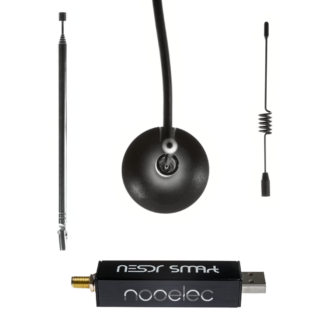
- Covers100 kHz to 1.75 GHz, which includes every public-safety band
- BandwidthUp to 3.2 MHz at a time
- IncludesSMArt v5 SDR (aluminum case, 0.5 ppm TCXO), Flamingo FM bandstop filter, 3 antennas, 10 RF adapters, carrying case
- Warranty2 years, made in the U.S. and Canada
This is the kit to buy. The FM bandstop filter is the part most beginners don’t know they need: strong FM broadcast stations overload cheap dongles and drown out weak police signals, and this filter blocks them. The adapters let you connect real scanner antennas (BNC, N, PL-259) without hunting for parts, and the temperature-compensated oscillator keeps the radio on frequency, which matters for digital decoding. We run the same SMArt v5 dongle in our own setup.
Nooelec NESDR SMArt v5 Bundle
- Covers100 kHz to 1.75 GHz
- BandwidthUp to 3.2 MHz at a time
- IncludesSMArt v5 SDR, telescopic antenna, magnetic-base antenna, adjustable dipole
The budget version of our pick: identical radio, three antennas, and about $20 less. You give up the FM bandstop filter and the adapter set, which you may end up buying separately if a strong FM station sits between you and the police tower. Either way, avoid the $12 no-name clones, which overheat and drift. One more note on any of these dongles: the 2 to 3 MHz window matters. A trunked system’s frequencies must fit inside it for one dongle to follow the control channel and the voice channels. Many small systems do; big ones need two dongles (SDRTrunk handles them automatically) or the Airspy below.
Airspy Mini
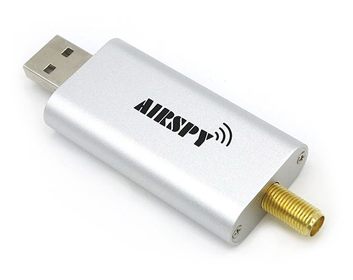
- Covers24 MHz to 1.8 GHz
- Bandwidth6 MHz, enough to cover most trunked sites with one device
- WhyMuch cleaner receiver than a $30 dongle; hears weak sites without garbling
One Airspy covers an entire local trunked site at once, so you never miss a call. TXK Today runs two, one per system, 24 hours a day. Buy direct from the maker; Amazon stock is unreliable. Its big brother, the Airspy R2 (about $199), widens the window to 10 MHz for the largest systems.
SDRplay RSP1B
- Covers1 kHz to 2 GHz
- BandwidthUp to 10 MHz
- NoteCheck that your software supports it; SDRTrunk does
Comparable to the Airspy, favored by shortwave listeners for its low-frequency coverage. Watch for knockoffs on Amazon; buy from SDRplay’s listed resellers.
Software (all free)
| Program | Runs on | What it does | Who it’s for |
|---|---|---|---|
| SDRTrunk | Windows, Mac, Linux | Follows trunked P25 (Phase I and II), DMR, NXDN and analog systems; plays, records, and can upload calls to Broadcastify Calls. Imports the RadioReference database. | Beginners. Start here. |
| trunk-recorder | Linux, Mac, Docker | Records every call on a system as a separate audio file with metadata. No live listening interface of its own. | Archiving, feeding OpenMHz or Broadcastify Calls, automation. This is what our newsroom runs. |
| DSDPlus + Unitrunker | Windows | The classic pairing: Unitrunker reads the control channel, DSDPlus decodes the voice. The paid “Fastlane” tier adds ProVoice and faster updates. | Windows hobbyists who like knobs. |
| OP25 | Linux | P25 decoder built on GNU Radio; powers most Raspberry Pi scanner builds. | Linux tinkerers. |
| SDR++ / SDR# | All / Windows | General-purpose receivers with a waterfall display. Great for analog (fire, EMS, air) and for seeing what’s on the air. They don’t follow trunked systems by themselves. | Exploring the spectrum. |
The Raspberry Pi scanner build
A Pi 4 or Pi 5, a Nooelec dongle and trunk-recorder or OP25 make a $120 to $150 box that quietly records every police and fire call in the county to a hard drive, and can stream them to your phone. Search “rtl-sdr police scanner raspberry pi” and you will find a dozen step-by-step builds; the RTL-SDR Blog site has the best-maintained one. Budget an evening.
One more time, because people ask: no SDR software decodes encrypted P25. The math doesn’t allow it and the law doesn’t either.
Best police scanners in 2026: what actually matters
Scanner marketing is a fog of acronyms. The checklist is short:
- P25 Phase II decoding, out of the box. Non-negotiable for police in most of the country.
- Database programming. Uniden’s HomePatrol-style units and Whistler’s TRX line load the whole RadioReference database; you enter a ZIP code and start listening. Keypad-programmed models save money but cost you an evening.
- Handheld or base? A handheld goes in the truck and on the nightstand. A base/mobile unit has a bigger speaker, runs on 12 volts or a wall adapter, and takes an outdoor antenna more easily.
- True I/Q (Uniden SDS series) if you live in or near a big metro with simulcast systems, or travel with the scanner. Otherwise optional.
- DMR/NXDN keys only if your county page on RadioReference shows those modes. Uniden sells them for $50 to $60 each; Whistler includes them.
- Analog-only scanners (under $150) will not hear digital police. They are fine for rural fire, EMS, aviation and weather, and as a first scanner for a kid.
Handheld scanners
Prices are approximate as of September 2026 and move often; the button shows the current price. Amazon affiliate links.
Uniden SDS100
- DecodesAnalog, Motorola/EDACS/LTR trunking, P25 Phase I and II
- Add-onsDMR ($60), NXDN ($50), ProVoice keys optional
- ProgrammingZIP code via free Sentinel software, RadioReference database built in
- SimulcastTrue I/Q receiver, the best there is
Released in 2018 and still the benchmark. Weather-resistant, color display, works on every P25 system in the country including the big simulcast metros. Its firmware is still being updated (last in March 2026).
Uniden SDS150
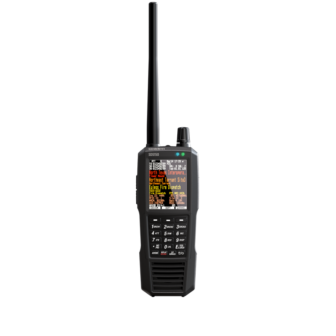
- DecodesSame as SDS100, plus the Waterfall display included
- NewBuilt-in GPS, Bluetooth with the U/AWARE phone app, USB-C, charging cradle
- ProgrammingZIP code via Sentinel
- SimulcastTrue I/Q
GPS is genuinely useful if you drive a lot: the scanner switches systems as you cross into new counties. Early firmware bugs were fixed in the March 2026 update. Wait for a sale unless you need GPS; the SDS100 does the same listening for $250 less.
Uniden BCD436HP
- DecodesAnalog, Motorola/EDACS/LTR, P25 Phase I and II
- Add-onsDMR, NXDN, ProVoice keys optional
- ProgrammingZIP code via Sentinel
- SimulcastOlder receiver; fine in most markets, struggles in big simulcast cities
Everything you need for digital police radio for about $200 less than an SDS100. Records audio to an SD card. If your county page on RadioReference shows a single-site system, this is the sensible buy.
Uniden BCD325P2
- DecodesAnalog, Motorola/EDACS/LTR, P25 Phase I and II
- Add-onsDMR and ProVoice keys optional
- ProgrammingKeypad, or free PC software; no ZIP-code database
- SimulcastOlder receiver
The least expensive new scanner that hears digital police. Small enough for a shirt pocket. You’ll spend an evening entering talkgroups from RadioReference, and you’ll get to know your system in the process.
Whistler TRX-1
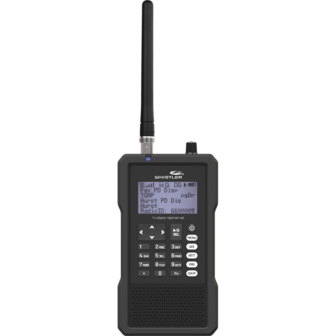
- DecodesAnalog, Motorola/EDACS/LTR, P25 Phase I and II, DMR, NXDN, all built in
- ProgrammingZIP code via free EZ Scan software
- SimulcastWeak; poor in simulcast metros
Whistler shut down in October 2024 and was revived by new owners in 2025, with production and database updates restarted, so this is a live product again. The draw is that DMR and NXDN come free, which matters if your county’s smaller agencies use them.
Uniden BC125AT
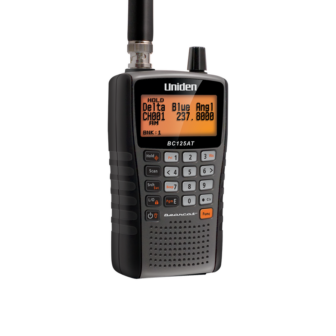
- DecodesAnalog conventional only. No trunking, no digital.
- ProgrammingKeypad or free PC software
- HearsRural fire, many EMS services, airports, NOAA weather, ham radio, railroads, and police in the shrinking number of towns still on analog
Listed so you know what it is: the popular cheap scanner that people buy and then ask why they can’t hear the police. In most places it can’t. It is a good analog radio for the rural fire departments and the airport, and a good first scanner for a kid.
Base and mobile scanners (home, shop, truck)
Uniden SDS200
- DecodesAnalog, Motorola/EDACS/LTR, P25 Phase I and II; DMR/NXDN keys optional
- ProgrammingZIP code via Sentinel; Ethernet port for remote control
- Power12 V (truck) or included AC adapter
For a kitchen counter, a shop or a wrecker cab. Loud speaker, big color display, takes an outdoor antenna, and you can stream it to your phone at home over your network.
Uniden BCD536HP
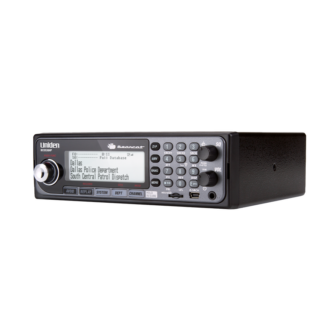
- DecodesAnalog, Motorola/EDACS/LTR, P25 Phase I and II; keys optional
- ProgrammingZIP code via Sentinel
- ExtraBuilt-in Wi-Fi so you can listen and control it from a phone in the house
The base version of the 436HP. Same trade-off: about $100 less than the SDS200, older receiver, fine outside the big simulcast metros.
Whistler TRX-2
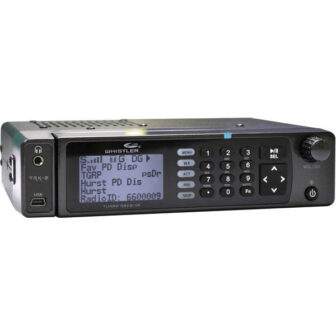
- DecodesAnalog, trunking, P25 I and II, DMR, NXDN, all built in
- ProgrammingZIP code via EZ Scan
Same case for it as the TRX-1: no keys to buy. Same caution about simulcast performance.
Don’t buy these for digital police
The Whistler WS1040 and WS1065 are still sold around $370 to $390 and look like a bargain. They decode P25 Phase I only, with no upgrade path. Any “police scanner” under $200 on Amazon is analog-only, no matter what the listing says about “digital display.” Used scanners from before 2013 (Uniden BCD396XT, BCD996XT, Radio Shack PRO-series) are Phase I only. And a Baofeng ham handheld, which comes up constantly in this search, is an analog transmitter with a poor receiver: it cannot hear digital police, and transmitting on public-safety frequencies with it is a crime.
Antennas: the upgrade that actually helps
The rubber antenna in the box is a compromise. A $25 antenna tuned for the band your system uses will do more for reception than any feature on the scanner. Two things to check first: the connector (Uniden SDS models and the 436HP use SMA; the 325P2, BC125AT and Whistlers use BNC) and the band. Most big trunked systems live at 700/800 MHz; many rural and older systems are VHF around 150 MHz. Many cheap “scanner antennas” are tuned for ham radio at 144 and 440 MHz and are barely better than stock at 800.
Remtronix 800 MHz whip
- FitsSMA (SDS100/150, BCD436HP); BNC version available for the others
- Bands700/800 MHz optimized, plus VHF/UHF
The standard recommendation on scanner forums for 700/800 MHz trunked systems. Noticeably better range on a distant tower site.
Diamond RH77CA
- FitsBNC (325P2, BC125AT, Whistler); adapter for SMA
- BandsBest at VHF/UHF, adequate at 800
A big improvement over stock for VHF fire, EMS and rural police channels, and aviation. If your county is mostly VHF, this is the one. For an 800 MHz system, get the Remtronix.
Tram 1089 magnet-mount
- BandsVHF, UHF and 800 MHz
- Cable10 feet, BNC connector (SMA adapter for the SDS/436)
A small magnet on the roof beats any handheld antenna inside a vehicle, where the metal body blocks half the signal.
Tram 1410 discone
- Bands25 to 1300 MHz receive; everything in this guide
- MountAny mast or eave; needs coax (RG-6 or LMR-240) run inside
For a base scanner or an SDR. Put it on the roof or a fence post with 50 feet of coax and you’ll hear the next county over as clearly as downtown.
Encrypted police radio: what you can and cannot hear
No. You cannot listen to encrypted police radio with a scanner, an app, a software-defined radio or any “decoder” sold online. Encrypted P25 traffic is scrambled with a key (usually AES-256, the same grade banks use) that lives only in the agency’s radios. A scanner will show the talkgroup is active and play silence. Decrypting it without the key is not technically feasible, and attempting to intercept it is a federal felony. Anything marketed as an “encrypted police scanner app” or “encryption decoder” is either relaying an unencrypted feed or a scam.
How much of the country is affected
This is the story of the last five years. A tracking project, policeradioencryption.com, counted more than 3,000 fully or partly encrypted police, sheriff, fire and EMS agencies by spring 2026, more than 85 percent of them having switched since 2020. Big departments that have gone fully dark include New York City (2023), Denver, Las Vegas, Baltimore, Washington, D.C., and Virginia State Police, among others; Seattle encrypted its tactical channels in 2026 and Fairfax County, Virginia is moving its main dispatch channels to encryption. Texas examples include Austin, Bell County and, in December 2025, all of Brazos County, which went fully encrypted without public notice. Bexar County has been encrypted for decades and issues receive-only radios to newsrooms.
Two things soften that picture. First, partial encryption is far more common than full encryption: most agencies encrypt detective, tactical and SWAT channels and leave dispatch open, which is where most of what you want to hear happens. Second, fire and EMS traffic is still overwhelmingly in the clear, along with public works, schools, state highway patrols in most states, and neighboring towns. Even in a fully encrypted city, a scanner is rarely silent.
No, there is no federal encryption mandate
A claim circulating in 2026 says all police radio must be encrypted by an October 2026 federal deadline. It is false. There is no federal law, FCC rule or grant condition requiring encryption. The decision belongs to each agency (or, on statewide systems, each agency on the system; Arkansas’s AWIN policy, for example, says agencies that choose to encrypt do not even need to ask the state). Departments that encrypt usually cite officer safety and the spread of scanner apps; press groups counter that dispatch channels have been public for 70 years without incident and that encryption removes the public’s only real-time window into policing. Colorado now requires fully encrypted agencies to adopt a media-access policy; New York City passed the first big-city law requiring press access to encrypted police radio in January 2026. Most states have no such rule.
How to tell if your department encrypted: the RadioReference county page (mode E, DE or PE), the Broadcastify feed description, and your local news, which usually reports it. If your scanner went silent last week and the county page’s update log shows “encryption” edits, that is your answer.
Is it legal to listen to a police scanner?
Yes. Listening to police, fire and EMS radio is legal in every U.S. state. The federal wiretap law (the Electronic Communications Privacy Act, 18 U.S.C. § 2511) expressly permits intercepting “any governmental, law enforcement, civil defense, private land mobile, or public safety communications system, including police and fire, readily accessible to the general public.” State laws mirror it; Arkansas even has a statute titled “Scanners not prohibited.” The restrictions are narrow and worth knowing:
- Encrypted and cellular traffic are off limits. The same federal law defines a transmission that is “scrambled or encrypted” as not readily accessible. Decrypting one, or listening to cell phone calls, is a federal offense punishable by up to five years. (The FCC repealed its 30-year-old rule requiring scanners to block cellular bands effective March 27, 2026, but the listening ban in the wiretap law did not change.)
- Scanners in vehicles. Five states restrict having an operating scanner in a car: Indiana, Kentucky, Florida, Minnesota and New York, generally with exemptions for licensed ham radio operators and, in some, for people with a permit. A few other states have narrower rules. Everywhere else, including Texas and Arkansas, a scanner in the truck is legal.
- Using a scanner to commit a crime. Many states add a penalty enhancement if you use a scanner while committing or fleeing a crime. That is the only way ordinary possession becomes a problem.
- Transmitting is different. Scanners only receive. Keying up on a public-safety frequency without authorization, or jamming one, is a state and federal crime.
- What you do with what you hear. Radio traffic is unverified, real-time information. Names, plates, medical details and addresses go out over the air routinely. Reposting them can cause real harm and, depending on content, legal exposure. Our newsroom’s rule: scanner traffic is a tip, not a source. We confirm before we publish.
Laws change and this is not legal advice. Search “[your state] scanner law” on the RadioReference wiki for current statutes before mounting one in a vehicle.
What you’ll actually hear, and how to understand it
The first night is confusing. Dispatch calls out unit numbers, addresses and codes; officers answer in clipped phrases; long silences give way to bursts of six people talking. It makes sense within a week. A few things that help:
- Dispatch vs. everything else. The dispatch talkgroup is where calls are assigned and where you hear what is happening. Car-to-car, tactical and “info” channels are where officers coordinate on a scene, run plates and check warrants. Start with dispatch only and add channels as you learn the rhythm.
- Codes vary by agency. Ten-codes (“10-4”) differ from department to department, and many agencies have moved to plain language since the 2000s. Signal codes, penal-code numbers and unit-numbering schemes are all local. RadioReference’s wiki has code lists by state and agency.
- Fire and EMS are worth listening to. Structure fires, wrecks and medical calls are dispatched with the address and nature of the call, and fireground channels carry the whole operation. On most nights there is more happening on fire dispatch than on police.
- Build a favorites list. On Unidens, a Favorites List with just your local talkgroups keeps the scanner from wandering off to the next county during a busy night.
How a newsroom listens: our setup
We wrote this guide because we do this every day. TXK Today runs two Airspy software-defined radios, one on each of the two trunked systems that serve our market, feeding a small computer running trunk-recorder. Every unencrypted call on the police, sheriff and fire talkgroups is recorded as its own clip and transcribed automatically by speech-recognition software. An AI model reads the transcripts each hour and flags the calls that matter: shootings, pursuits, structure fires, major wrecks, missing persons. A person checks before anything is published. The overnight traffic becomes a scanner report in our morning newsletter, and we upload the main dispatch talkgroups to Broadcastify Calls so anyone can play back individual transmissions. The receiver side of all that cost less than one SDS100, and every piece of software is free.
Why can’t I hear police on my scanner? Troubleshooting
| Symptom | Likely cause | Fix |
|---|---|---|
| Harsh buzzing or a digital “motorboat” noise instead of voices | Analog scanner on a digital channel | You need a P25 scanner. No setting fixes this. |
| Scanner shows the talkgroup is active but plays silence | Encrypted talkgroup | Nothing can be done. Check RadioReference for E/DE flags; listen to the channels that are still clear. |
| Everything was fine, then it went quiet last week | Agency changed systems, moved talkgroups, or encrypted | Update the database (Sentinel/EZ Scan) and read the county page’s update log. |
| Garbled, choppy audio that comes and goes on a digital system | Simulcast distortion on an older scanner | Try a different tower site in the scanner’s settings, or move to an SDS-series unit. |
| Hear fire but never police on the same system | Police talkgroups are locked out, avoided, or encrypted | Check the scanner’s avoid/lockout list first, then the encryption flags. |
| Weak or no signal indoors | Stock antenna, wrong band, or you are far from the tower | Antenna tuned for your system’s band; move near a window; outdoor antenna for a base. |
| App plays nothing, or plays a different town | No feed for your agency, or the feed is offline | Look up your county on Broadcastify. If there is no online feed, you need a radio. |
| App audio is minutes behind what you see happening | Feed operator added a delay at the agency’s request | Normal for that feed. A scanner or SDR has no delay. |
Frequently asked questions
Can civilians listen to police scanners?
Yes. Federal law specifically allows anyone to listen to unencrypted police, fire and public-safety radio, and every state permits it. The only exceptions are encrypted channels and cell phone calls, which no scanner can receive anyway.
Can you still listen to police scanners in 2026?
In most of the country, yes. More than 3,000 agencies have encrypted some or all of their traffic, but the majority of U.S. police dispatch channels are still in the clear, and fire and EMS almost always are. Check your county on RadioReference to see what is open near you.
Is there a way to listen to a local police scanner for free?
Yes, if a volunteer streams your area. Open Broadcastify or the Scanner Radio app, choose your state and county, and play the feed. If no feed exists for your agency, the cheapest option is a USB SDR dongle ($40 to $70) and free software on a computer.
Do police scanner apps actually work?
They work where a volunteer runs a Broadcastify feed and the agency is unencrypted. Apps do not receive radio themselves; they stream someone else’s scanner, usually 15 to 60 seconds behind and sometimes delayed 30 minutes at an agency’s request.
Which police scanner app is actually free?
Scanner Radio (Android and iOS), 5-0 Radio (iOS) and Broadcastify’s own website are free with ads. Paid tiers remove ads and add archives; they do not add channels that the free version can’t hear.
Can you listen to encrypted police radio?
No. Encrypted P25 traffic cannot be decoded without the agency’s key, and no scanner, app, SDR or “decoder” sold online can do it. Attempting to intercept encrypted transmissions is a federal crime under 18 U.S.C. § 2511.
Is it illegal to listen to a police scanner while driving?
In most states, no. Indiana, Kentucky, Florida, Minnesota and New York restrict operating scanners in vehicles, usually with exemptions for licensed amateur radio operators. Check your state’s current statute before mounting one in a car.
How do I find local police scanner frequencies by ZIP code?
Use RadioReference (radioreference.com/db/browse), pick your state and county, and read the mode and frequency or talkgroup for each agency. Modern scanners from Uniden and Whistler load that same database and program themselves when you enter a ZIP code.
What is the best handheld police scanner in 2026?
The Uniden SDS100 (about $700) for anyone in or near a large metro, because its True I/Q receiver handles simulcast systems. The Uniden BCD436HP (about $500) does the same listening in smaller markets. The SDS150 (about $950) adds GPS and Bluetooth.
What is the cheapest way to listen to digital police radio?
A USB software-defined radio with the free SDRTrunk program on a computer: the Nooelec NESDR SMArt v5 Essentials kit (about $60 to $70, our pick) or the basic SMArt v5 bundle (about $45). Either decodes P25 Phase I and II and can record every call. The cheapest standalone scanner that hears digital police is the Uniden BCD325P2 at about $460.
Are police scanner feeds live or delayed?
Online feeds run 15 to 60 seconds behind real time, and some are deliberately delayed up to 30 minutes at an agency’s request. A scanner or SDR you own has no delay.
Why aren’t all police radios encrypted?
Encryption costs money, complicates mutual aid with neighboring agencies that don’t share keys, and draws public and press opposition. Many agencies compromise by encrypting tactical and investigative channels and leaving dispatch open.
Sources and further reading
- RadioReference database and wiki; Broadcastify; OpenMHz.
- Law: 18 U.S.C. § 2511; 18 U.S.C. § 2510(16); Ark. Code § 5-36-307; Texas Penal Code §§ 16.02 and 38.152; FCC 25-85 (repeal of 47 CFR 15.121, effective March 27, 2026); state scanner-law summaries on the RadioReference wiki.
- Encryption: policeradioencryption.com tracking map (2026); Texas Association of Broadcasters; KBTX (Brazos County, Dec. 2025); Seattle Police Department; Fairfax County Board of Supervisors (Mar. 2026); Arkansas Department of Public Safety, Encryption Considerations for Agencies Using AWIN; AWIN Phase II announcement (Feb. 2026).
- Hardware: manufacturer pages at uniden.com, whistlergroup.com, rtl-sdr.com, airspy.com, sdrplay.com; RadioReference forums; TXK Today’s own monitoring setup.
- TXK Today archives: Listen in on live police, fire and EMS radio traffic (2014); Texarkana switches to a new digital public safety radio system (2017).
Prices, encryption status and app details are as published in September 2026 and change without notice. Product links are Amazon affiliate links; prices shown are approximate and the retailer’s price at checkout controls. Nothing here is legal advice.
This guide is part of the TXK Today Guides series: plain-language explainers from a working newsroom. Spot an error, a changed law, or an app we missed? Email [email protected].