


Comparative Analysis: Air-Cycle Technology vs. Vapour-Compression Systems

Cooling is essential for human comfort and industrial processes, yet many current methods contribute heavily to climate change. As countries aim to reduce carbon emissions, the inefficiencies and environmental issues of traditional vapour-compression systems must be reassessed.
This comparative analysis explains the core differences, operational features, and climate impacts of Air-Cycle (AC) and vapour-compression technologies, marking an important shift in the field of thermal management. It also explores how emerging manufacturers such as mirai-intex.com are advancing air-cycle applications for industrial and commercial use.
The Dominance of Vapour-Compression
Vapour-compression refrigeration has been the main cooling technology for over a hundred years. Its popularity is due to a balance between efficiency, cost, and availability. It operates through the repeated compression and expansion of a refrigerant, transferring heat from a cooler area to a warmer one. This process depends on four key parts:
- the evaporator
- the compressor
- the condenser
- the expansion valve
The refrigerant changes from liquid to vapour and back, absorbing heat at low pressure and releasing it at high pressure. This system is used almost everywhere, from home air conditioners to large industrial chillers.
However, relying on vapour-compression systems creates major environmental and operational challenges. The main issue lies in the greenhouse gases used as refrigerants. Hydrofluorocarbons (HFCs), although they do not harm the ozone layer, have Global Warming Potential (GWP) levels thousands of times higher than carbon dioxide.
Air-Cycle Technology
A growing, environmentally friendly alternative is the air-cycle refrigeration system. Based on the reversed Brayton cycle, it uses air (called R-729) as the working fluid, removing the need for chemical refrigerants. This makes Air-Cycle (AC) systems a zero-GWP solution that fully complies with modern environmental agreements such as the Kigali Amendment.
An air-cycle system typically includes a compressor, a heat exchanger (or recuperator), an expander (or turbine), and another heat exchanger. The air is compressed, cooled in the recuperator, then expanded through a turbine, which lowers its temperature and allows it to absorb heat. The air then passes back through the recuperator to cool the incoming compressed air, improving system efficiency.
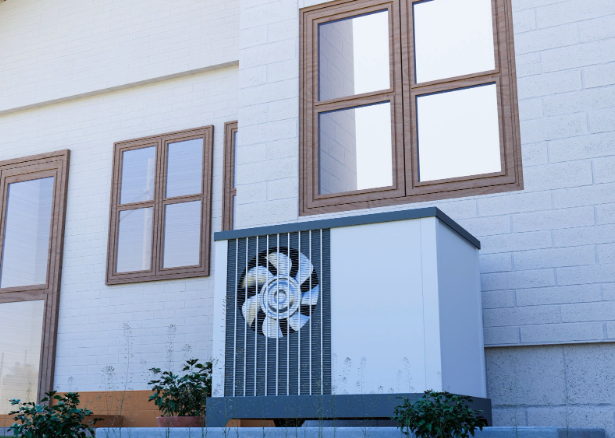
Recent improvements in turbine design, materials, and control systems have greatly increased the performance of air-cycle technology. Modern systems can achieve competitive Coefficients of Performance (COP), particularly in industries requiring extremely low temperatures or stable performance in difficult environments.
Comparative Performance and Environmental Footprint
A direct comparison of these two technological paradigms shows distinct advantages and disadvantages across critical performance indicators.
| Feature | Vapour-Compression Systems | Air-Cycle (AC) Technology |
| Working fluid (refrigerant) | HFCs (high-GWP synthetic chemicals), HFOs (low-GWP), or natural refrigerants. | Air (R-729), an inert atmospheric gas. |
| Direct emissions (GWP) | High to moderate (Leaks of HFCs are severe greenhouse gas contributors). | Zero (Release of air is environmentally benign). |
| Operational principle | Phase change cycle (Evaporation and condensation). | Gas cycle (Reversed Brayton cycle of compression and expansion). |
| Energy efficiency (COP) | High under standard, steady-state conditions. | Competitive in modern systems; superior for cryogenic or ultra-low temperature requirements. |
| Maintenance & safety | Requires specialised handling for dangerous refrigerants; systems must be monitored for leaks. | Refrigerant-free maintenance; highly reliable with no chemical safety risks. |
| Best application | Homes, cars, and general commercial air conditioning and refrigeration. | Industrial processes, ultra-low temperature requirements, and data centre cooling. |
Decarbonisation and Smart Integration
The effective integration of cooling technology into a decarbonised energy system presents a significant challenge extending beyond mere system efficiency. Cooling appliances must function as smart, flexible loads capable of interacting beneficially with renewable-dominated electrical grids.
System flexibility allows for the management of peak demand, a crucial factor in maintaining grid stability when solar and wind generation are variable. Heat pumps, which operate on the vapour-compression cycle but can be powered entirely by renewable electricity, are already playing a significant role in this transition.
Air-cycle systems, with their inherent safety and robust operation, are particularly well-suited for integration with industrial heat recovery loops and distributed energy generation. Their application in the cold chain further supports the global effort to reduce food loss, which itself contributes approximately 8% of global greenhouse gas emissions.
Addressing cooling requires a holistic approach that simultaneously tackles direct emissions, indirect emissions, and system flexibility:
- Systems must be controllable to consume energy during off-peak hours or periods of high renewable energy availability.
- Coupling cooling units with thermal storage (e.g., chilled water, ice) allows cooling production when electricity is cheapest or cleanest, then drawing from storage as needed.
- Industrial systems should be designed to capture and reuse waste heat generated by compressors or turbo-machinery, improving overall process efficiency.
- Advanced controls and Artificial Intelligence (AI) are essential for predicting thermal loads, optimising refrigerant charging (in VC systems), and modulating compressor speed for peak efficiency.
The Climate-Aligned Trajectory
The decision between air-cycle and vapour-compression technologies will shape global climate progress. Vapour-compression systems are improving with newer, lower-GWP refrigerants and higher energy efficiency, yet their dependence on chemicals continues to pose risks. Air-cycle systems, in contrast, offer a permanent, refrigerant-free approach aligned with long-term decarbonisation goals.
Ongoing investment in air-cycle research has produced durable and efficient systems suitable for critical industrial and commercial uses. Organisations focused on sustainability, energy security, and stable long-term costs are beginning to see the clear advantages of using air-cycle systems. As the global temperature continues to rise, cooling technologies must evolve to reduce emissions rather than add to them.
–In collaboration with mirai-intex.com