

Dalby-led panel weighs home detention for older inmates, automatic record sealing as Arkansas looks past new prison
Four draft bills got six hours of testimony Monday but no votes. The Texarkana Republican's committee meets again Nov. 10, and bills can be filed starting Nov. 16.

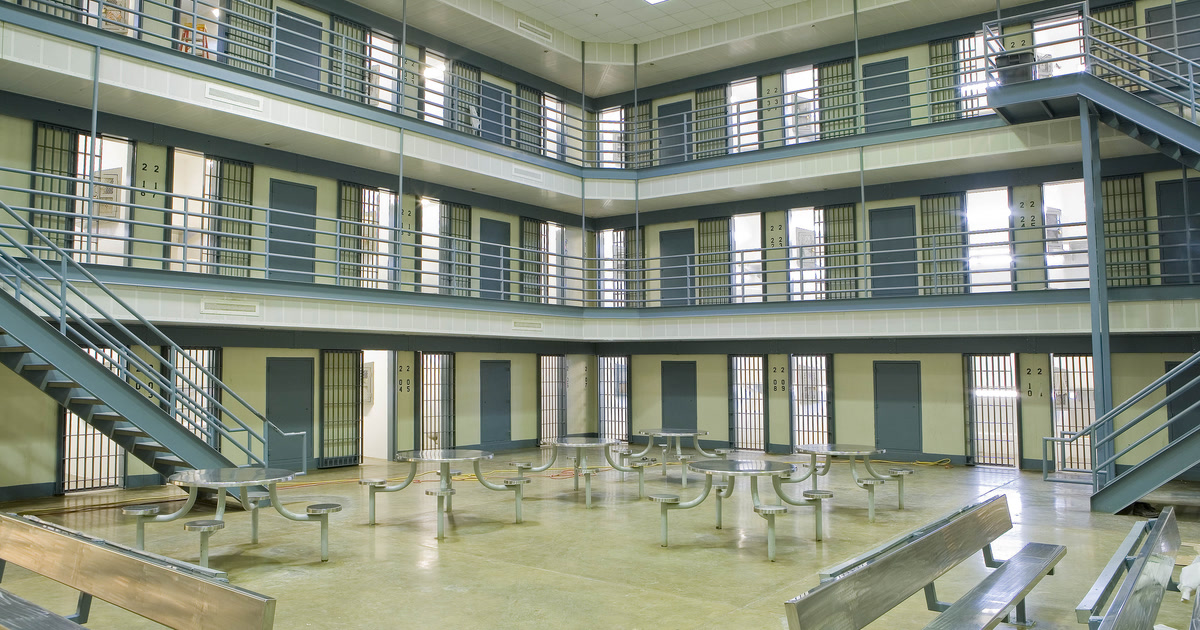
LITTLE ROCK — Arkansas lawmakers spent six hours Monday on four draft bills meant to keep the state from needing more prison beds, including one that would move inmates 60 and older to home detention and another that would automatically seal old criminal records.
The joint House and Senate Judiciary committees, co-chaired by Rep. Carol Dalby, R-Texarkana, and Sen. Alan Clark, R-Lonsdale, took no votes. Clark said the committee will meet again at 10 a.m. Nov. 10 to start “putting a lot of these things together” before the legislative session opens in January.
Rep. Justin Gonzales, R-Prescott, also sits on the committee.
The bills were presented by Sen. Clarke Tucker, D-Little Rock, but Clark told members the package is bipartisan. “I could have very well had them in my name,” he said, “but that would have caused me to have to leave the chair.”
Tucker said none of the four is ready to run as written. He framed the question as whether Arkansas is using the roughly 17,000 prison beds it has wisely.
Article continues below
▼ Continue reading
“Are we making the highest and best use of the prison beds that we have?” Tucker said. “And I believe the answer to that question is no.”
What the four bills would do
The first would let the director of the Division of Correction place an inmate 60 or older in home detention with an electronic ankle monitor if the director decides the inmate is no longer a threat to public safety. Tucker said more than 2,100 state inmates are 60 or older, “about the same number of state prisoners in county jails waiting on a state bed.”
The sentence would not get shorter, Tucker said. The inmate would serve it at home instead of in a cell, and would go back to prison for any violation.
“Is incarcerating someone who’s 72 and medically frail the best use of that resource while a convicted murderer is waiting for a prison bed in a county jail?” Tucker said. “I would say no.”
The second bill would let inmates rated low risk earn credits toward “pre-release custody” in home detention or a transitional housing facility by keeping a clean record, holding a prison job and finishing a GED, vocational or drug-treatment program.
The third, titled the Clean Slate Act, would have the Administrative Office of the Courts build a system by 2030 to find records already eligible for sealing under current law and send judges monthly lists. Judges would then be required to seal them. Tucker said the bill does not change which crimes qualify. “It’s just not being used,” he said of the existing petition process, “because it’s complicated.”
The fourth would expand the credits people on parole and probation can earn toward early discharge and require the Division of Community Correction to publish the rules.
Pushback from both parties
House Majority Leader Howard Beaty Jr., R-Crossett, questioned the premise that older inmates are the least dangerous.
“If you’re incarcerated in Arkansas over the age of 60, you probably did something pretty vile or wicked to be there,” Beaty said.
Rep. Jimmy Gazaway, R-Paragould, said Arkansas already has geriatric and compassionate release on the books through the 2023 Protect Arkansas Act, which requires an inmate to serve half the sentence first. Tucker agreed the mechanisms exist and said the problem is “they just really aren’t being used.”
Sen. Terry Rice, R-Waldron, who owns a hardware store near the Oklahoma line, said sealed records worry him as an employer who sends workers into customers’ homes. “I don’t want to start off with an employee that’s going to lie to me, first thing,” he said.
Sen. Bryan King, R-Green Forest, said the state has drained hundreds of millions in one-time money to cover Medicaid and other costs and asked where ongoing funding for new programs would come from. “The number one reason all these endeavors fail is because of a lack of money funding every year,” King said.
Rep. Andrew Collins, D-Little Rock, pressed a Texas consultant on his claim that reforms there cut violent crime, saying crime fell nationally over the same years. “I want to have a little bit more proof of that,” Collins said.
What the out-of-state witnesses said
Timothy Head, president of the advocacy group Unify.US, said Texas reforms starting in 2009 cut corrections spending 3 percent and the prison population 5 percent over two years, and the state closed two prisons instead of building three.
Gary Mohr, who ran Ohio’s prisons from 2011 to 2018, said a program that let him move inmates to halfway houses or home confinement six months before release had a 90 percent success rate. He said Arkansas has the third-highest incarceration rate in the country and the highest rate of incarcerated women.
David Safavian, Unify’s chief operating officer, who served about a year in federal prison after a 2006 conviction in the Jack Abramoff lobbying scandal and was pardoned by President Donald Trump in 2020, told lawmakers that about 62 percent of Arkansas prison admissions are people revoked from probation or parole, most for technical violations rather than new crimes.
“There’s no reason 62 percent of people who are on probation and parole should be revoked for a technical violation,” Safavian said.
He also said a federal rule change last year lets inmates on home confinement enroll in Medicare and Medicaid, shifting their health care costs off the state.
Southwest Arkansas inmates in a Clarksville program
Jimmy McGill, executive director of Next Step Recovery Housing in Clarksville, said courts have sentenced 51 men to his 18-month program over the past two years instead of sending them back to prison, including two from Hempstead County and two from Little River County.
McGill, who said he went to prison six times before becoming the state’s first parolee hired into a state job, said all 51 were required to work and the program takes no state money. He put the avoided prison cost at about $2.1 million.
“Normal people ain’t stealing your weed eater at three in the morning,” McGill told Clark. “That’s somebody with a drug problem.”
McGill said 13 of the 51 are back in jail or prison, all on charges that were pending before they entered the program. The committee’s handout from Next Step listed 28 of the 51 as drug-possession cases and one as aggravated robbery.
A two-minute limit, and who asked for it
Dalby said little during the hearing until 5:43 p.m., when she moved to limit public comment to two minutes per speaker “in light of the late hour.” Beaty objected, saying people who had sat through the whole day deserved to be heard. The motion carried on a voice vote with at least one no.
Three people spoke. Dan Walden asked lawmakers to consider his cousin Larry Walden, who he said is 15 years into a 60-year state sentence for an unarmed 2009 bank robbery in Fort Smith and has been denied clemency twice. Clark told him to return when the home-detention bill comes up in session. “I would think that would be effective testimony for that bill,” Clark said.
As the meeting adjourned at 6 p.m., Clark told the committee he had asked Dalby to make the two-minute motion. “Y’all would blame me when you sat here all night,” he said.
Clark said the committee’s December meeting may be held at the Ouachita River Unit in Malvern so members can tour a prison.