

A telegram from Havana: How the war of 1898 came home to Texarkana
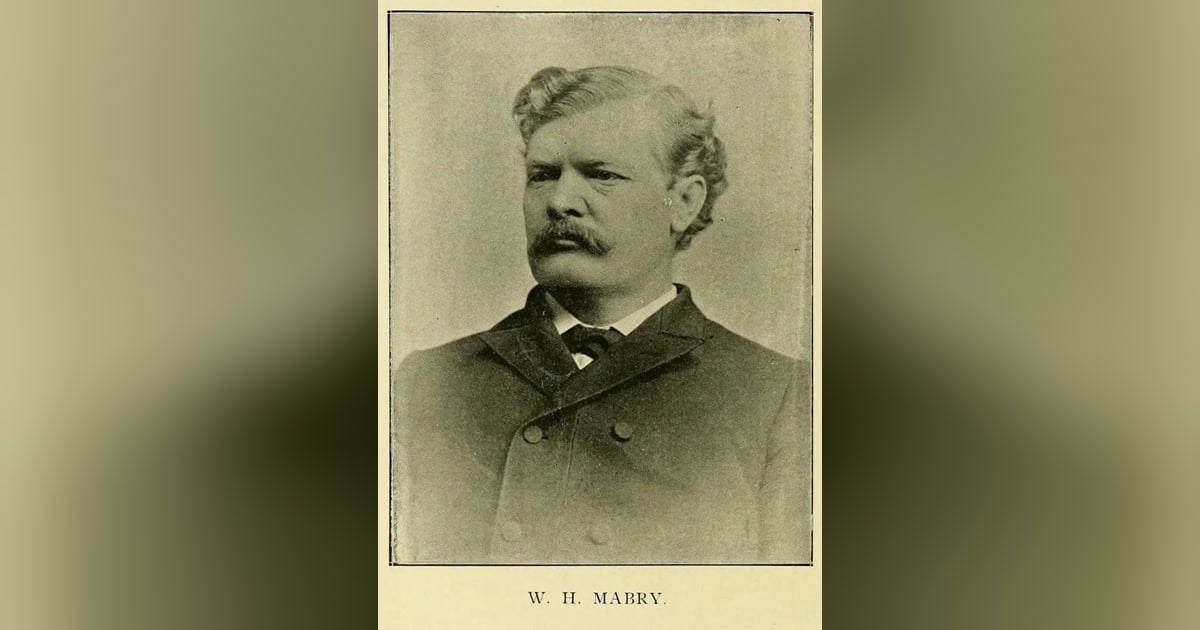
Texas Adjutant General W. H. Mabry ordered Texarkana's volunteer company raised in 1898. Months later, with his family living here, he died near Havana. Disease, not battle, killed most of the Americans who died in that war.

Part 3 of 11 for 11, a TXK Today series remembering Texarkana-area veterans through America’s wars. A new story every day through Veterans Day.
On the night of Jan. 4, 1899, a telegram reached a house about a mile out on State Line. It was for Maj. A. C. Allen. His son-in-law, Col. Woodford Haywood Mabry, had died that day in an Army camp near Havana.
Only 12 hours earlier, Allen had said goodbye to his daughter, Lucy Mabry, who was leaving to be at her husband’s bedside, The Daily Texarkanian reported the next day. She was already on her way through New Orleans. A second telegram went after her, asking her to come home.
Mabry was 42. He was one of the best-known military men in Texas, and his death was one of many in the war with Spain that came from sickness, not bullets.
The general and the Texarkana Rifles
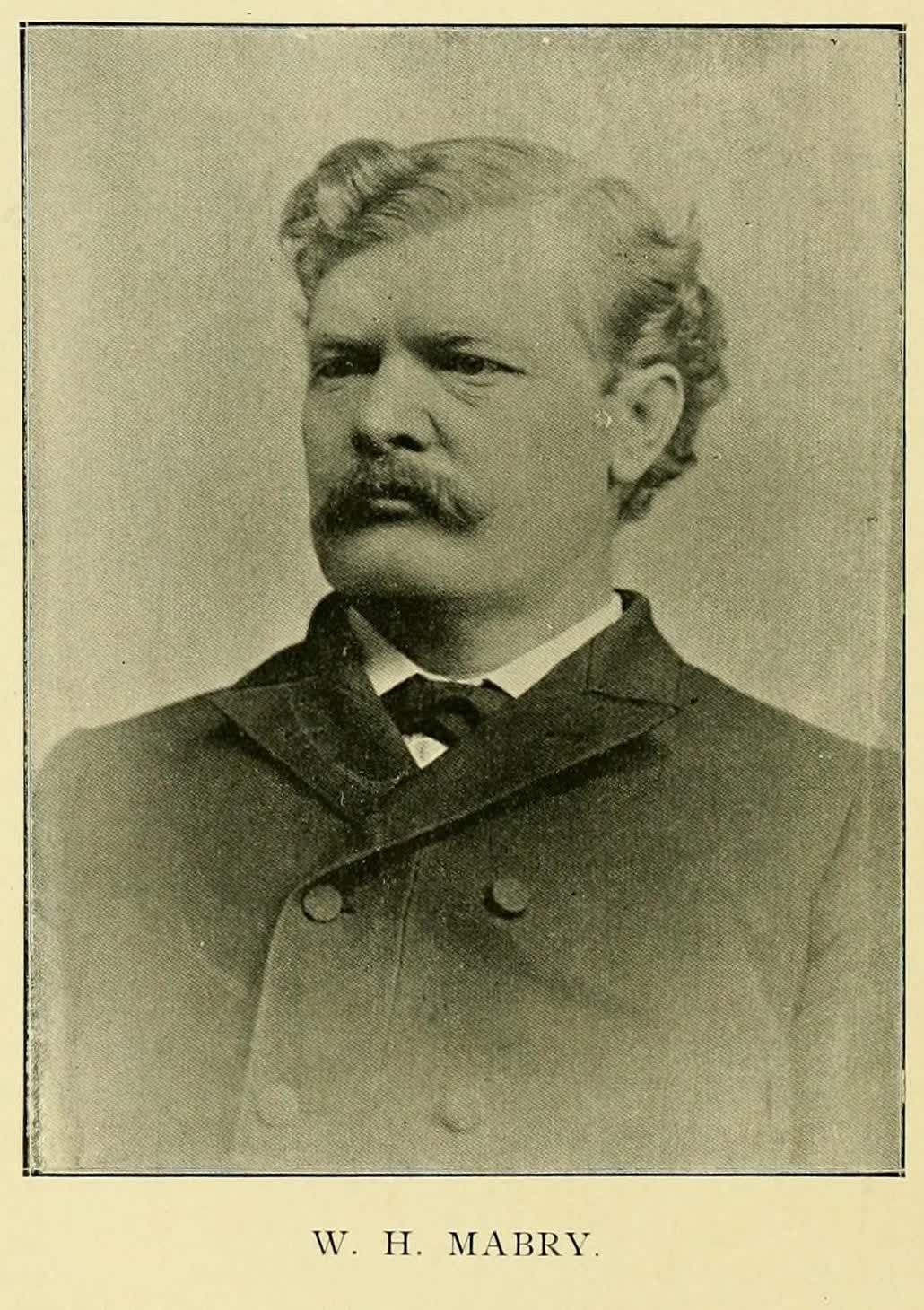
Mabry was born in Jefferson in 1856, attended the Virginia Military Institute and was a wholesale merchant when Gov. James Hogg named him adjutant general in 1891, according to the Handbook of Texas. He commanded the Texas Rangers’ Frontier Battalion and the Texas Volunteer Guard. The guard companies voted in 1892 to name their Austin campground Camp Mabry.
The war grew out of Cuba. Cubans had been fighting for independence from Spain since 1895, and American newspapers filled their front pages with stories of Spanish cruelty on the island. On Feb. 15, 1898, the battleship USS Maine blew up in Havana harbor, killing 266 of her crew. The cause was never settled, but “Remember the Maine” became the cry for war.
Article continues below
▼ Continue reading
Congress declared war on Spain in late April, and President William McKinley called for 125,000 volunteers. The regular Army had only about 28,000 men, so the states would have to raise the rest. That is what put Texas’ adjutant general, and Texarkana’s militia company, in the middle of it.
As war with Spain neared in the spring of 1898, Mabry told Capt. William A. Haywood to call the Texarkana Rifles together and recruit the company to 100 men. Twenty-five showed up at the West Side city hall on March 31, the Texarkanian reported, and by the end of the night the roll stood at 75.
It wasn’t enough. When the adjutant general’s office listed the companies for Texas’ first three volunteer regiments, the paper reported on April 29, “the Texarkana Rifles have been lost in the shuffle.” It blamed the “disorganized state” the company had drifted into.
Mabry resigned as adjutant general on May 5 to become colonel of the 1st Texas Volunteer Infantry, according to the Handbook.
Company L
Haywood took his men across the state line instead. He went to Little Rock and offered the company to the governor as Arkansas troops, and the offer was accepted, the Texarkanian reported May 8. Because most of the men were Texans and the ranks were short, the company was merged with another short company. Early reports named a company from De Queen, but the Arkansas adjutant general’s report says it was consolidated with the Chicot Rifles of Lake Village. Haywood became captain, and the Lake Village company’s captain, R. W. Reynolds, became first lieutenant.
The Arkansas Gazette listed it as Company L, 1st Arkansas Volunteer Infantry, “known as the Governor’s Guards,” with Haywood as captain. Texarkana women raised money for a company flag.
By the end of May the regiment was at Camp Thomas, a sprawling Army camp on the Civil War battlefield at Chickamauga Park, Ga. A July letter home said, “Health is excellent.”
By August it wasn’t. A doctor sent by Arkansas Gov. Dan Jones reported the camps filthy and the water “not fit for beast,” with malaria and typhoid taking victims, the Texarkanian reported. A local Soldiers Relief association sent most of its money to Company L because the men were “more in need of money on account of sickness,” including $25 to the regiment’s surgeon for hospital use.
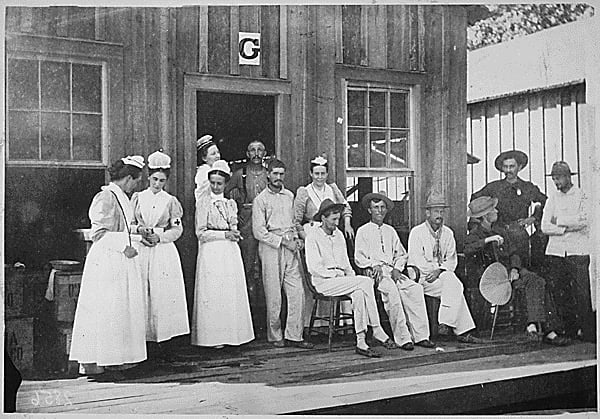
The 1st Arkansas never left the country. It was mustered out at Little Rock on Oct. 25, 1898.
Henry Fox
One Texarkana member of Company L did not live to see it.
Henry Fox, 23, had been a stoker at the city’s gas and electric light plant before he enlisted in Haywood’s company. He came home on leave, fell sick and died Sept. 5 at the home of his stepfather, Peter Bauer, the Texarkanian reported. “He made a good soldier and was a good man,” the paper wrote. It did not name his illness. The Arkansas adjutant general’s report did. Its roster of Company L records that Fox died Sept. 5 “of typhoid fever while on furlough at Texarkana.”
Two days later, members of the 1st Arkansas home on leave buried him with military honors. Two old Union soldiers, Kirk Bramble and Oscar Madden of the Grand Army of the Republic, helped, and the customary shots were fired over the grave. The paper did not say where he was buried.
His story was typical of the war. The U.S. Department of Veterans Affairs counts 385 American battle deaths in the Spanish-American War and 2,061 other deaths in service. Most of those were from disease, much of it typhoid, malaria and dysentery in crowded camps like Chickamauga. The 1st Arkansas lost 22 enlisted men to disease in its five months of service, according to a regimental history.
Quemados
The fighting lasted about 10 weeks. The Navy destroyed Spain’s fleets at Manila Bay and off Santiago de Cuba, the Army took Santiago in July, and an armistice stopped the shooting Aug. 12. In the peace treaty signed Dec. 10, Spain gave up Cuba and ceded Puerto Rico, Guam and the Philippines to the United States. Mabry’s regiment went to Cuba anyway, as part of the Army that would occupy the island, sailing from Savannah, Ga., just before Christmas, reaching Havana Dec. 26-27 and camping at Camp Columbia in Quemados, outside the city.
In December his wife and children moved to Texarkana to live with her parents. “We welcome to our city the family of Col. Haywood Mabry,” the Texarkanian wrote Dec. 19, “while the colonel is off in Cuba at the head of his regiment.” The regiment actually sailed a few days later.
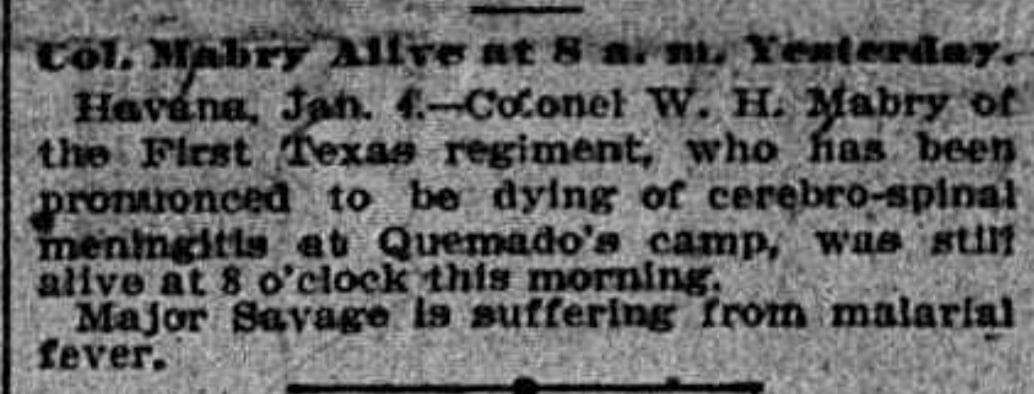
On Jan. 1, 1899, Spain formally handed Cuba over to the United States. Two days later, the paper reported that he was “critically ill” in Havana and that Gov. Charles Culberson had passed the news to his wife by telephone. It did not name the illness. Later accounts, including the Texas Military Forces Museum’s Hall of Honor, say malaria, but a dispatch from Havana the morning he died, printed the next day in The Galveston Daily News, said he had been “pronounced to be dying of cerebro-spinal meningitis” at the Quemados camp. Gen. Fitzhugh Lee cabled the governor that Mabry “died this afternoon” and that the “best medical attention was given him from the time he was first taken sick.”
His body came back through Miami. Texarkana undertaker Charles Reeves went to Jefferson to help with the burial, and Allen, Lucy Mabry and the children went with him. Every business in Jefferson closed, and “fully 3,000 people followed the remains to the grave,” the paper reported Jan. 11. Mourners included Culberson and “Congressman-elect Sheppard.” The paper gave only the last name. The man elected to Congress from the district that fall was John L. Sheppard, father of future U.S. Sen. Morris Sheppard. Mabry’s remains were placed in a brick vault at Oakwood Cemetery, where his father, Confederate Gen. Hinche Parham Mabry, is also buried.
Congress later granted his widow a pension for life, according to the Handbook of Texas. In March 1899, the Texarkanian reported that Lucy Mabry, still living with her father, had her husband’s horse from Cuba, and that “no amount of money could get her to part with it.”
Do you have family stories, letters or photos from the Texarkana Rifles, Company L of the 1st Arkansas or the Mabry and Allen families? Do you know where Henry Fox is buried? We’d like to hear from you through our contact page.
Sources: The Daily Texarkanian (Texarkana, Ark.), issues of April 1, April 29, May 8, May 15, May 18, May 25, May 30, July 18, Aug. 16, Aug. 17, Sept. 5, Sept. 8, Oct. 25 and Dec. 19, 1898, and Jan. 3, Jan. 5, Jan. 8, Jan. 10, Jan. 11 and March 29, 1899, via The Portal to Texas History; The Galveston Daily News, Jan. 5, 1899, via FamilySearch; Claudia Hazlewood, “Mabry, Woodford Haywood,” Handbook of Texas Online; L. E. Daniell, “Personnel of the Texas State Government” (1892), via Internet Archive; E. H. Loughery, “Texas State Government” (1897); U.S. Department of Veterans Affairs, “America’s Wars” fact sheet; National Archives photo 522870; Texas Military Forces Museum, “Hall of Honor: Woodford H. Mabry”; Patrick McSherry, “A Brief History of the 1st Arkansas Volunteer Infantry,” Spanish American War Centennial Website; Find a Grave memorials for Woodford Haywood Mabry and Henry Fox.