

Hickey apologizes for vote on utility law as farmers tell lawmakers of thousands in added electric costs
Regulators say Entergy's handling of Google's payments will cost other customers about $300 million. Lawmakers are now talking openly about repealing the Generating Arkansas Jobs Act

LITTLE ROCK — State Sen. Jimmy Hickey Jr., R-Texarkana, apologized Monday for voting for the 2025 law that lets utilities charge customers for power plants while they are still being built. He spoke after four farmers told a legislative committee the charge is adding thousands of dollars a month to their electric bills.
“I voted no to begin with,” Hickey told the Joint Committee on Energy. He said he then wrote a 12- to 15-page amendment to the bill. “And I’m going to tell you, after my amendment, this is still a horrible bill.”
“Sometimes a man just has to say he made a mistake,” he said. “I made some mistakes, and I’m going to apologize.”
The hearing on Act 373, the Generating Arkansas Jobs Act, ran more than four hours. At least one senator, Clint Penzo, R-Springdale, called for repealing the law outright when the Legislature convenes Jan. 11. Several others pressed Entergy Arkansas, the law’s largest user, on how much its customers are paying and how much the company is earning.
Farmers: ‘Slipped it under the door’
Four farmers from Carlisle, Hazen and Des Arc told the committee the charge, which appears on bills as the “Generating Arkansas Jobs Act” rider, arrived with no warning on June bills.
Lori Caveness of Carlisle said the charge felt like someone “just kind of slipped it under the door.” She said it added about $25,000 over three months across the bills for her wells, grain bins and homes. Entergy has described the residential charge as about $5.77 a month, and Caveness called the idea that it costs only about $5 a bill “ludicrous.”
Wendi Stacks of Hazen said she and her in-laws farm about 1,700 acres each, and the charge added about $12,000 for the family. She said it amounts to $1 to $2 per acre per month during irrigation season.
“It’s terrible to open a bill and find out that way that your legislature put this on you,” Stacks said. She asked lawmakers to repeal the act.
Don Kittler of Carlisle said the rider portion of his August bills alone came to $12,760, about a 5% increase.
Cory Skarda of Des Arc said he and his brother farm 3,900 acres with 33 electric wells. He expects to pay $30,000 to $40,000 more next year, more than he has taken home in each of the last three years after paying his bills.
“A data center for a trillion-dollar company in West Memphis isn’t really going to benefit me,” Skarda said.
Asked by Hickey whether any of them expected the charge to help them in the future, the farmers said no.
Regulators: Google payment choice costs $300 million
The Arkansas Public Service Commission had been asked at the committee’s September meeting to compare two ways of handling Google’s payments to Entergy for Cypress Solar. Cypress Solar is a $1.6 billion solar and battery project being built largely to serve Google’s West Memphis data center.
Google’s payments total $526 million, Danni Hoefer, the commission’s chief of staff, told the committee. Entergy and Google agreed in their contract to treat the money as payment for electric service. That money is spread over the life of the plant to lower all customers’ rates.
The alternative is to treat the payments as a “contribution in aid of construction.” That would subtract them from the plant’s cost before it goes into rates. The commission’s analysis found the alternative would have cost customers about $308 million less in 2025 dollars, or about $519 million less over the life of the plant, according to the slides Hoefer presented.
Residential customers carry about 39% of those costs, she said.
Penzo said it looked like “the decision was made to charge $300 million more to the ratepayer in order to get a higher return.”
Entergy disputed the commission’s numbers. John Bethel, Entergy Arkansas’ director of public affairs, said the analysis did not account for terms in the contract that require Google to cover the plant’s full cost either way. Under the alternative, he said, “Google sees the benefit.”
Hoefer said the commission ran 14 scenarios on the Google contract, and all 14 showed it would not shift costs to other customers. She also said most of the contract remains redacted.
The 6% vs. 8% question
Several senators challenged Entergy on its return during construction.
Hoefer told the committee the return Entergy earns under the rider is “closer to 8%.” Lauren Waldrip, executive director of the Arkansas Advanced Energy Association, put it at 8.63%. She said the law’s language excludes accumulated deferred income taxes from the calculation, which pushes the rate higher than in normal ratemaking.
Sen. Ronald Caldwell, R-Wynne, said commission officials told him in the lobby during the hearing that the law lets Entergy raise its return from about 6% to 8%. “For those who can’t do the math, that’s a 33% increase,” he said.
Bethel said the rider uses the same federal formula for financing costs during construction that would apply under the traditional method. “It is a higher rate, but it’s the exact same rate under Method A and Method B,” he said.
Sen. Steve Crowell, R-Magnolia, was not persuaded. “Ratepayers are getting nailed, and your guys are going to make more money,” he said. “That’s not a question, that’s a statement.”
Economists: ‘Customers become the lenders’
Two economists told the committee the law shifts the risk of building power plants from utility investors to customers. They were Jason Walter of the University of Tulsa and Eric Olson of Florida State University.
“Customers become the lenders, they’re not entitled to any return,” Walter said.
Walter pointed to figures in Entergy’s own presentation. He said the Ironwood gas plant was approved at about $550 million, and Entergy now projects it will cost about $700 million. Across all three plants in the rider, he said, projected costs run about $252 million above approved amounts. He said he had found no explanation for the difference.
The economists urged lawmakers to return to the traditional method, set cost caps and require large new customers to pay up front.
Steve Chriss of Walmart said the company has historically opposed this kind of financing. He said Walmart’s electricity costs in Arkansas have risen more than 20% in five years and run about 20% higher than in Texas. If the law is not repealed, he said, lawmakers could require payments from customers like Google to be applied first. They could also lower the rate of return on rider projects.
Co-ops say no to the rider
Jennifer Loiacano of the Electric Cooperatives of Arkansas said the state’s 17 distribution co-ops have not used the rider and do not plan to. Their member-elected boards instead adopted commission-approved tariffs. Those tariffs require any data center to post deposits, pay construction costs up front and carry bonds or letters of credit, so other members do not pay for its infrastructure.
Loiacano said the co-ops’ generation arm is building new gas plants without the rider. One is in Naples, Texas, to replace the co-ops’ share of a retiring coal plant, and another is in Independence County. She said the co-ops do not project a power shortfall.
Entergy: Cypress Solar to leave the rider in 2028
Entergy officials said the rider saves customers money over time by paying financing costs as they come up instead of adding them to a plant’s price. They pointed to their projection that the charge would start at about $25.13 per 1,000 kilowatt-hours under the traditional method, compared with $5.74 in the rider’s first year.
David Palmer, Entergy Arkansas’ vice president of regulatory affairs, said that without the rider the Jefferson Power Station would hit rates “all at once.” He said the farmers would then be “really ticked off.”
Under questioning, Entergy officials made these points:
- Cypress Solar’s share: About $1.77 of the current $5.77 residential charge goes to Cypress Solar. The plant is expected online at the end of 2028.
- Google’s arrival: Google is expected to come online as a customer next year, and its rates are designed to more than cover Cypress Solar’s cost.
- New filing: Entergy filed an application Monday to amend its Google contract. Among other changes, it proposes moving Cypress Solar out of the rider and into regular rates the year the plant enters service.
- Next project: An application is pending to add a fourth project to the rider, converting Unit 1 at the White Bluff coal plant to natural gas. Entergy said that project would cost much less than the other three.
- The charge over time: The rider is projected to peak around $20.10 per 1,000 kilowatt-hours when the plants enter service, then decline as they depreciate.
- Other bills: Entergy’s formula rate plan raised rates 4% in January. Its pending rate case, the first in about 10 years, seeks just under 2% overall. The case also proposes a time-of-use rate, a discount for low-income customers and new rate options for farm irrigation.
Asked by Sen. Ricky Hill, R-Cabot, how Entergy would tell the farmers goodbye if they go out of business, Ventrell Thompson, Entergy Arkansas’ vice president of customer service, said costs are rising for everyone, including Entergy. He said the rider was “another savings opportunity for customers.”
“You still haven’t answered my question,” Hill said.
SWEPCO’s Turk plant comes up
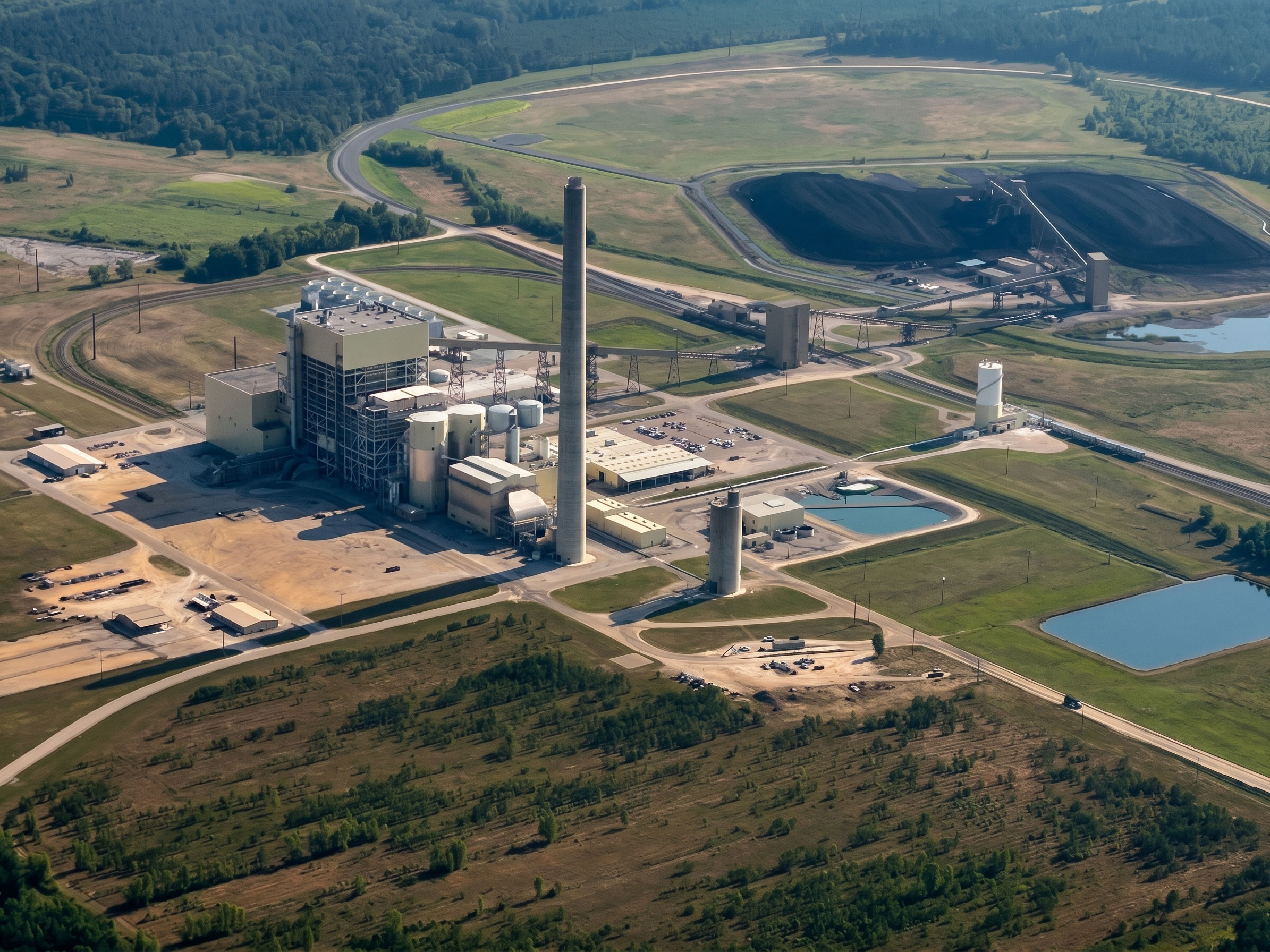
Sen. Mark Johnson, R-Ferndale, the committee’s co-chair, said the state has three coal plants facing closure, not two, because SWEPCO’s John W. Turk Jr. Power Plant near Fulton in Hempstead County “is also on the chopping block.”
Johnson said an Environmental Protection Agency official told him one of the plants probably cannot be saved and another might be. He said Turk is “so new and so efficient” that a strong case could be made to reverse the decision to close it. He added that his comments involved “a lot of speculation.”
The two plants discussed through most of the hearing are Entergy Arkansas’ White Bluff and Independence coal plants. Under a 2018 settlement with the Sierra Club, approved by a federal judge in 2021, Entergy must stop burning coal at White Bluff by 2028 and at Independence by 2030.
SWEPCO has not publicly announced plans to close Turk. The company’s most recent long-range plan, filed with the Arkansas Public Service Commission, lists Turk retiring in 2068. That plan modeled converting Turk to natural gas in 2030 only under a 2024 federal carbon rule. The EPA repealed most of that rule in September.
Turk, which began operating in 2012, is the newest coal plant in the SWEPCO system. A 2011 settlement with environmental groups that cleared the way for the plant barred SWEPCO from building a second unit there, but it did not require the plant to close.
TXKtoday has reached out to SWEPCO for comment and will update this story when the company responds.
Johnson also noted that Act 548 of 2025 exempts electricity used by qualifying data centers from state sales tax. To qualify, a data center must meet investment and payroll minimums and receive a positive cost-benefit analysis from the Arkansas Economic Development Commission. Farmers still pay sales tax on their electric bills, including on the rider.
What’s next
Hickey said he is still weighing whether to repeal or amend the law. Even a fix, he said, would leave the charge on bills for the plants already under construction. “Everybody in the world is going to be showing their bill and saying, ‘I thought the legislature fixed this,'” he said.
Bills for the 2027 session can be prefiled starting Nov. 16. The committee next meets at 1 p.m. Nov. 12.
Most Texarkana, Arkansas, customers are served by SWEPCO, not Entergy. SWEPCO was not among the utilities approved for the rider as of the commission’s June report.