

Miller County death row inmate Andrew Sasser asks federal judge to reconsider ruling that kept his sentence in place

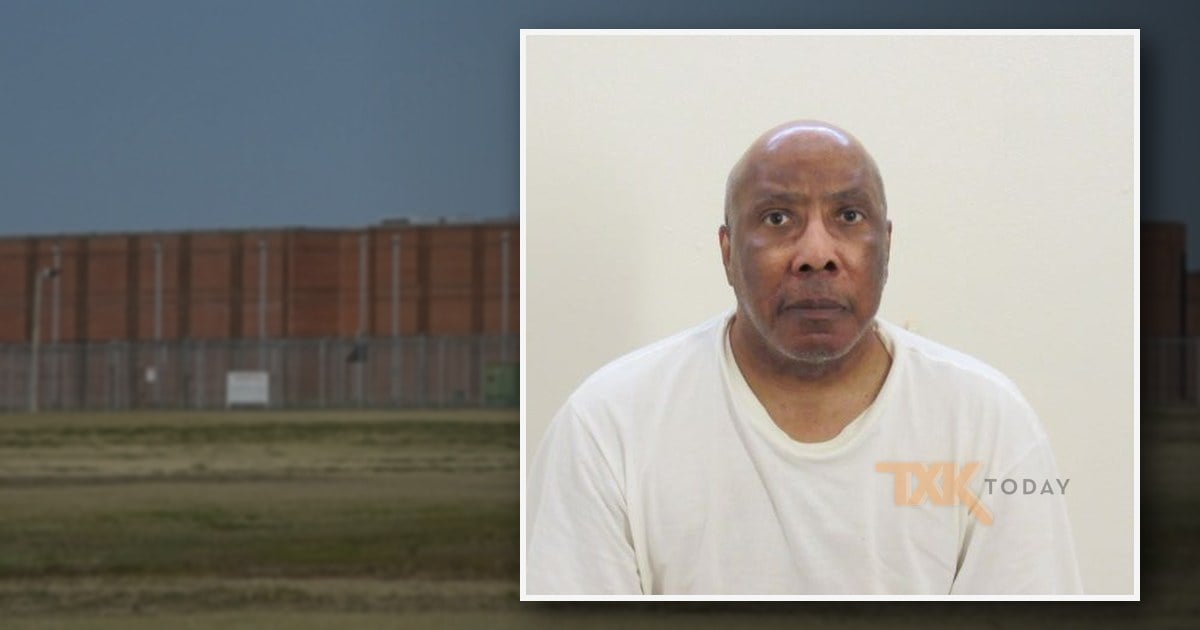
TEXARKANA, Ark. — Lawyers for Andrew Sasser, who has been on Arkansas’ death row since a Miller County jury condemned him in 1994 for killing a Garland City convenience store clerk, asked a federal judge in Texarkana on Thursday to reconsider her refusal to reopen his case.
The motion, filed Oct. 22 in the U.S. District Court for the Western District of Arkansas by the Federal Public Defender’s office in Little Rock, asks Senior U.S. District Judge Susan O. Hickey to withdraw her Sept. 24 order and restore a 2018 ruling that vacated Sasser’s death sentence.
The 1993 killing
Sasser was convicted of capital felony murder in the death of Jo Ann Kennedy, who was working alone as the clerk at the E-Z Mart in Garland City in the early morning hours of July 12, 1993, according to the Arkansas Supreme Court’s 1995 opinion upholding the conviction.
A woman who lived across the street testified she saw a man behind the counter with Kennedy and called 911 at about 12:46 a.m., telling the dispatcher she believed a woman was being killed at the store. Her mother testified she watched a truck leave, and then saw Kennedy come around the side of the building, reach for the door and collapse. A Miller County sheriff’s deputy found her dead on the sidewalk outside the door. The autopsy showed she died of multiple stab and cutting wounds and blunt force injuries to the head, the opinion states.
At trial, Sasser stipulated that he caused Kennedy’s death. In a recorded statement to an Arkansas State Police investigator and the Miller County sheriff, he said the two argued over an order of nachos at the drive-through window and fought through the store, and he denied trying to rape or rob her. Jurors also heard from a clerk at the Lewisville E-Z Mart whom Sasser was convicted of kidnapping and raping in 1988. The jury found that prior violent felony outweighed the mitigating evidence and sentenced him to death. Chuck Black, now retired, prosecuted the case.
Article continues below
▼ Continue reading
Court records show Sasser pleaded guilty in Lafayette County in November 1988 to rape and kidnapping, both Class Y felonies, and was sentenced to 10 years in prison on each, plus five years of probation for second-degree battery. Less than five years later, he was out of prison; a 2010 federal ruling says he was charged with a parole violation after his arrest in Kennedy’s killing.
Three decades of appeals
Sasser filed his federal habeas corpus petition in July 2000, and the case has passed through four district judges and three 8th U.S. Circuit Court of Appeals decisions since, according to Hickey’s order.
On March 2, 2018, U.S. District Judge P.K. Holmes III rejected Sasser’s claim that he is intellectually disabled and therefore cannot be executed, but found his trial lawyers were ineffective for failing to obtain a timely psychological evaluation and failing to meaningfully consult a mental health professional. Holmes vacated the death sentence.
The 8th Circuit reversed in 2021. It held that the ineffectiveness claims Holmes granted were not the claims Sasser had pleaded in his 2001 petition, but new claims he first raised in 2004, and that bringing them on remand amounted to an unauthorized “second or successive” petition and “an abuse of the writ.” The U.S. Supreme Court declined to hear the case, and the district court dismissed it with prejudice on July 6, 2022.
The new fight
In December 2025, Sasser asked the court to reopen the case, arguing that two 2025 U.S. Supreme Court decisions, Rivers v. Guerrero and BLOM Bank SAL v. Honickman, show the 8th Circuit got it wrong. His lawyers argued that once the appeals court threw out the original 2002 judgment in 2013, there was no final judgment in place, so the claims he added afterward could not be treated as successive.
The state argued the decisions changed nothing the 8th Circuit had applied and that Arkansas “has a strong interest in seeing Sasser’s sentence carried out,” according to Hickey’s order.
Hickey denied the motion Sept. 24. She wrote that Sasser’s argument “relies on a misreading” of both the 8th Circuit’s ruling and Rivers, that the Supreme Court had expressly declined to decide whether amendments filed before a final judgment can never be successive, and that Sasser had not shown the “extraordinary circumstances” required to reopen a case. In a footnote, she wrote that Sasser “engages in some deceptive quotation from Rivers,” saying one passage his lawyers quoted was the Supreme Court summarizing a lower court’s reasoning rather than stating its own holding.
Thursday’s 15-page brief, signed by assistant federal public defenders Alex Satanovsky and Eliza Meredith, says the order made “two principal mistakes.” It argues Rivers and a 2020 Supreme Court case, Banister v. Davis, “both state unequivocally that prejudgment amendments are not successive,” and that the old abuse-of-the-writ doctrine never applied before a judgment existed. It also argues Hickey misread the 8th Circuit’s 2021 decision as resting on a 2007 finding that Sasser’s new claims were abusive, when the appeals court actually applied a broader rule that would have barred the claims regardless.
The motion asks Hickey to grant the request to reopen the case and “reinstate its 2018 order and writ of habeas corpus vacating Mr. Sasser’s death sentence.”
No ruling had been entered as of Friday morning. Sasser has no execution date. Arkansas has not carried out an execution since April 2017. Sasser is also one of 10 death row prisoners suing in Pulaski County Circuit Court over the state’s 2025 law authorizing nitrogen gas executions.