


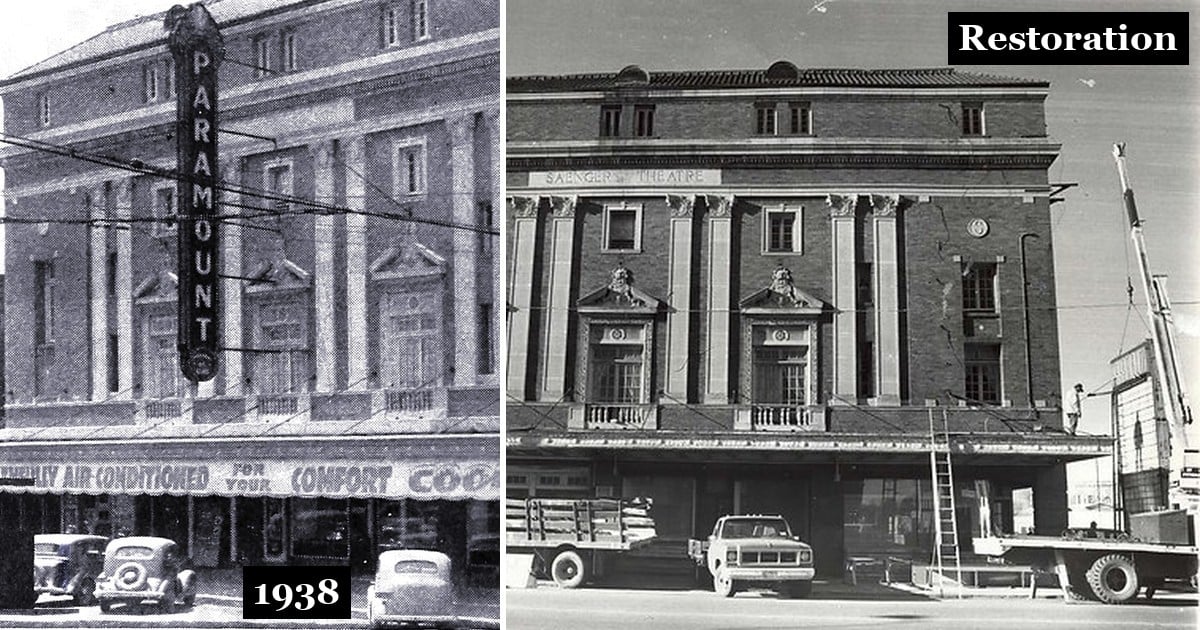
The building Texarkana now calls the Perot Theatre was almost built without a stage.
When the Saenger Amusement Co. of New Orleans drew up plans for a grand new house at Third and Main streets, it meant to show motion pictures only, according to the theater’s 1978 National Register of Historic Places nomination. Texarkana talked the company out of it.
The new Saenger opened on the evening of Nov. 18, 1924, 102 years ago this month.
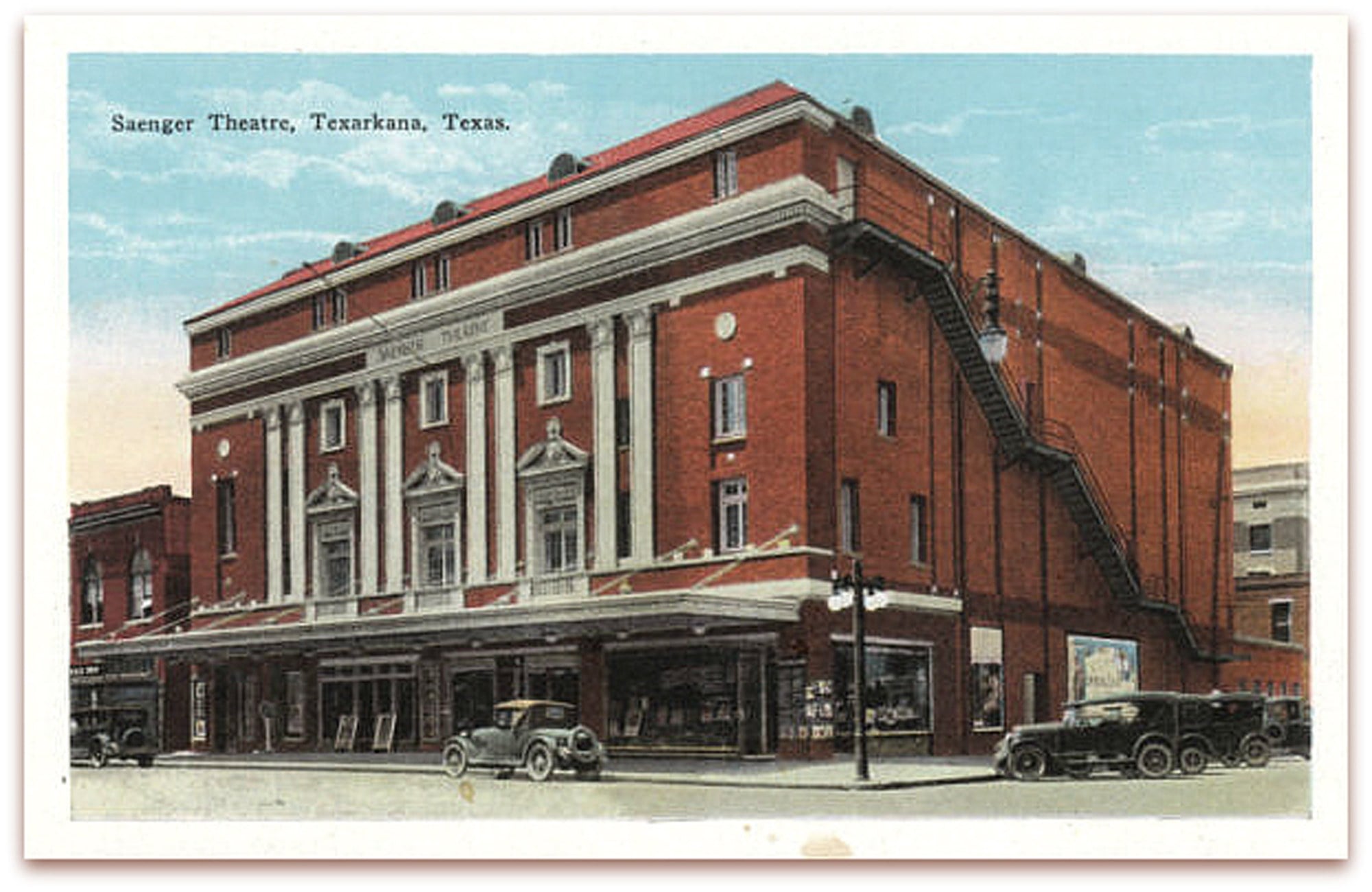
$7 a seat, 2,000 seats
Texarkana had been a theater town since the 1870s, the nomination says, a regular rail stop for touring actors and opera singers on their way between bigger cities. At least six opera houses and theaters went up between 1878 and 1925. Audiences there “were not yet willing to forego legitimate theater for the still unproven motion picture,” wrote Katy F. Caver, the Texarkana Historical Museum curator who prepared the nomination.
So the public pushed for a stage, and the Chamber of Commerce promised Saenger a sellout on opening night. The company changed its plans. Local merchants then kept the promise: they bought 2,000 tickets in blocks of 12 at $7 a seat, the nomination says.
Saenger already ran three other theaters in Texarkana, including an older Saenger a half block north on Main. That one was renamed the Strand.
Article continues below
▼ Continue reading
Opening night
Opening day was a civic holiday of sorts. There was a parade, a luncheon and speeches by the mayors of both Texarkanas and representatives of the Saenger company, according to the nomination, which drew on the Four States Press of Nov. 16 and Nov. 18, 1924. Telegrams came in from stage and screen stars, including two from director D. W. Griffith.
The curtain went up that night on a play, “Foot-Loose,” starring Margaret Anglin and William Faversham, two of the best-known stage actors of the day. The first movie to play the house was Griffith’s “America,” his 1924 Revolutionary War epic.
The play was Zoe Akins’ “Foot-Loose,” and the two stars were touring it through the South and West that fall, according to Variety, the show business weekly. Saenger used the tour to open two new theaters on back-to-back nights. In a dispatch from Pine Bluff, Arkansas, dated Nov. 18, Variety reported that the company’s new house there had opened the night before with what it called “the first legit play that has appeared in this city in 15 years,” and that the same production would open “another new Saenger theatre, at Texarkana, Tex.,” that night.
The film trade press remembered the picture instead. Moving Picture World reported in its Dec. 13, 1924, issue that the Pine Bluff and Texarkana houses both “used ‘America’ as the opening attraction.”
Two weeks earlier, the same magazine reported that “a cordial invitation” had gone out to Miriam “Ma” Ferguson, who had just been elected governor of Texas, to attend the dedication of “the new $300,000 theatre the Saengers have erected at Texarkana.” The nomination does not mention her among the day’s speakers.
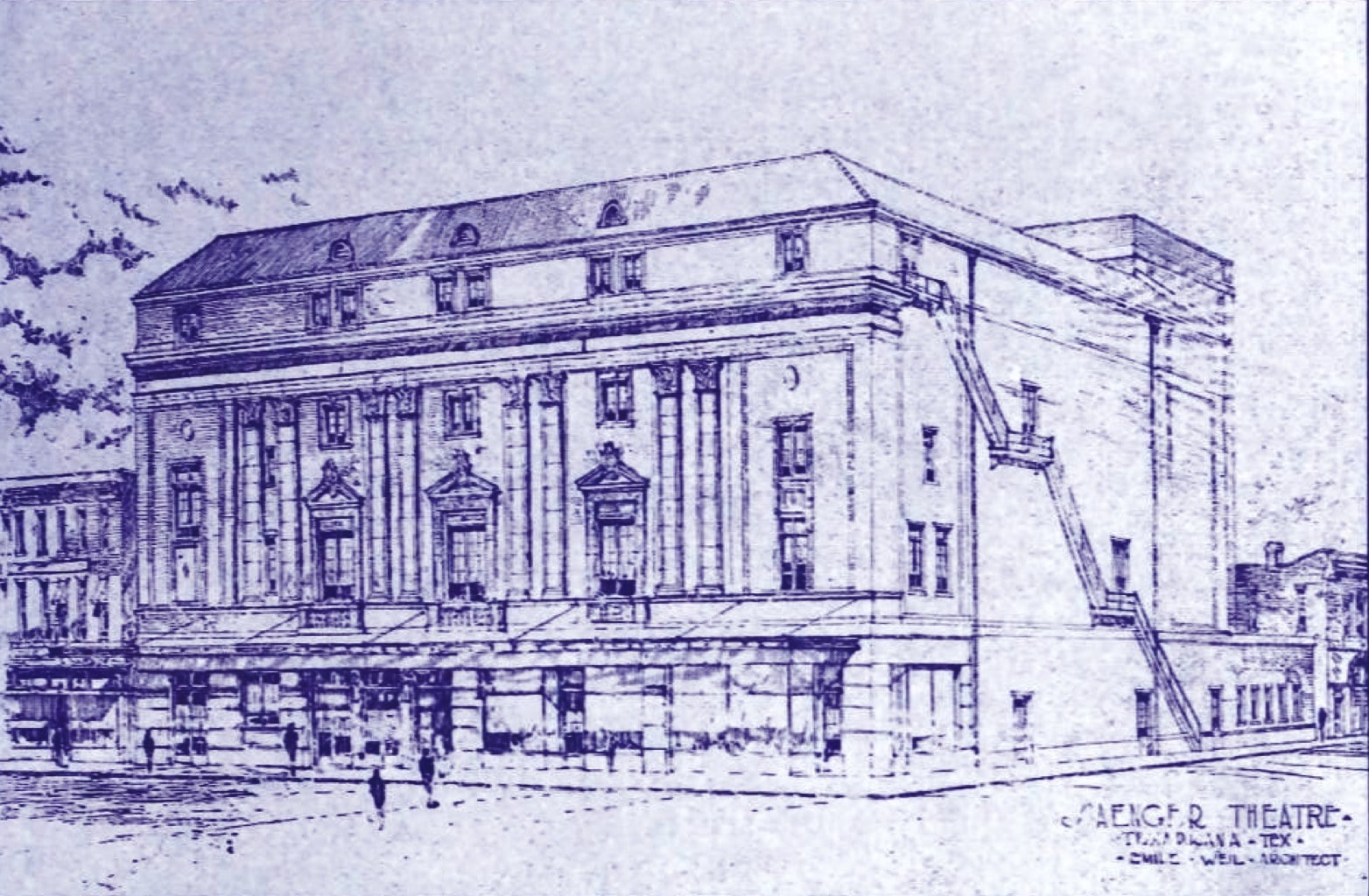
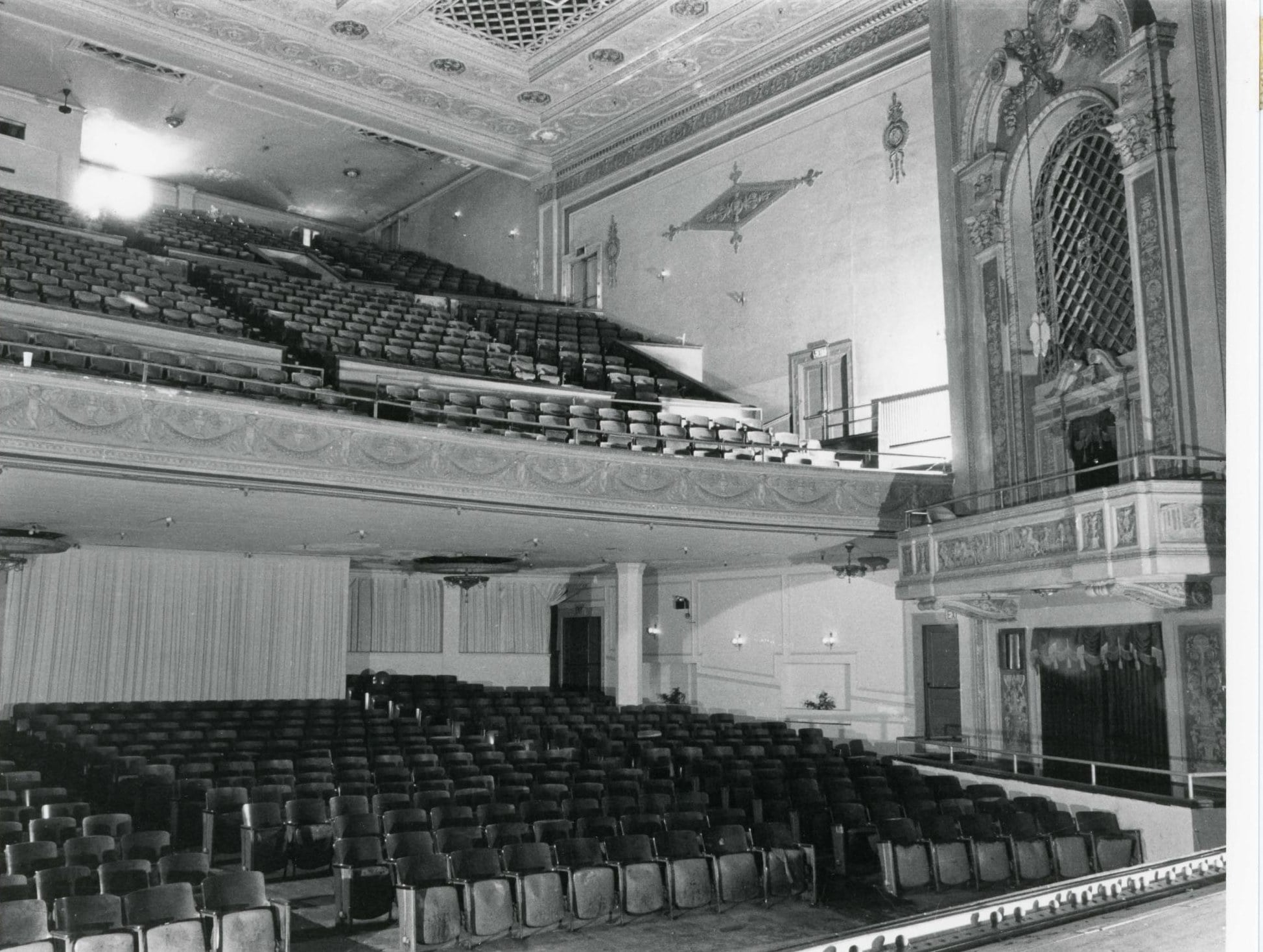
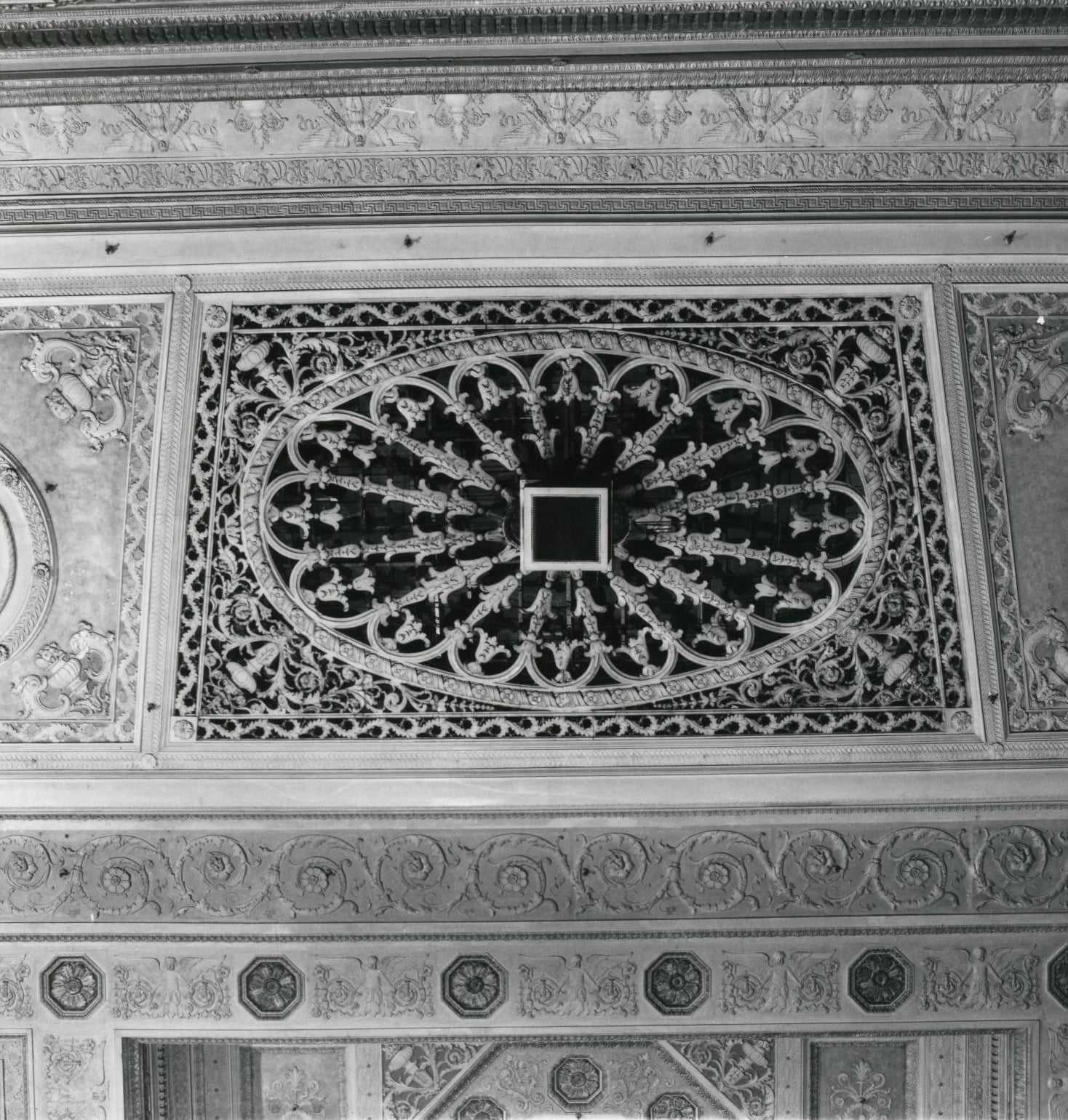
The theater they walked into was designed by New Orleans architect Emile Weil and built by Brashears Construction Co. of Texarkana. It had 1,675 seats, 788 on the main floor and 887 in the balcony, under a clear span of 90 feet, the nomination says. The lobby was black and white marble, and gilded plaster covered the auditorium ceiling.
The trade papers counted the seats more generously. Exhibitors Herald, in its Dec. 6, 1924, issue, described a house “representing an investment of probably over $300,000 and with nearly 2000 seating capacity,” a figure closer to the 2,000 opening-night tickets the merchants bought than to the nomination’s count. The theater, the magazine said, showed “the faith and confidence which the Saenger Amusement company has in Texarkana and its future.”
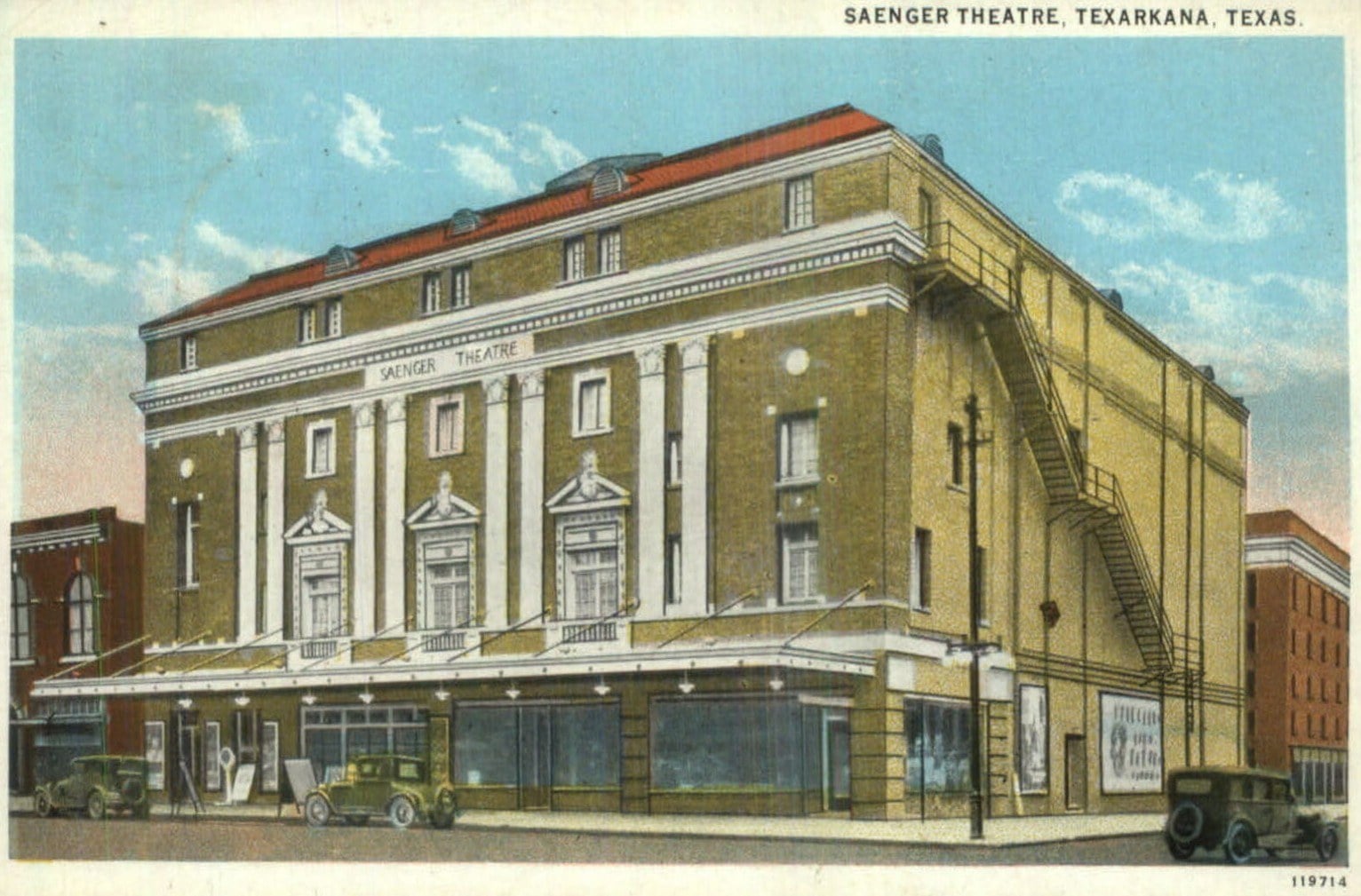
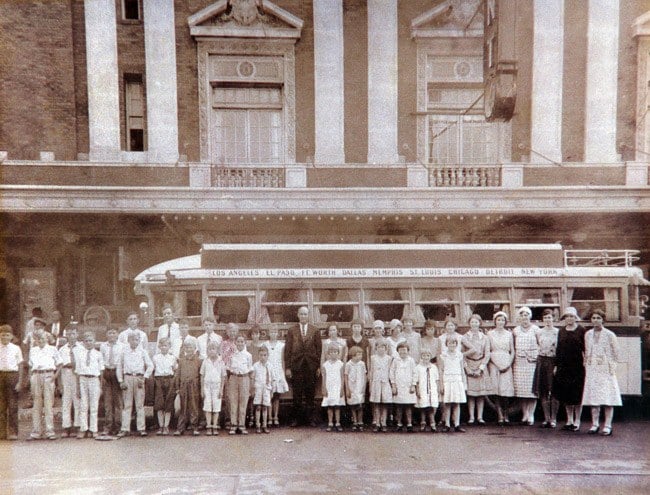
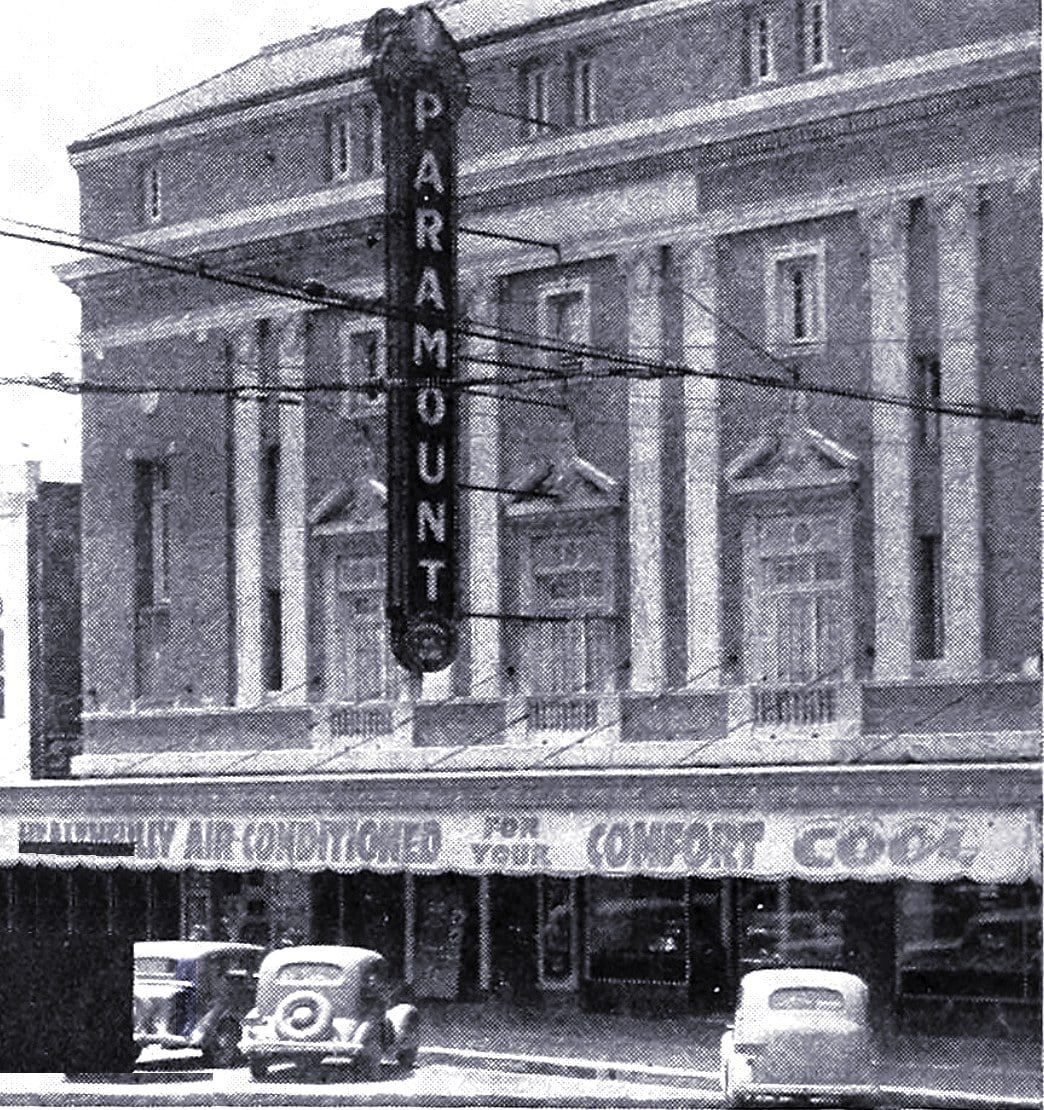
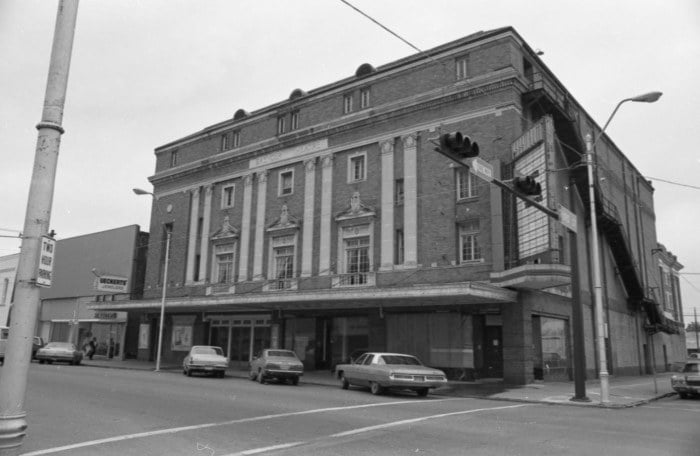
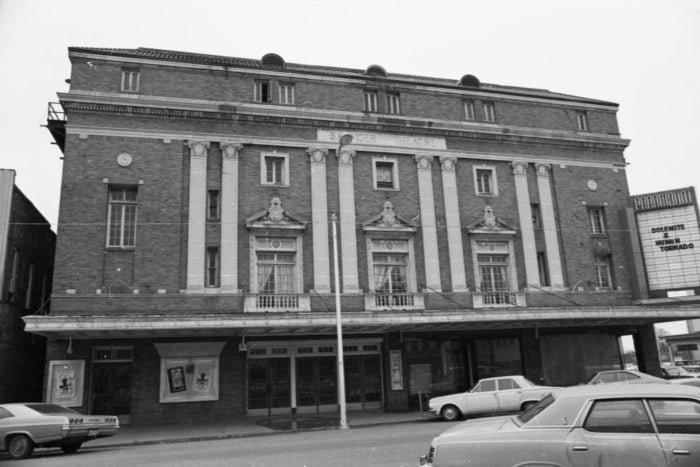
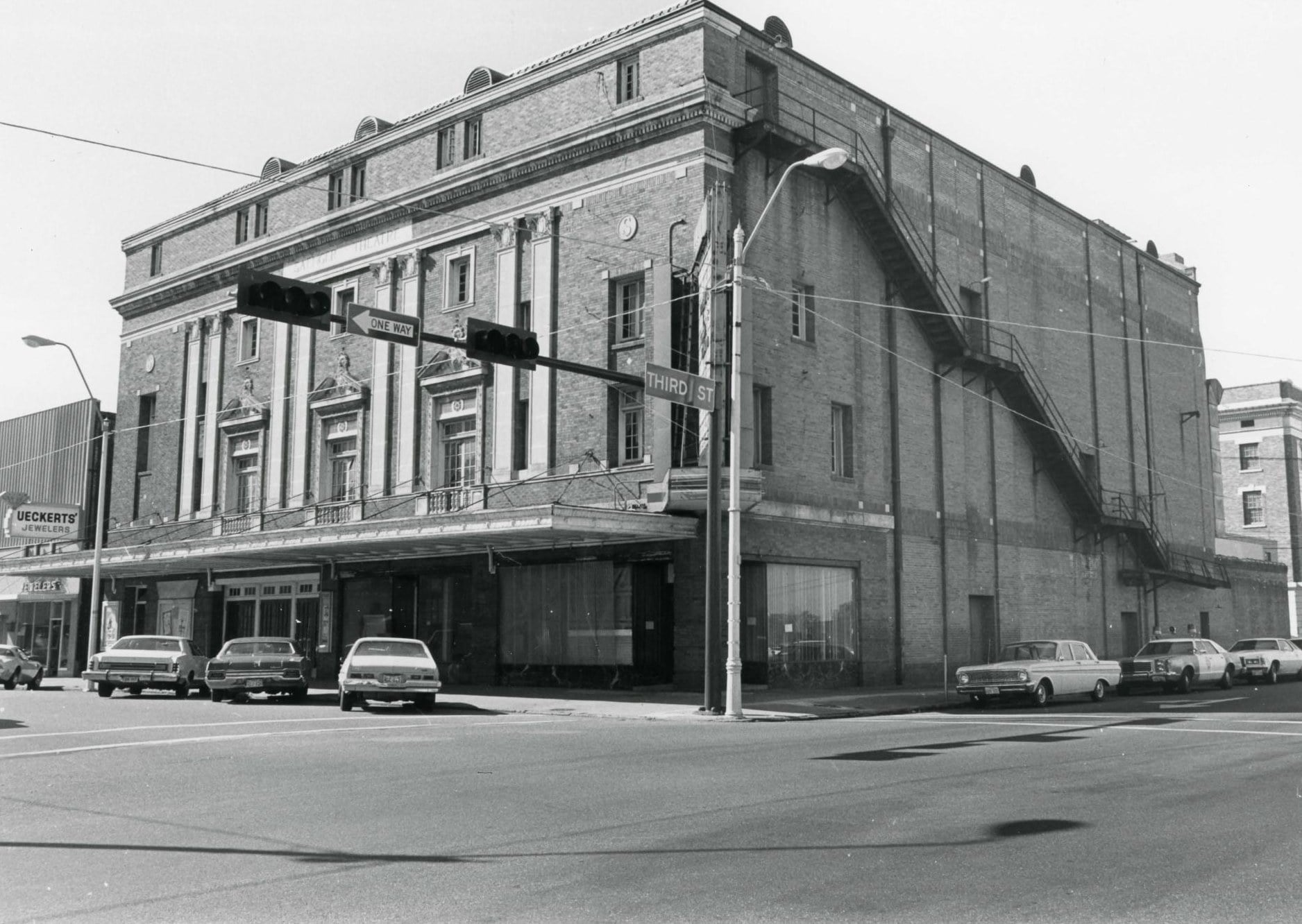
From the street, the nomination says, the building “appears rather plain on first sight, but actually is not.” It is Italian Renaissance in golden brick with concrete trim, under a roof of terra cotta tile. Eight pilasters are topped with capitals that each carry an “S” in relief, a lion-shaped grotesque sits over the balcony windows, and marble panels set into the brick spell out the theater’s name in gilt letters.
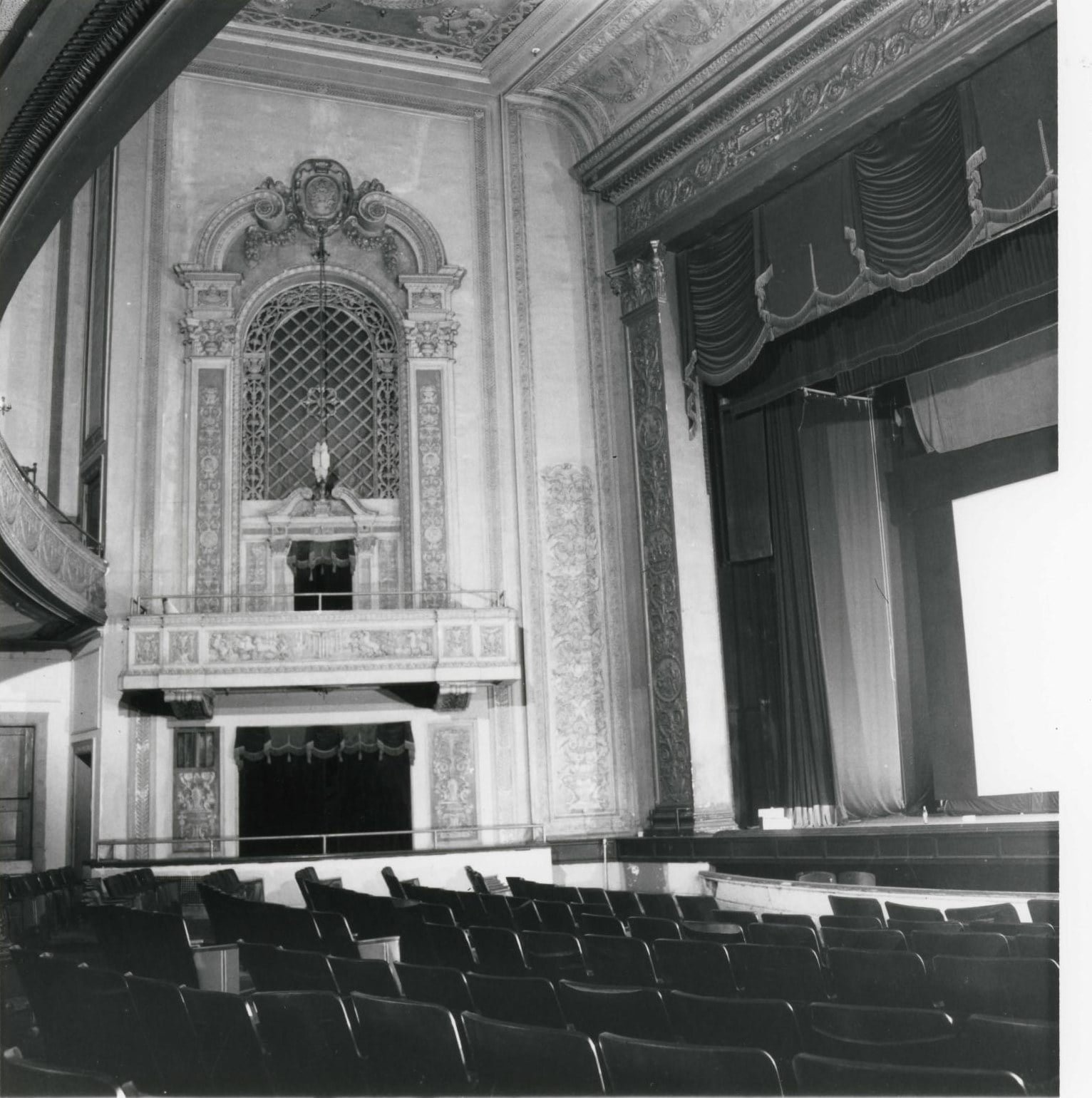
Inside, the auditorium was one of the largest in the South, according to the nomination, with a clear view of the stage from any point in the house. A huge chandelier hung with cut-crystal lusters lit the room. The stage measured 35 feet by 100 feet, with eight dressing rooms underneath and a pit big enough for a full orchestra. Two boxes sat on each side of the stage, each with a private entrance.
Some of the engineering was about fire. The projection room was built with extra ventilation as a precaution against the highly flammable nitrate film of the day, and it had its own restroom for the operator. A sprinkler system with 1,008 heads went in to meet insurance requirements.
Not every patron came through that lobby. The upper rear of the balcony was reserved for Black theatergoers, who reached it by separate stairways and had separate lounges, according to the nomination.
Follies, the organ and the Paramount years
Through the 1920s and ’30s, local showman W. A. McCartney staged an annual “Follies” at the Saenger, modeled on Ziegfeld’s revue and cast with local talent. The nomination calls it “one of the few occasions that drew the citizens of both cities together in a cooperative effort.”
The organist for the Follies and every other show was Eva Vernon Hardin, Mrs. Arthur Hardin, who had managed the Saenger interests in Texarkana before her marriage. By the time the new theater opened, Arthur Hardin was manager and Eva played the organ. The Saenger was the first theater in the city with a pipe organ instead of a piano, the nomination says.
The organ console sat near the orchestra pit in full view of the audience, and the instrument “is said to have been one of the finest of its kind,” the nomination says. By 1978 it was gone. No one could say when it had been dismantled, but it was believed to have been moved to a theater in New Orleans. The big chandelier was gone as well, its fate unknown.
The Hardins stayed prominent in Texarkana entertainment until the 1940s. Long after technical improvements had made “the organist and her cue cards obsolete,” the nomination says, the Saenger kept hosting local playhouse productions, fashion shows and other live entertainment, along with the occasional professional show.
Paramount-Publix bought the theater in 1931, and it later became the Paramount. It ran first-run films until the mid-1960s. Then it met what the nomination calls “the economic fate common to downtown movie houses all over the nation.” The Paramount “went to second and third rate movies, and then only black action films were run until it closed in March of 1977.”
By then the balcony had been closed to patrons for several years and was used for offices and storage, and 200 to 300 seats had been taken out. A large multicolored marquee had been added to the northeast corner. The nomination did not care for it: the marquee “is wholly out of character with the building and should be removed.”
In early December 1977, the city of Texarkana, Texas, announced it was buying the building as part of its downtown development plan, with plans to restore it as a performing arts center, according to the nomination. Later that month the city’s Historic Landmark Committee approved it as a site of local historical importance.
The city went looking for design money from the arts councils of both states and from the National Endowment for the Arts. By June 1978 it had an NEA grant to hire a design team, and City Manager Stuart A. Bach wrote to the National Register office asking it to waive a 30-day waiting period so the listing could be approved before the design work began. The theater was entered on the register July 12, 1978.
Texarkana natives H. Ross Perot and his sister, Bette, gave $800,000 toward the restoration in memory of their parents, according to the Perot Theatre’s own history, and the city renamed the house the Perot Theatre. It reopened in 1980.
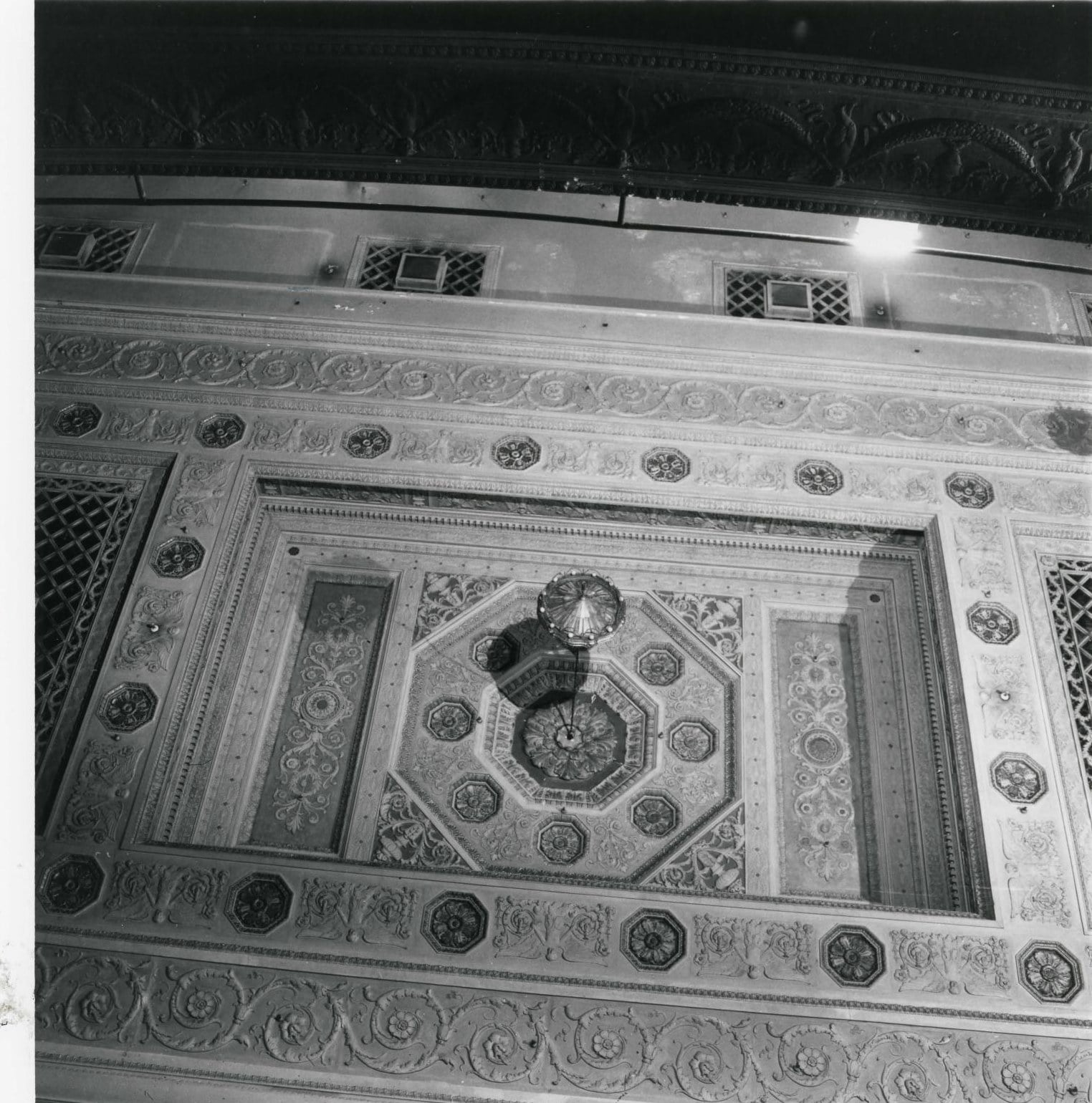
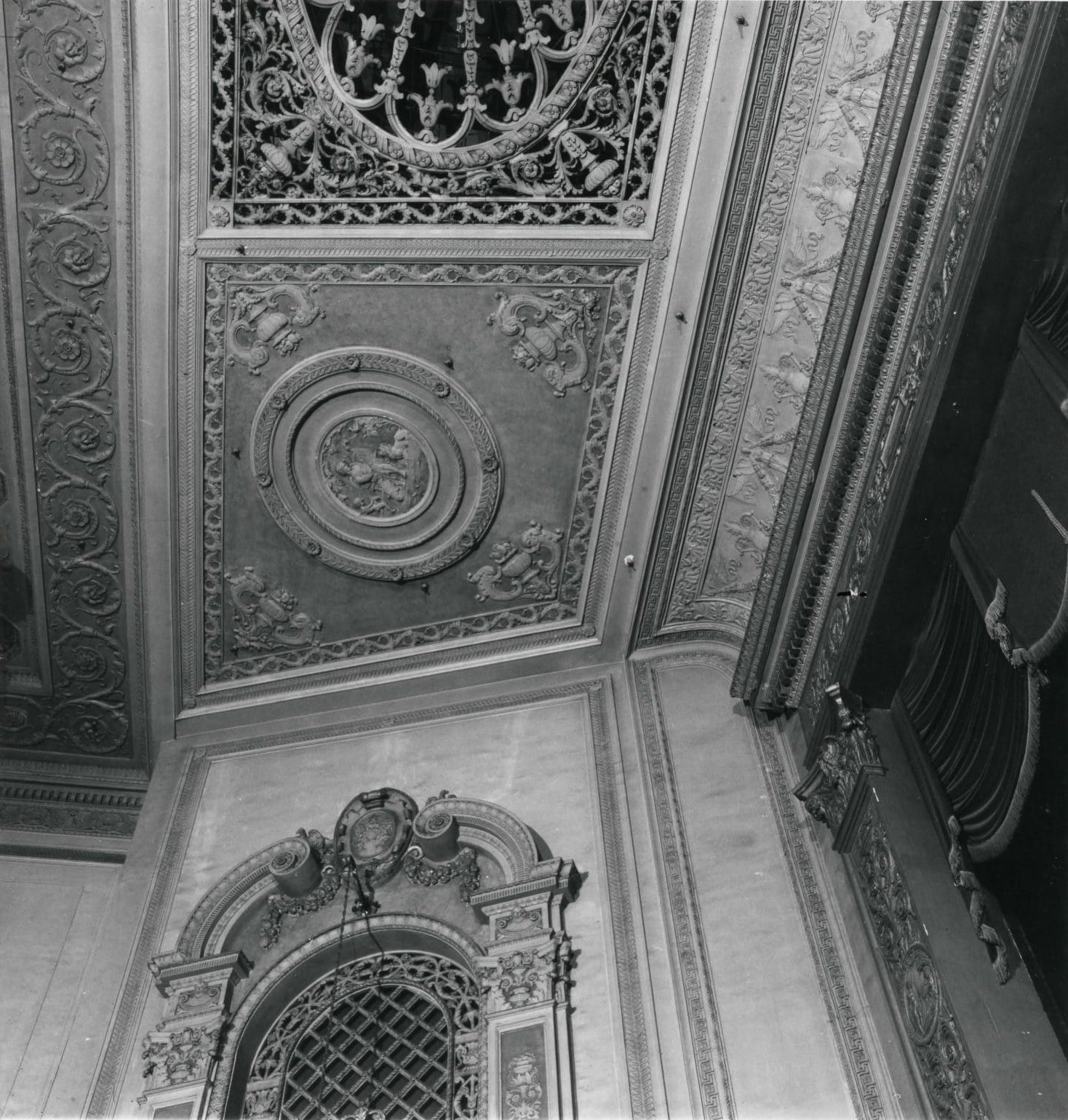
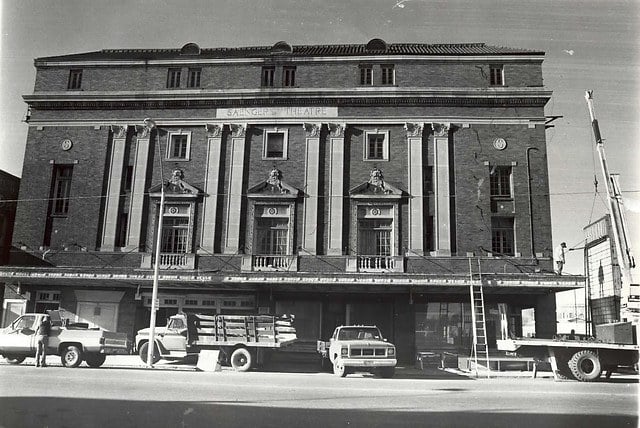
The stage that Texarkana insisted on in 1924 is still in use.
Did your parents or grandparents perform in the McCartney Follies, see a show at the Saenger or the Paramount, or work there? Do you have programs, tickets or photos? We’d like to hear from you. Contact TXKtoday.
Featured image: The theater as the Paramount, in a photo its uploader dates to 1938, and during its restoration, undated. Original sources unknown, via Cinema Treasures; composite by TXKtoday.
Sources: National Register of Historic Places nomination, Saenger Theater (Paramount Theater), Texarkana, Texas, prepared by Katy F. Caver, Texarkana Historical Museum, 1978, via the Texas Historic Sites Atlas, citing the Four States Press, Nov. 16 and 18, 1924; Perot Theatre, “About”; Variety, Nov. 5 and Nov. 19, 1924, Moving Picture World, Nov. 29 and Dec. 13, 1924, and Exhibitors Herald, Dec. 6, 1924, via the Internet Archive.