

Howell on seven years as county judge: a pandemic, a cyberattack and the $12 million land deal

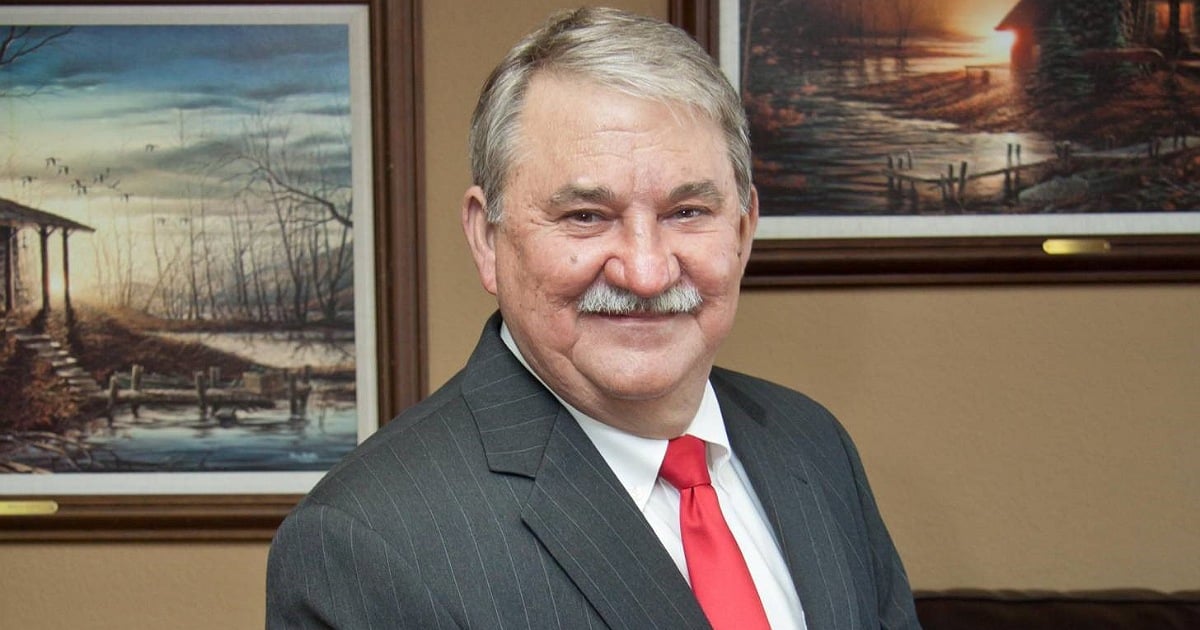
Bowie County Judge Bobby Howell leaves office Dec. 31 with, by his account, a county that is “running smoothly” and has “plenty of money in the bank,” a $12 million payment for land that cost three local governments $1.5 million six years ago, and a county-built fiber network he says will give the courthouse free internet for the next 25 years.
“Right now I think everything’s running smoothly,” Howell said in an interview last week with TXK Today. “We’ve got plenty of money in the bank, and we’re able to function.”
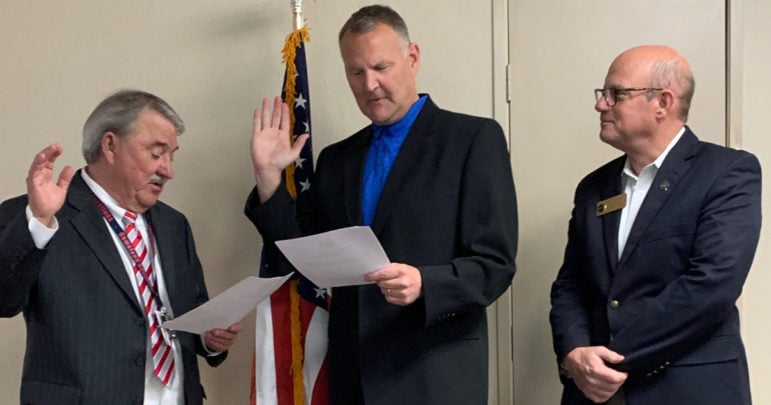
Howell, a Texarkana lawyer for more than 30 years, was appointed in October 2019 to replace Judge James Carlow and elected to a full term in 2020. He is not seeking re-election. Josh Davis, the former county tax assessor-collector and the Republican nominee, is unopposed on the Nov. 3 ballot.
In an hourlong conversation, Howell talked about the county’s sale of land along Interstate 30 to a data center developer and the opposition it drew. He also described the parts of the job he says the public never saw: a pandemic that began five months after he took office, a ransomware attack the county was advised to keep quiet about, and a fiber-optic loop he built with federal relief money.
Five months in, a pandemic
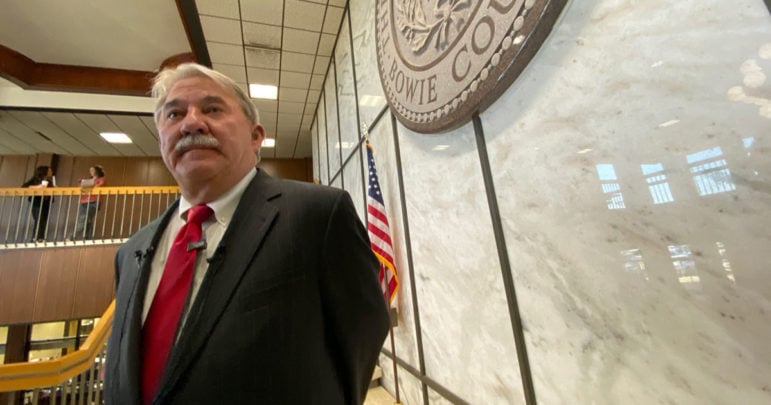
Howell said he spent his first year and a half in office dealing with COVID-19. He worked with CHRISTUS St. Michael to set up vaccine clinics, pressed the state for a larger share of vaccine doses, and got the state to open an antibody infusion center that the county operated in Nash.
Article continues below
▼ Continue reading
“Some people tell me we saved a lot of lives with that,” he said. “I’m not going to say that, but that’s what other people say.”
The county and the city of Texarkana, Texas, ran a joint emergency operations center out of the fire department’s training building for about a year, working with law enforcement and the medical community.
“I just did the best I could,” Howell said. “I had as much experience as anybody in the country at managing a county during a pandemic, because we had never had one before.”
The cyberattack the county was told not to discuss
Howell gave the most detailed account the county has offered of the ransomware attack that hit Texarkana-area governments in December 2020. Texarkana Water Utilities, which handled the county’s information technology at the time, found the intrusion Dec. 6, 2020, and courthouse computers were shut down.
Howell said the county said little then on the advice of its insurer’s lawyers, who believed publicity “encouraged the bad actors.”
Two things stand out to him. First, he had added cyber coverage to the county’s insurance before the attack, including a $3 million policy for ransom payments. Unlike the city and the water utility, he said, the county was insured. It never paid a ransom.
Second, the county got lucky. Its scanned records sat on a server at the Bi-State Justice Building, where IT staff rebuilt the server from backup copies and recovered 95% or more of what was on it. Its financial software ran on a separate server in the auditor’s office that was never connected to the infected network. Within two days the county confirmed that machine was clean and was paying bills and running payroll.
“Could’ve been a lot worse,” Howell said. Full recovery took about six weeks, with little data lost and, because of the insurance, little cost to the county.
The attack also ended the county’s IT arrangement with the water utility, which Howell said had been serving the two cities first. The county “cut the cord” and hired an outside firm, Roundtable Network, to rebuild its systems separately. He said he considered an in-house IT department but decided the work was more than a one-person job and too fragile if that person left.
A fiber loop nobody has announced
Howell also described a project that has not seen much publicity because it is not finished. He held back part of the county’s federal COVID relief money for a fiber-optic network he calls the Bowie County Loop, built in partnership with Texarkana College, which put in $4.5 million from its own share of relief funds.
The line runs from Texarkana west along U.S. 82 to DeKalb, then south and back along U.S. 67, forming a loop that connects every county office and passes every school in the county. Howell said the schools will be able to connect to it for high-speed internet at a lower price.
Under the agreement, once the network is installed the county pays nothing for internet service for 25 years. The county now pays about $100,000 a year, Howell said. It will keep a second provider as a backup, at a price that has not been negotiated.
“That’s a big deal for the county,” he said.
The rest of the relief money went largely to one-time capital needs, Howell said, because the payment was one-time and he did not want to start programs the county could not sustain. The biggest item was the air conditioning at the courthouse, which opened in 1985 and had had little maintenance. Commissioners also bought equipment their precincts had gone without.
“We were careful about how we spent that,” he said. “And I think I did a good job with it.”
The $12 million, in his words
The decision that defined Howell’s last year was commissioners’ Aug. 28 vote to sell 582 acres north of I-30 at Hooks to Datahub Developers LLC for $12 million, over the objections of a courtroom full of residents. Bowie County, the Hooks Special Industrial Development Corp. and the New Boston SIDC had bought the land in 2020 for about $1.5 million, $500,000 each.
“We made a pretty good profit on our investment in that land,” Howell said. “To sell it for $12 million is a pretty good profit in and of itself. We have another 238 acres on the south side of I-30 and U.S. 82.”
The price started at $10 million, he said. It rose to $12 million after Southwestern Electric Power Co. assured the buyer it could deliver more electricity. “Which I assume means they will build a bigger” facility, he said.
Several costs come out of the proceeds. The 2020 seller kept the mineral rights, so the three mineral owners had to be paid to give up use of the surface. Howell said that cost “a pretty penny,” though he did not recall the figure. Attorney Kyle Davis handled the negotiation.
The three entities also agreed to reimburse the city of New Boston up to $1.5 million for extending water and sewer lines to the site, which the buyer wanted. Howell said he thought New Boston should have paid for the lines itself, since the city will collect the utility revenue.
He wants to pay it from $2 million the buyer put up in escrow, now held by AR-TX REDI, the regional economic development group, but said he had not yet gotten approval from County Auditor Jennifer Beckett. The other $10 million has been disbursed, less closing costs.
The county’s share goes into its general fund. Because the money arrived after the budget was set, spending it will take a budget amendment. Howell said he hopes commissioners use it to buy another tract for economic development.
No tax abatement was part of the sale, Howell said, though he expects the buyer to come back and ask for one.
‘Your potential buyer just wouldn’t come here’
Howell said he does not know how the sale could have been handled differently. “You’ve got a contract that says it has a confidentiality clause in there,” he said.
Asked where the line falls between protecting negotiations and keeping the public out of decisions about public land, Howell said developers will not come to a community that airs their plans early.
“If it wasn’t done that way, your potential buyer just wouldn’t come here,” he said. “They won’t have their plans aired and made public before they’re final.”
That is also his answer to the Hooks City Council, which said it was blindsided by the sale. Howell said the city created the Hooks SIDC, which is a separate entity, “but apparently they didn’t understand how it worked. Because you just can’t go make things public that aren’t done yet.”
Asked whether residents should have had a choice in the sale, Howell said no.
“In my opinion, no, because they have no expertise for the most part,” he said. “Most of these deals were done under executive session.”
The case for the project
Howell said the county’s benefit is twofold: the profit on the land, and the taxes. If the developer builds what it has told him it will build, he said, it would add about $4.5 billion to a county tax roll he put at roughly $8 billion.
“That’s probably a 50% increase in the tax roll,” he said. “So I don’t see how you can pass that up.” The added value could pay for spending the county has put off, or lower taxes for everyone else, depending on what future commissioners decide.
He acknowledged one unknown. The servers inside a data center may last five years or less, and he does not know how the Bowie Central Appraisal District, which operates independently of the county, will value them.
Howell said much of the opposition is based on misinformation. If the developer builds what it has described, he said, he doubts the site will be noisier than the interstate beside it. He cited studies he has read suggesting data centers can bring utility prices down and use about as much water as a municipal golf course.
The county’s only real say over projects in unincorporated areas, he said, comes when a developer asks for a tax abatement. “Not unless they come to us for a tax abatement,” he said when asked whether the county could stop one. Creating the reinvestment zone an abatement requires triggers a public hearing, and the agreement lets the county write in conditions it otherwise could not impose.
For the Red Barn Solar abatement approved Oct. 13, Howell said he hired Austin attorney Jim Allison, who negotiates such agreements across Texas, and structured it as a payment in lieu of taxes. That gives the county a guaranteed sum that goes straight into the general fund instead of through the appraisal process, he said. Land in such projects is usually taxed at agricultural or timber rates. By his figures, the owners of the solar project’s acreage now pay about $5,600 a year in county taxes.
Rick Jackson, the neighbors and ‘those other folks’
The sale drew national attention in September when Georgia Democratic gubernatorial nominee Keisha Lance Bottoms used it against Republican nominee Rick Jackson, who lists himself as Datahub’s chief executive.
Howell said he had never heard of Jackson until opponents of the project brought him up. “When I asked about him, I was told he’s their finance man,” he said. The county dealt with the buyer through Rob Sitterley, CEO of AR-TX REDI, and Jackson’s name never came up in negotiations, Howell said. The link opponents found, an office address shared with Jackson’s company in the closing documents, is common when lawyers set up companies for clients, he said.
“I really didn’t pay much attention to them, because I don’t consider them a credible source,” Howell said of the opponents’ research.
He said the buyers have since formed a separate operating company and changed its name, and are expected in town this week for a meeting arranged through REDI.
Howell said the county and TexAmericas Center are “neither” partners nor competitors. There was “some rumbling,” he said, after TexAmericas CEO Scott Norton announced the proposed Project Big Pine data center campus in April as if it were settled. “All he had was a developer that had an option on some land,” Howell said. “Really, it was just a marketing announcement.”
The 600 acres Black Mountain Power bought near Leary have “really got people stirred up because it’s going to be kind of in their backyard,” he said. A company representative, a former state representative from Marshall, told him what gets built depends on how much power the company can secure. Howell said the company is trying to arrange water from Leary, and that Leary’s water operator told him he would welcome the sale: he flushes about 5.5 million gallons a year from two dead-end lines, and a data center line would use about 4.5 million gallons a year and complete a loop in his system.
Howell called Gov. Greg Abbott’s recent turn against rural data centers “a total about-face for political reasons.” He said much of the state’s grid debate does not apply to Bowie County, which is outside the ERCOT grid.
Howell said he tries to keep county business low-key, and that commissioners had run the county “without any theatrics” until this year. “Now, the anti-data center group has changed that,” he said. “Because they come in and show up and want to tell everybody how to operate the county. And there’s so much they don’t know, but they think they do.”
At the Aug. 28 meeting, he said, opponents “got so loud and unruly and rude” that business could not be conducted. “It bothers me when they do that,” he said.
“I’m hopeful that people will start construction soon, and I’m hopeful they will start putting out some positive information to counter these other folks,” Howell said. “But I’m afraid those other folks are going to be there from now on.”
What he could not fix
Howell named mental health as a priority when he ran in 2020. Asked what changed, he was blunt: in his view, a county never gets ahead of it.
State hospitals have waiting lists of about 18 months, he said, even for defendants who need competency evaluations before trial. As county judge, he signs emergency detentions in which patients are held and stabilized at county expense. Most stop taking their medication after release, he said, and end up back where they started. “It’s a vicious cycle.”
He said the state “has been very hard on rural counties.” Outside the Houston-Dallas-San Antonio triangle, he said, “they ignore you for the most part,” even as statewide officials credit rural voters for electing them. “What are they doing for the rural voters? Not much, in my opinion.”
The county pays for the jail, the district attorney’s office, the courts and a public defender’s office, Howell said, and “it just doesn’t leave much to do roads and bridges.” The jail is the single biggest expense. He credited Sheriff Jeff Neal with running it better than LaSalle Corrections, the private company that managed it until 2020. “I won’t say that the costs are down, but I think that we’ve run a better jail than what LaSalle did,” he said. Contractors’ low pay led to “poor supervision, which leads to lawsuits.”
Howell said the county has taken the maximum 3.5% revenue increase allowed each year without an election, because inflation has often run higher. He warned against Abbott’s and Lt. Gov. Dan Patrick’s campaigns to sharply cut or eliminate property taxes, and against a proposal to require two-thirds voter approval for any increase. “How do you finance cities and counties if you don’t have property taxes?” he said. Most people, he said, are better off paying property taxes than an income or sales tax.
His biggest disappointment is Bowie Parkway, the county road from U.S. 82 to U.S. 67 that many Red River Army Depot workers use. He said he tried repeatedly to raise money to bring it up to state standards so TxDOT would take over its maintenance, at one point working through the depot and TexAmericas, and never found the funding. He said TxDOT has otherwise been a good partner and keeps him posted on the U.S. 82 expansion from New Boston to DeKalb and the I-30 widening.
He called his seat on the AR-TX REDI board one of the most enjoyable parts of the job, and credited the group and Sitterley with leading the push for state and federal money for the runway expansion at Texarkana Regional Airport, which he said several businesses are waiting on.
‘Nothing, and I’m not going to start that till after lunch’
He said he asked several sitting and former county judges how long it took to figure out the job. The answer, he said, was that “you’ll never really figure it out, because there’s so much to it.” The hardest part, he said, is that a Texas county judge is held responsible for everything in county government while having no authority over how other elected officials run their offices.
He said Davis “would do good in the job” because his years as tax assessor-collector gave him a familiarity with county operations that Howell lacked when he started. Howell’s assistant will stay on under Davis.
After he leaves office Dec. 31, Howell said, he plans to spend time with his family.
“People ask me all the time, what are you going to do?” he said. “And I say nothing, and I’m not going to start that till after lunch.”
He added that he has not found the million dollars opponents of the data center claimed he was paid. “I haven’t found any yet,” he said.