


GPS originated as a project of the US Defense Department to support navigation. The Internet began with the development of ARPANET, a research network on behalf of a department of the US defense agency. Radar, jet propulsion, weather satellites etc. – all these are military technologies, which have found their way into civilian use long ago. We speak of dual-use technologies.
How Technology Moves From the Lab to the Market
Engineers initially design these systems to solve critical field problems for military applications. As the technology matures and manufacturing costs come down, it makes for an ideal commercial product which requires similar performance in terms of sensor robustness to withstand rough handling, vibration, bad weather and low power.
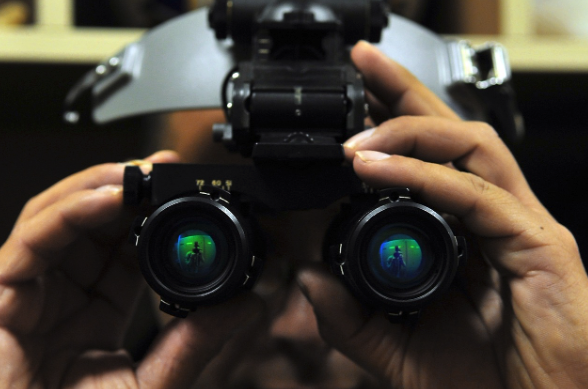
Night vision technology went through a similar transition. The image-intensifier tubes used for night vision for many years were often very large, expensive and even controlled by certain export restrictions. However, improvements in production methods and the arrival of digital sensors as well as thermal detectors, such as forward looking infrared (FLIR) cameras, that are much smaller, enabled night vision technology to be used by many other groups of people. Night vision equipment military now has civilian counterparts designed for hikers, boat crews, farmers, and researchers.
Note, however, that moving technology from a defense-related program to a commercial offering is not necessarily straightforward. While production may have been funded by the US Defense Department, for example, export restrictions to countries where the technology could be used for nefarious purposes can be significant. And while commercial models may sacrifice some range, sensitivity or ruggedness in exchange for lower price points and simpler operation, there are also a host of regulatory issues that must be addressed.
Article continues below
▼ Continue reading
Civilian Uses Become Routine
Commercial security systems routinely rely on thermal cameras to monitor warehouses, solar farms, substations, and ports around the clock. These sensors easily detect intruders and vehicles without the need for bright floodlights, and unlike standard video surveillance, they aren’t blinded by glare or harsh shadows.
Nocturnal animals are counted by researchers with help of sensors, bat colonies are monitored and nesting sites of birds are surveyed. Hot spots are found by fire crews after a fire and thermal imaging is used by utilities to inspect power lines, panels, switches and other electrical equipment for signs of abnormal heat.
In the case of search-and-rescue operations, night searches, flood relief and building inspections optical/thermal sensors can be used to detect people and hazards. The technology that solves the field problem of search-and-rescue teams may have a military origin, but the application itself is a civilian, immediate need problem.
The Benefits and the Limits
Publicly financed R&D solves an engineering problem which is of far greater value in civilian applications than in the militarily relevant environment in which it was developed. Once a number of public and commercial organizations start to use corresponding versions, the larger series production and the competition for civil applications can lead to a reduction in price.
This equipment can be and has been misused as well as the information that it collects used in some fashion to infringe upon a person’s right to privacy. Similarly, there are certain restrictions on the export of such information sensitive equipment to certain countries as well as commercial concerns.
The line dividing defense tech and civilian gear continues to shift as cost-effective sensors enter new industries. While these tools offer unprecedented security and operational utility, maintaining export compliance, privacy protections, and responsible deployment remains an essential part of the ongoing technology dialogue.