


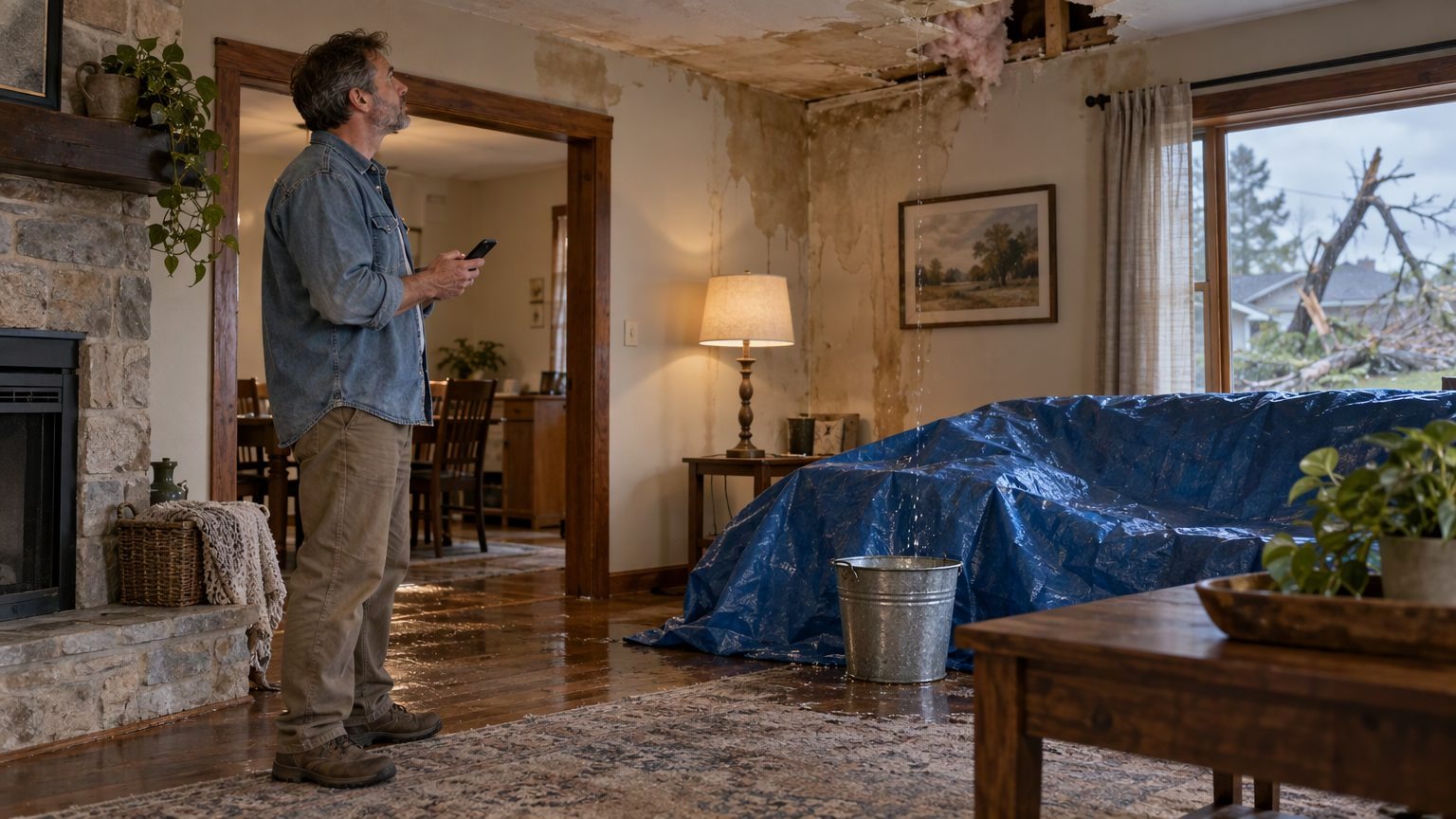
While damaged areas still need attention, a property insurance denial can leave you responding to new document requests. You still receive calls. Document Texas adjuster communication in writing as estimates arrive after a wind or hail loss to keep a record of what the insurer said and what you submitted for review.
For 2025, Texas Department of Insurance figures place Texas homeowners insurance losses at $8.74 billion. Since 2019, wind and hail have accounted for an average of 62% of homeowners losses, the department says. This is general educational information, not legal advice tailored to you.
Start documenting Texas adjuster communication in writing
Create the communication log immediately
Once the insurer denies your claim, start one chronological communication log. Record the contact’s name and role, how you communicated, and the exchange’s date and time in each entry. Include what you talked about in the log. At the end of each entry, put what was promised and when you’ll follow up.
Label the adjuster’s words separately from your observations in the log. Use “water stain visible on bedroom ceiling” to describe what you see.
Write your entry immediately, as soon as you’re done. A note made weeks later may omit the exact wording or deadline discussed during a call. Preserve emails in their original format with attachments, and save copies outside the insurer’s portal in case your access changes.
This claim file supports documenting Texas adjuster communication in writing.
Article continues below
▼ Continue reading
How to confirm an adjuster phone call by email
Send a short email with the facts immediately after each phone call with an insurance adjuster. Write down the call date, who took part, and what you discussed, including the documents the adjuster requested. Add what was promised next. Invite corrections without arguing about the denial.
Here’s a message to use:
“Thank you for speaking with me on May 12 about claim number 12345. My understanding is that you requested the roofing estimate and photographs, and that you will review them after receipt. I am sending those files today. Please reply if any part of this summary is inaccurate.”
Keep the attachments with your sent message. Without a reply, your email doesn’t legally prove the insurer accepted what you wrote about the call.
Preserve the complete denial file
Save the denial notice and identify every stated reason
Save the complete denial letter with every attachment. Save an emailed notice’s metadata to show when it arrived, plus the envelope from any mailed notice. After receiving everything needed to establish final proof of loss (the materials supporting your claim), an insurer generally must send written acceptance or rejection within 15 business days under Texas Insurance Code §542.056. A rejection must include the insurer’s reasons.
Check every reason the insurer gave against the cited policy language and the insurer’s inspection report. Compare your submitted evidence with those findings next. Request missing pages or clarification in writing. An unfair claim settlement practice under Texas Insurance Code §541.060 is failing to give a prompt, reasonable explanation grounded in the policy and relevant facts or law.
Keep evidence in its original form
Gather the documents below into a single file. Amendments changing your policy’s coverage or terms are called endorsements.
- Applicable endorsements with the policy
- Denial letter, together with claim correspondence
- Original photographs and videos with date information intact
- Invoices and receipts with contractor estimates and inspection reports
- Damaged material photographs alongside temporary repair records
- Delivery confirmations alongside email attachments and portal uploads
Save the originals first, before you make working copies. Note each damaged item’s location or when you saw it in a separate caption index; don’t change the original photographs or reports.
Build a timeline for quick review
Use this reusable denied claim timeline with your actual entries. Give each call or submission its own row so the events don’t run together. The dates below are just examples.
| Date and time | Person or office | Event | Material sent or received | Next action or status |
| April 3, 10:15 a.m. | Claims intake | Loss reported and claim number issued | Initial damage photographs | Inspection to be scheduled |
| April 8, 2 p.m. | Assigned adjuster | Property inspection completed | Roof and interior photographs | Await written decision |
| April 22 | Insurer claims office | Denial notice received | Letter and cited policy provision | Review stated reasons |
| April 24 | Assigned adjuster | Follow-up email sent | Contractor estimate and photo index | Written response requested |
Request a second inspection with a focused written message
State what the insurer should examine and why
Your written request for another inspection needs your claim number and the property address. Identify the denial finding you dispute, then explain which evidence warrants another look. That evidence belongs in an attachment. Ask for the insurer’s written decision on your inspection request and provide reasonable times for access.
Name the specific areas the insurer needs to inspect. If the dispute concerns storm damage to particular roof slopes, name those slopes rather than asking the insurer to inspect “everything” without identifying a condition overlooked in the original inspection report.
Here’s a sample request:
“I am requesting another inspection of the property under claim number 12345. The denial states that the roof condition resulted from wear, while the attached contractor report identifies storm-related damage on the west and south slopes. Please confirm in writing whether you will schedule another inspection and identify any additional information needed for review.”
Attach a short evidence index with filenames and a brief description of each item. For example, West slope photographs shouldn’t share an index listing with the contractor’s report. In the request, give the role and proposed availability of any contractor or engineer who expects to attend.
Ask the insurer how to arrange safe access. Instead of climbing onto a damaged roof for another photograph, use the evidence index to mark areas you couldn’t safely reach.
Asking for another inspection doesn’t mean you’ll get one. Instead of accepting or denying your request, the insurer can offer a different way to review it. Save its written response beside your inspection request.
Track the response period and decide when to escalate
Record when you delivered requested information
Keep the delivery proof beside each requested submission’s entry and note when the material was delivered. If the insurer needs more time than the applicable decision period allows, its explanation must be in writing under Texas Insurance Code §542.056. It generally must decide by the 45th day after giving that notice.
The initial decision period doesn’t start until the insurer has what it needs to decide your claim, as the Texas Department of Insurance’s insurance claim deadline guidance explains. With each submission, store its delivery receipt or portal confirmation.
When the insurer requests missing material, make a separate entry that includes your response with its delivery confirmation. Don’t assume a reinspection request automatically restarts a statutory clock. Ask for guidance about the deadline that applies to your claim.
Use the record when seeking regulatory or professional guidance
Seek help when the insurer stops answering or changes its explanation. When there’s a dispute about what you submitted or another request for documents you’ve already supplied, record it in your file. You may contact the Texas Department of Insurance about its complaint process or consult a qualified professional about policy language and deadlines.
The department’s 2025 annual report states that it resolved 19,607 complaints and helped consumers obtain $89.6 million in additional claim payments and premium refunds, averaging $4,572 per complaint. Because those numbers cover the whole report, they don’t predict property claim results or promise anything about your case.
Bring your denial notice and timeline to that conversation. Mark unanswered requests so the person reviewing your file can locate the latest pending issue.
Close with a record another person can follow
A useful file lets someone unfamiliar with your claim find the denial reason and compare it with the evidence you submitted. Put what happened on a call in the communication log so that person isn’t left guessing. To keep unanswered requests visible, place the relevant message next to each timeline entry. Leave dramatic language and lengthy accusations out of your notes; when someone needs details, they can check them. Keeping careful records won’t guarantee that the denial changes. Turn to those records for concrete details of what was said and submitted to help you make your next decision.