


While the incident report is still being processed and witnesses head home after a Texarkana crash, you may already be receiving medical care. Before nearby video is overwritten, relatives may need to gather records. Details don’t last. Without establishing fault or guaranteeing an outcome, promptly saving evidence can give families considering brain injury claims a clearer record. While you follow the medical team’s instructions, have a trusted person help you save material.
Protect your health before handling evidence
Seek an assessment and follow the discharge plan
Your health comes first. While clinicians evaluate you, get a prompt medical assessment and have a relative save the paperwork. Follow the discharge plan (including its instructions about worsening symptoms).
In the United States, CDC reports approximately 214,110 TBI-related hospitalizations in 2020 and 68,663 TBI-related deaths in 2023.
The cause and severity of the injury determine treatment, according to the National Institute of Neurological Disorders and Stroke. Care may include emergency stabilization or medication, and some patients may need surgery or rehabilitation. After monitored rest, concussion care can involve returning to activity under a clinician’s direction. Keep the written discharge plan with your appointment information.
Know what to avoid after a suspected brain injury
Even if you feel somewhat better, stick to your clinician’s restrictions; improvement alone isn’t a reason to resume driving. Alcohol, like non-prescribed drugs, can complicate symptoms or recovery. Until a qualified clinician clears you, avoid activities that risk another head impact. Remember: your symptom log cannot diagnose a concussion. If discharge instructions aren’t clear, ask your care team to explain them, and report new or worsening symptoms.
Article continues below
▼ Continue reading
How to preserve evidence for brain injury claims
Crash material and medical documentation can support traumatic brain injury claims, with records of changes at work or in your daily activities. As you receive care, have a relative begin gathering witness contacts and report details.
- Get the incident or crash report information
Write down the investigating agency and report number. Add crash date and location beside the responding officer’s name. Completing the report can take some time. Request it directly from the investigating agency, and keep confirmation of your request.
Social media posts don’t replace the report. Even with names and an initial account preserved, the report may leave disputes about the crash unresolved. With the request date, keep a copy of whatever you receive. - Save original scene photos and damaged property
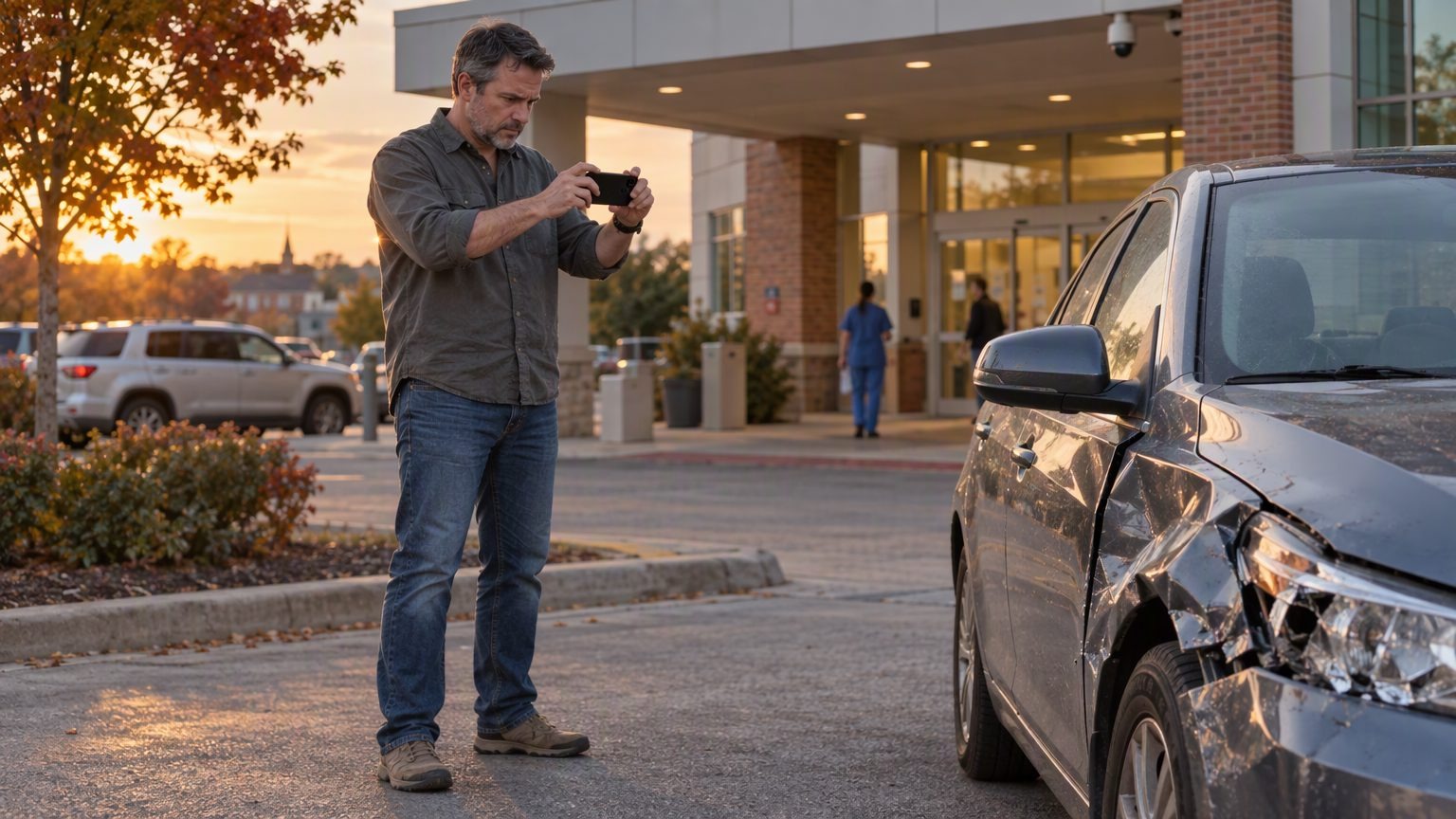
Photograph the scene only when you can do so safely. Capture roadway conditions and relevant traffic controls, making sure vehicle positions and visible damage are included. Without altering damaged eyeglasses or a helmet, keep those items and ask a relative to photograph them.
With dates and metadata intact, save the original photos and videos. Leave your only copy uncropped and unfiltered, without annotations. Rather than relying on a screenshot, keep the original file and save any edited versions separately. - Identify witnesses and request available video
Record each witness’s full name and a reliable contact method, along with where they were positioned. Record observations in the witness’s own words, and add the date to your note. Don’t present someone’s account as definite when they say they’re uncertain.
Besides possible cameras at nearby homes or businesses, vehicles may have dashcams. Before routine overwriting, promptly ask owners whether recordings exist and how you can request copies. Don’t access equipment or accounts without permission, or trespass. Keep copies of your correspondence. - Build a dated symptom and care record
To document a traumatic brain injury after a car crash, save emergency records and test results. Include discharge instructions, referrals, and your therapy notes. Organize appointments and medication changes by date, and include each provider’s name.
In a brief daily log, note headaches and sleep disruption, with specific changes in what you can do. When a familiar recipe requires help, for instance, write down what happened and when you needed it. That isn’t a diagnosis; it’s an observation. Record better days accurately as well, and make it clear whether an entry is your own recollection or a relative’s. - Collect the medical records needed for a TBI claim
Medical records needed for a TBI claim may come from emergency care, primary care, neurology, and rehabilitation providers. When needed, request records separately, keeping bills separate from clinical paperwork. A bill simply lists the charges rather than explaining the underlying diagnosis or treatment.
That a traumatic brain injury came from a crash isn’t necessarily proved by any single record. To get a clearer account, connect crash evidence to contemporaneous medical findings and a dated symptom history, with documented functional changes such as needing help with cooking. - Preserve missed-work and income documentation
Missed-work documentation for a brain injury claim includes written restrictions and absence records. With pay stubs, save employer correspondence about changes to schedules or duties. For self-employment, keep invoices and calendars that show canceled work. Losses you can’t support shouldn’t be estimated.
Crozes et al. (2024) conducted the review. In the Journal of Rehabilitation Medicine, a 2024 review of 22 studies found average added acute-phase costs of about $22,000 after TBI, with excess costs lasting up to six years. Keep your own dated financial records, because those averages don’t predict your expenses. - Keep originals and create a secure backup
Sort material by date and category. For paper originals, store them in a dry spot; keep unedited digital files and a second secure copy. Before relying on the backup, test that it opens.
For each item, ask the family member helping you to note its source and arrival date. Instead of sharing records in public posts, save them privately and allow access only to people you authorize. In the folder, keep a list of outstanding requests.
Use this final evidence-preservation checklist
While the injured person focuses on care, families can go through this checklist. Mark whether each category has been received or is still requested. An empty entry means follow-up is needed, not that you can draw a conclusion about the crash. Beside every outstanding item, write the request date so another family member can check the status.
| Evidence category | What to secure | Storage check |
|---|---|---|
| Incident record | Agency and report number; crash details | Request status recorded |
| Scene material | Original photos and videos; damaged property images | Original files retained |
| Witnesses | Names and contact details; firsthand observations | Information dated |
| Available video | Camera location and owner; request details | Request made promptly |
| Medical care | Clinical records and instructions; referrals | Filed chronologically |
| Symptoms | Dated notes describing specific functional changes | Entries kept factual |
| Work and income | Restrictions and attendance records; income documents | Originals preserved |
| Backup | Second secure copy of digital and scanned material | Copy can be opened |
By keeping records organized, you can help document the incident and course of medical care, along with resulting income loss, in brain injury claims; no individual record guarantees an outcome.
When a brain injury changes awareness or behavior
Reduced insight can affect self-reporting
After a brain injury, reduced insight means diminished awareness of your own cognitive or emotional limitations, along with physical ones. Relatives or clinicians may notice changes you sincerely underestimate. Without assigning a diagnosis, use family notes to describe specific events, such as someone needing repeated reminders about an appointment.
Anoxic injuries can produce behavioral changes
An anoxic injury comes from lack of oxygen to the brain; it isn’t interchangeable with every crash-related head injury. Alongside irritability or apathy, possible changes involve reduced impulse control or rapid emotional shifts. The cause isn’t identified by behavior alone. Have a clinician assess new behavioral changes.
Support should respect the survivor’s experience
What brain injury survivors often want understood is that symptoms can be invisible and energy levels may vary. Linear recovery isn’t guaranteed. Before taking over without permission, find out what help would be useful. For example, ask whether you may organize the appointment reminders.
Brain injury education and advocacy come from the Brain Injury Association of America, a national nonprofit. Through it, people also connect with support resources and state affiliates.
A clearer record starts with accurate details
While you focus on recovery, saving evidence promptly can reduce avoidable gaps. Without promising any claim result, use original files and dated medical documentation to keep observations separate from assumptions. You don’t need to finish every request at once or make decisions the injured person can make. With this checklist, ask a trusted family member to compare the secure folder and note the items still outstanding.